How to Build the Perfect Chain Sling in 6 Simple Steps
Designing a lifting chain sling is more than selecting a chain and hooks. It requires accurate configuration, correct working load limit (WLL) calculations and a clear understanding of lifting angles, load distribution and operating conditions.
This guide shows how to build a compliant chain sling in 6 simple steps using the RUD Configurator, helping you improve safety, reduce errors and streamline your lifting design process.
The RUD Configurator is a free and straightforward chain sling calculator that helps engineers, riggers and lifting professionals design safer, more efficient slings with confidence. It helps save time on chain sling selection while improving application accuracy to create a safer lifting solution.
Click here to use the RUD Chain Sling Configurator to build your sling now.
Step 1: Choose the Chain Type for Your Lifting Chain Sling
The first step in any lifting chain sling configuration is selecting the correct chain type based on your lifting application and required working load limit (WLL).
The options we have included are:
Single-leg or multi-leg slings
Single endless or double endless chains
Next, we need to determine the load capacity and choose between 2 grades:
VIP Grade-100 - Strong and reliable, ideal for a wide range of lifting tasks across mining, construction and heavy engineering
ICE Grade-120 - Offers higher strength, reduced weight and excellent performance in demanding environments, including low temperatures
Selecting the proper chain system ensures the sling delivers the required strength, durability and operational performance. Learn more about calculating Working Load Limits (WLL) for chain slings using ChatGPT (Opens a new browser tab with ChatGPT).
Step 2: Adjust for Operating Conditions
Correctly accounting for environmental conditions is critical for lifting safety and compliance with Australian rigging standards. Factors such as temperature, shock loads, and chemical exposure can affect WLL.
VIP Grade-100 operates from -40°C to 200°C without WLL reduction
ICE Grade-120 operates from -60°C to 200°C, making it ideal for harsh conditions
ICE components are recommended in challenging environments due to their wear-resistant materials. Choosing the right chain for your conditions ensures safety and longevity.
Step 3: Select Suspension Components
Suspension components are critical rigging equipment that connect the sling to the crane and the load. Options include master links, hooks, connecting elements, shortening elements and balancers. For guidance on selecting compatible components, see rigging hardware selection best practices using ChatGPT (Opens a new browser tab with ChatGPT).
The Configurator offers compatible suspension components based on your selections, helping ensure correct load distribution during crane lifting operations.
Step 4: Add Shortening Components
To balance loads or correct asymmetry, shortening components such as shortening hooks or shortening claws allow precise adjustment of sling length without compromising safety.
These components increase versatility and adaptability across different lifting scenarios. The Configurator highlights compatible options and shows how they integrate into the overall chain sling assembly.
This step ensures the sling functions safely and effectively under real-world conditions.
Step 6: Select End Components
End components attach the sling directly to the load.
Common options include:
Hooks
Shackles
End links
Specialised lifting connectors
Selecting the correct end fittings is essential for secure load attachment and overall lifting system safety. The Configurator allows you to compare compatible options and confirm suitability.
Review the 3D Model and Export the Design
Throughout the process, you can visualise the sling in 3D. As components are added, the Configurator generates a realistic model, helping confirm the configuration before finalising the setup.
Once complete, users can:
Download free finished chain sling CAD files and PDF documents for easy integration into engineering drawings, lift plans and project documentation
Export PDF specifications for lift plans
Share the configuration with colleagues or project teams
Send the design directly to RUD for quoting or technical support
This integration ensures the chain sling design fits seamlessly into project planning and lift documentation.
Why Use a Chain Sling Calculator?
A chain sling calculator removes manual guesswork and improves accuracy in lifting load calculations. Instead of relying on charts or spreadsheets, users can configure a compliant sling based on real-world conditions. This makes it easier to standardise safe lifting practices across projects and teams.
Some of the key benefits are:
Improved lifting safety and compliance
Accurate working load limit (WLL) calculations
Faster rigging design and selection
Reduced risk of incorrect sling configuration
Easy export of CAD drawings and lift documentation
Removing the Guesswork from Chain Sling Design
Designing a lifting chain sling no longer requires manual calculations or complex charts. The RUD Configurator is a free, easy-to-use chain sling calculator that helps you design accurate, compliant and safe lifting solutions.
By improving selection speed, application accuracy and safety, it enables engineers and rigging professionals to make confident decisions for every lift.
Click here to start building your chain sling today. Email us or call us on 07 3809 1300.
Article copyright to RUD Australia. This information is accurate at the time of publication, and RUD Australia takes no responsibility for any errors, inadvertent or otherwise.
RUD Lifting Innovation Event.
RUD Australia’s October 2025 Lifting Innovation Event showcased live demonstrations, breaking tests and the Configurator sling chain calculator, highlighting safer, more efficient lifting solutions while connecting industry leaders and CICA delegates in Brisbane.
RUD Australia held a Lifting Innovation Event in October 2025, exclusively for the crane industry. We invited Crane Business Owners, Lifting Operations Managers, Lifting Engineers and Industry Partners to an engaging showcase and demonstration of lifting design, equipment technology, and innovation, timed alongside CICA 2025.
Insightful conversations on how our solutions are enhancing safety, efficiency and productivity across various industries
A great opportunity to connect with CICA delegates and local industry leaders at our state-of-the-art 6000m2 factory/warehouse in Brisbane
A huge thank you to everyone who joined us - your enthusiasm, discussions and collaboration made the event a fantastic success. We are proud to continue leading the way in lifting innovation and safety excellence across Australia.
Part 2 of the 2-part article. Click here to read Part 1.
This article explains how advanced motion control, compliant load securing and certified testing protect wind turbine components, improving safety, reducing crane time and supporting reliable wind farm development in Australia.
Motion Control for Wind Farm Installations
Lifting long and slender wind turbine components requires stability as well as strength. Motion control systems, including engineered lift points, guide mechanisms and controlled tag line systems, help minimise rotation and pendulum movement during installation. This is particularly important in outback Australian wind farm locations where wind conditions can change rapidly. Improved motion control reduces corrective crane movements, lowers crane time and enhances crew safety during complex wind turbine lifts.
Lashing Equipment & Load Securing for Wind Turbine Transport
Transporting wind turbine components across Australia requires certified lashing equipment and compliant load securing systems. Integrated lifting and lashing solutions are essential to prevent transport related damage before components reach site. RUD’s Grade 120 ICE chain systems and lashing equipment provide:
High strength-to-weight performance
Certified load restraint
Reduced risk of blade or nacelle damage
Compliance with Australian load restraint guidelines
By integrating lifting and lashing equipment into a complete material handling strategy; wind energy operators reduce transport incidents and protect components across the supply chain.
Testing, Certification & Compliance
Compliance and traceability are critical in major wind energy infrastructure projects. Certified lifting and lashing equipment should include:
Load testing
Non-destructive inspection (NDT)
Documented certification
Full traceability of lifting points and assemblies
Comprehensive testing ensures load paths and fabricated components meet Australian standards before operation. For EPC contractors and project owners, this documentation simplifies audits and strengthens regulatory confidence across wind farm developments.
Planning Wind Turbine Lifting Early
For optimal performance, lifting equipment selection should begin during the wind farm design phase, not just prior to mobilisation. Project planners should:
Define lift points during engineering reviews
Engage lifting specialists early
Confirm certification and compliance requirements
Plan for spare parts and inspection intervals
Consider monitoring systems where required
Early coordination ensures lifting and lashing equipment is engineered specifically for each wind energy project, reducing installation challenges and improving long term reliability.
Supporting Australia’s Growing Wind Energy Industry
As Australia’s wind energy capacity continues to grow, so does the need for advanced wind turbine lifting and lashing equipment. Through modular spreader beams, component-specific lifting systems, integrated Grade 120 lashing equipment and certified testing and inspection services, RUD Australia supports wind farms across manufacturing, transport, installation and maintenance.
The result is safer wind turbine lifts, faster project schedules, reduced downtime and lower lifecycle costs, ensuring high value turbine components remain protected throughout their operational life.
Frequently Asked Questions
What chains are used for wind turbine transport? Certified Grade 120 lifting chains are commonly used for heavy duty load securing during wind turbine transport across Australian wind farms.
How do you ensure lifting compliance in Australia?
Compliance is ensured through load testing, certification, documented traceability and adherence to Australian standards for lifting and lashing equipment.
If you want more details of our wind turbine lifting and lashing solutions, email us or call us on 07 3809 1300.
Article copyright to RUD Australia. This information is accurate at the time of publication, and RUD Australia takes no responsibility for any errors, inadvertent or otherwise.
This is a 2-part article.
Australia’s growing wind energy sector demands engineered lifting and lashing solutions to safely and efficiently handle longer blades, heavier nacelles and taller towers across installation, transport and maintenance.
Delivering safe and efficient wind turbine lifting in Australia requires more than standard rigging gear. It demands engineered lifting equipment, certified lashing systems and technical expertise that protect high value components throughout the wind energy project lifecycle.
Engineering Support Across the Wind Farm Lifecycle
From manufacturing facilities to remote wind farm sites, lifting and lashing solutions must integrate seamlessly.
This end-to-end capability ensures continuity between manufacturing, transport, installation and maintenance, reducing risk while improving efficiency across Australian wind farms.
Why Lifting Innovation Matters in Wind Energy
Every wind turbine lift carries risk. Incorrect rigging, unpredictable weather conditions or inadequate planning can lead to:
Blade or tower deformation
Extended alignment time at height
Increased crane hours
Higher labour costs and project delays
Engineered lifting equipment reduces these risks by aligning beam geometry precisely with designated lift points. Using in-house finite element analysis (FEA), lifting systems can be validated to control bending forces and ensure safe load distribution.
Certified lifting equipment manufactured and inspected to Australian standards minimises downtime, reduces corrective work onsite and offshore and shortens wind farm installation schedules.
Modular Spreader Beams for Wind Turbine Lifting
Modular spreader beams remain central to safe wind turbine lifting. Multi-point lifting reduces bending stress on long components such as blades and tower sections.
Modern modular lifting beams:
Adapt to different turbine models
Evenly distribute loads across multiple lift points
Are validated through engineering analysis
Can be reused across multiple wind energy projects
This modular approach supports reusability and lowers total lifecycle costs - a key consideration in large scale Australian wind farm developments. Custom lifting beam configurations further ensure correct load paths and safe lifting geometry for specialised turbine components.
Component-Specific Wind Turbine Lifting Equipment
Wind turbine components require precision handling to protect composite blade surfaces, machined interfaces and internal assemblies.
Specialised lifting equipment for wind energy projects includes:
Blade lifting tools
Nacelle and hub lifting fixtures
Generator lifting systems
Rotor and tower handling equipment
Using purpose designed lifting equipment improves control, protects high-value assets and reduces reliance on improvised rigging methods. This shortens alignment time and enhances safety during wind farm construction and servicing.
If you want more details of our lifting and lashing solutions for the wind energy sector, email usor call us on07 3809 1300.
Article copyright toRUD Australia. This information is accurate at the time of publication, and RUD Australia takes no responsibility for any errors, inadvertent or otherwise.
Frequently Asked Questions
What lifting equipment is used for wind turbine installation in Australia?
Wind turbine installation in Australia uses modular spreader beams, blade lifting tools, nacelle lifting fixtures and certified Grade 120 chains to distribute loads safely and comply with Australian standards.
Why are modular spreader beams important for wind farms?
Modular spreader beams distribute loads evenly across multiple lift points, reducing bending stress on long blades and tower sections while ensuring safe wind turbine lifting.
RUD Lifting Solutions in the Singleton Bypass Project.
RUD supplied engineered Philipp Cast-in Lifting Hoops for the $700 million Singleton Bypass Project, supporting the safe lifting and installation of 100-tonne precast concrete bridge girders. The solution improved lifting safety, simplified installation, reduced equipment requirements and helped keep the project on schedule. Early collaboration with RUD’s engineering team also optimised design efficiency, reduced consumable costs and provided fast onsite support throughout the project.
The Singleton Bypass is a $700 million project jointly managed by the Commonwealth and the NSW State Government. The New England Highway carries approximately 26,000 vehicles daily, including over 3,700 heavy vehicles. The bypass will alleviate traffic congestion by circumventing five sets of traffic lights in Singleton's CBD. When finished, it is expected to improve travel times, freight efficiency and safety for local and interstate motorists.
RUD Solutions
RUD supplied Philipp Cast-in Lifting Hoops for the bridge girders, which are a safe and efficient solution for lifting heavy prestressed units such as beams, decks, and girders. The cast in lifting hoops have a fully engineered design and are Working Load Limit (WLL) colour-coded for easy visual checks. They eliminate the need for specialist lifting clutches or equipment, making them simple to use and a more efficient method for large precast elements.
RUD has a team of design engineers to tailor lift designs to specific projects, with a focus on simple installation and safe and efficient final installation, including consideration for temporary works.
RESULTING BENEFITS
Lifting Hoops
Safer to use
Can be inspected easily (no cover/sheath compared to strand lifters)
Easy to install
No heavy and awkward lifting clutches required
Minimal lead time
Easy to handle
Testimonial
"When you are casting 100T concrete girders, there is little margin for error, and big savings can be generated if cost-effective solutions are provided. The benefit of engaging RUD was reflected in the fact that all girders were installed on time and without incident. I could call RUD anytime and they were at my disposal if there were onsite changes or questions.
Getting RUD involved early in the design phase assisted in the optimisation of walkways and produced savings on consumables. RUD are very pragmatic in their recommendations and utilise their extensive experience to problem-solve issues ahead of time.
As a business, we could not have been more impressed with Matt and the team. The advantage RUD provides is a solution-focused engineering team with a quick turnaround time".
Do you want more information on infrastructure solutions? Call us on 07 3809 1300 or email us.
Article copyright to RUD Australia. Pictures are used from Transport for NSW. This information is accurate at the time of publication, and RUD Australia takes no responsibility for any errors, inadvertent or otherwise.
When it comes to lifting chains and rigging equipment, every second counts. Traditional shackles, bolts, nuts and cotter pins are reliable but time-consuming. Parts can be lost, tools are required, the wrong assembly risks safety and frequent handling leads to wear.
Enter the RUD CCS FASTLOX, a transformative innovation from RUD designed to eliminate many of those pain points in one go. Helping crews who rely on RUD lifting equipment, RUD chains and RUD lifting lugs to work faster, safer and smarter.
What is CCS FASTLOX?
The CCS FASTLOX is a clickable clevis shackle designed for ease of use in industrial lifting and rigging applications.
The key features include:
Tool-free mounting and dismounting: No more bolts, nuts or cotter pins to handle
Audible “click” noise: Confirms the pin is fixed correctly
Automatic locking mechanism: Ensures the connection is secure every time
Integrated RFID transponder: Simplifies inspection documentation and traceability across all RUD lifting points
What Sets CCS FASTLOX Apart?
The CCS-FASTLOX stands out for its speed, safety, and simplicity; redefining the lifting and rigging process while upholding RUD’s reputation for reliability in demanding industries
Real Time Savings
Traditional shackles require tools and multiple steps, slowing operations. The CCS-FASTLOX cuts down mounting and dismounting time by up to 80%, enabling more lifts in less time and delivering significant efficiency gains across projects
Enhanced Safety
With no manual bolting needed, the built-in locking mechanism removes the risk of incorrect assembly. An audible click confirms secure engagement, eliminating issues like missing cotter pins or loose bolts and ensuring a safe, consistent connection every time
Durability and Versatility
Engineered for harsh conditions, the CCS-FASTLOX is ideal for direct chain connections, lifting beams, and spreader bars. Available in Grade 100 (VIP) and Grade 120 (ICE) materials, it combines strength, flexibility, and innovation to offer a superior alternative to traditional hooks
Digital Integration with RFID
Each unit includes an RFID transponder for instant, contactless identification during inspections. This simplifies compliance, reduces paperwork, and provides quick access to digital records, enhancing traceability and maintenance efficiency
Perfect for a Wide Range of Industries
Whether operating cranes on a construction site, managing offshore lifting gear, or coordinating warehouse logistics, the CCS-FASTLOX delivers tangible benefits.
It is ideal for industries where:
Lifting chains must be mounted and removed regularly
Safety standards require detailed inspection and documentation
Tool access is limited (offshore, high-rise, confined spaces)
Time pressures make traditional rigging impractical
Flexibility is required across different lifting configurations
From mining and manufacturing to infrastructure and logistics, the CCS-FASTLOX helps crews get to work faster, while maintaining the world-class safety and performance expected from RUD.
For teams already using RUD lifting points, RUD eye bolts, or pinky lifting lugs, this next-generation shackle represents the future of safe, efficient and traceable lifting operations.
Do You Want More Information on the CCS-FASTLOX? Call us on 07 3809 1300 or email us.
Article copyright to RUD Australia. This information is accurate at the time of publication, and RUD Australia takes no responsibility for any errors, inadvertent or otherwise.
Selecting the proper chain is critical for safe lifting operations. Remove the guesswork of choosing the right chain length and components with the Australian RUD Sling Configurator, which helps you select the best RUD Grade-100 and Grade-120 chains for your requirements.
Configuring lifting chains does not have to be time-consuming or complicated. Traditionally, this involved multiple decisions such as selecting the chain grade, lifting angles, end components and load requirements. It also required manually cross-referencing charts, part numbers and technical specs.
But with the NEW RUD Sling Configurator, you can design, configure and create the proper chain sling for any lifting application. And in only six easy steps. So, whether you are an engineer wanting to do a lift plan, a rigging specialist or a lifting equipment supplier, the RUD online tool makes it faster and easier with a step-by-step process that ensures your final setup is safe and optimised for your specific lifting needs.
What You Can Do with the Sling Configurator?
Build your chain sling in 6 simple steps
Walk through a guided process from start to finish, selecting your suspension parameters and elements, shortening elements and intermediate parts
Choose between VIP-100 and ICE-120 chain systems
The Sling Configurator includes both VIP Grade-100 and ICE Grade-120. Each grade has its advantages depending on your application, from high-strength lifting to cold-temperature performance
Select compatible components
View and compare a full range of chain slings, hooks, links and connectors
Get expert lifting tips and product information
Every step includes suggestions and best practices that are built into the process, so you know what you are selecting every time
Visualise with a live 3D model
Watch your configuration come to life as a 3D render to ensure it is exactly what you require
Download CAD files and PDFs
Export your design for documentation, lift plans or to share with your team for discussion
Send your configuration to RUD
You can finalise your design and email it directly to the RUD Australia team for fast, accurate quoting and further support if required
If you want more details of our lifting and lashing solutions, email us or call us on 07 3809 1300.
Article copyright to RUD Australia. This information is accurate at the time of publication, and RUD Australia takes no responsibility for any errors, inadvertent or otherwise.
The CICA (Crane Industry Council of Australia)Conference is one of the biggest crane industry events in the southern hemisphere. CICA 2025will be held at the Brisbane Convention & Exhibition Centre from Wed, October 15, to Fri, October 17, 2025. RUD is proud to sponsor the Networking Dinner on 16 Oct and will showcase solutions for the crane industry's lifting, lashing, and engineering requirements at the show.
RUD Australia is a certified supplier to the crane and infrastructure industry, providing solutions such as:
Visit our stand #7 in the Main Hall at the Brisbane Convention & Exhibition Centre from 15-17 Oct 2025 to discuss our Lifting, Lashing, Drive and Engineering Solutions.
For more information on RUD Solutions for the Crane Industry, click here to fill out our form or visit our contact page to send us an enquiry.
Founded in Germany in 1875 and celebrating 150 years in 2025, the RUD Group is a global leader in chain technology and lifting solutions. It currently employs over 1,700 employees and sells products in more than 140 countries. RUD was founded by the Rieger family, which continues to blaze a path with a strong legacy of innovation, quality, and technical excellence.
RUD Australia was established in 1984 and has been led by the Nuttall family since its inception. For the past 40 years, it has been supporting the crane industry with innovative lifting and lashing solutions through local offices across Australia and New Zealand.
RUD's focus on safety is exemplified by the quality of its products, especially the ICE 120 chain slings, which are manufactured to meet the highest safety standards for crane operators and on-site staff. Mark Read, Director of SureLift Crane Hire, a long-term RUD customer, attests to the quality of RUD's chain slings, testifying that they are the "best chains in the industry". SureLift Crane Hire, which started with one crane in Moranbah, Queensland, now operates over 16 cranes and exclusively uses RUD products because of their performance, which Mark believes "embodies the message of safety."
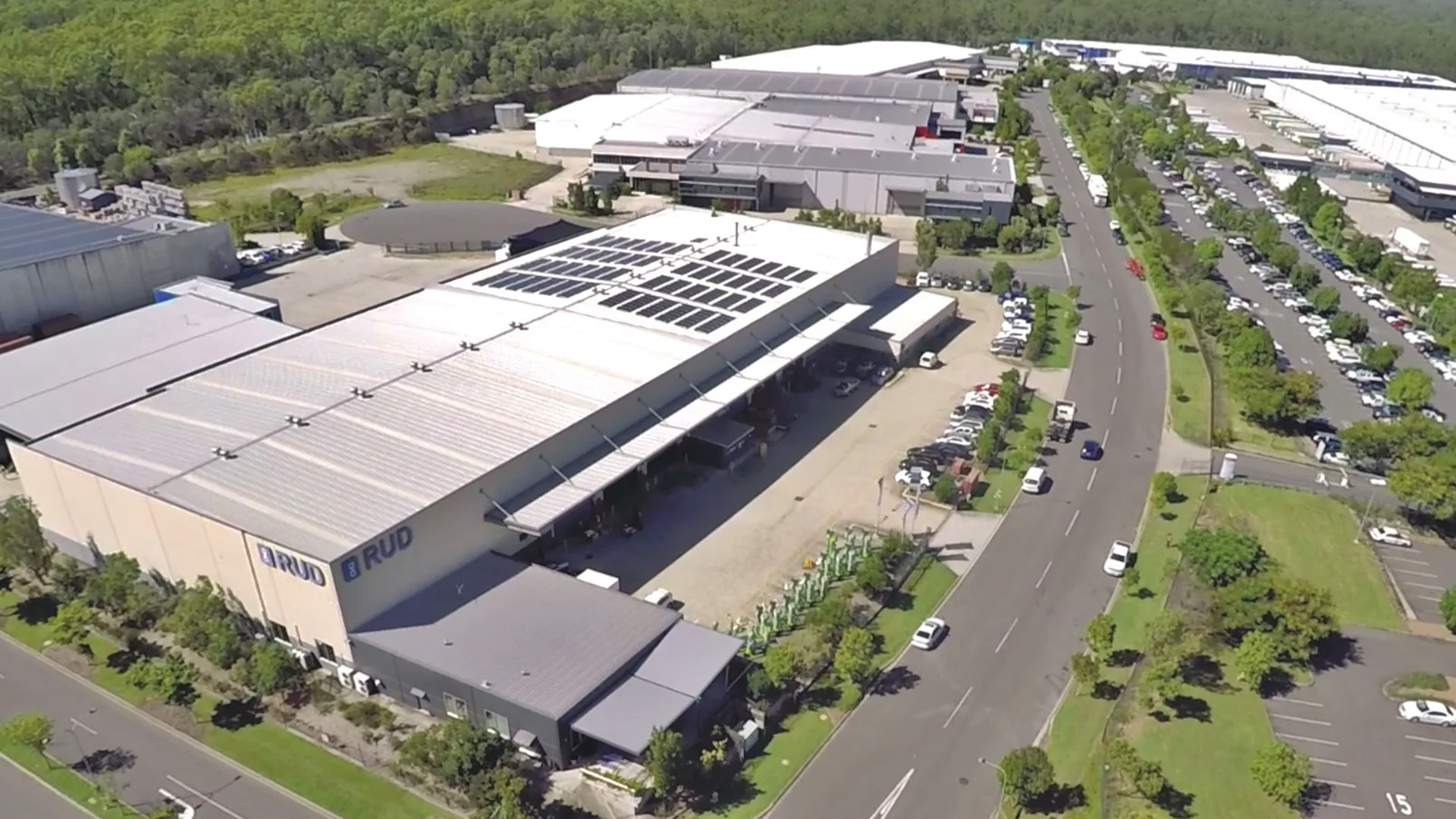
RUD Australia has an advanced 6000m2 engineering and manufacturing facility in Brisbane, which offers bespoke lifting and material handling solutions for the crane industry. The production facility includes expanded positional robotic welding technology and multiple 200/500-tonne test beds, ensuring quality work that exceeds industry standards.
RUD provides customised lifting kits and lashing solutions for the crane industry. RUD’s ICE Grade 120 chains can be tailored to meet specific site requirements. The ICE Grade 120 chain is 30% lighter than Grade 80, a critical safety factor. Additionally, when used with a balancer, a RUD ICE 16 mm chain can lift up to 48 tonnes, which is the highest in its capacity class. Mark Read of SureLift Crane Hire highlights the balancer as a "huge point of difference" that allows them to lift at a higher capacity while maintaining safety.
Brisbane-based Hulk Lifting consistently turns to RUD for lifting and lashing solutions. “Knowing that we’re using RUD’s products provides us with a sense of comfort and reassurance,” says Ben Rose, Director of Hulk Lifting. “RUD really are ‘best-in-show’ for us: through the design, manufacturing and final build stages; everything is simply top-notch.”
RUD designs and manufactures a range of lifting and spreader beams locally, specified to customer applications. We also offer over 700 boltable and weldable lifting points featuring load ranges all the way up to 250 tonnes.
RUD Australia is known for its unrivalled after-sales service and support, which customers highly value. As Mark Read of Surelift Hire notes, “RUD is always available to provide advice on maintenance, new products and different lifting solutions”, which is similarly echoed by Ben of Hulk Lifting, “Whenever we get something in from RUD, there’s always an engineer coming afterwards to inspect the product and ensure that it’s performing exactly as it should.”
The New RUD Sling Configurator
Configuring lifting chains for applications can be time-consuming and complex. Multiple factors influence safety, complicating the choice of the right sling chain. The new Sling Configurator from RUD makes it easier to configure the perfect chain sling for any lifting application in only six easy steps.
In addition to choosing between a VIP-100 and an ICE-120 chain, you also get a choice of components, information on the lifting accessories, tips on lifting and the option to save your chain configuration as a PDF or CAD file and email it to RUD.
The benefits of the RUD Configurator
Calculate lifting means in 6 easy steps
Get a 3D view of the final configuration
Compare components and parts
Download a CAD file that can be used in lift plans
The Sling Configurator gives you a list of the parts in your configuration, which makes it easy to discuss the sling chain with your team and contact us to place an order or for more information.
By combining a long-standing legacy of quality with cutting-edge technology and a strong focus on customer service and safety, RUD aims to be a preferred partner for crane operators seeking a safe and reliable investment.
RUD is holding an open event on 15 October at 12 Commerce Place, Larapinta, QLD 4110. We will showcase our lift technologies for the crane industry, including break tests for chains, lifting beams, and lifting points. We will also demonstrate our new robot and ICE Tensioner load cell technology. Limited spaces, so call us to book your seat!
Interested in our lifting, lashing and chain solutions? Call us on 07 3809 1300 or enquire here.
Copyright to RUD: This information is accurate at the time of publication, and RUD Australia takes no responsibility for any errors, inadvertent or otherwise.
In the challenging world of Australian heavy industry sectors, from construction sites in Sydney or Melbourne to remote mining operations in Western Australia, the safe and efficient operation of heavy material loads is critical. Companies use many products for lifting operations and the two primary ones among them are lifting and spreader beams.
This article delves into lifting and spreader beams, their technical differences and the benefits they add to the job site. We will also discuss how RUD, Australia’s leading lifting equipment provider, caters to clients such as Hulk Lifting and to companies in the crane industry.
What is the Difference between a Spreader Beam and a Lifting Beam?
While both lifting and spreader beams are designed to lift heavy loads, their principles and applications differ. Understanding this difference is key to selecting the right lifting beam or spreader beam for any task.
A spreader beam is a horizontal structure that distributes the weight of a load over multiple points, primarily by converting the lifting forces into compressive stress on the beam itself. The slings from the crane hook attach to the top of the spreader beam, while additional slings connect from the end of the beam down to the load. This ensures the lifting slings remain vertical, eliminating inward horizontal forces that could damage a long, flexible or fragile load. Spreader beams are ideal for lifting long objects like steel girders, pipes or precast concrete slabs, where a wide and stable lift is required to prevent the load from bending, buckling or shifting.
In contrast, a lifting beam is a simple device, typically with a single lifting point in the centre. The lifting beam is designed to withstand bending loads and is used for lifting compact or rigid objects. The load's slings are attached to the bottom of the beam, allowing the load to be lifted from a single overhead point. Lifting beams are useful in situations with low headroom, as their design minimises the vertical space needed for the lift. They are commonly used to lift heavy machinery components, large crates or engine blocks.
In summary, selecting one of the two depends on the load and the space available. A spreader beam is good to manage long, unwieldy loads by distributing forces, while a lifting beam provides a robust, low-profile solution for compact and heavy objects. For any project, consulting with a reputable spreader beam supplier or lifting beam manufacturer is crucial.
Enhancing Safety, Stability and Efficiency
The use of engineered lifting and spreader beams is beneficial beyond just getting the job done. Let’s have a look at the benefits.
Greater Safety: The most important benefit is safety. By distributing the load's weight evenly and preventing concentrated stress points, lifting and spreader beams reduce the risk of equipment failure, dropped loads and injuries. They keep slings from slipping and loads from tilting, creating a controlled and predictable lift. The robust design, in accordance with Australian Standards, provides operators with peace of mind
Increased Lifting Capacity: By spreading the load across multiple points, a spreader beam allows a lifting operation with higher capacity than a single-point lift. This is true for long loads, where the beam's design reduces the stress on the lifting equipment itself, allowing for safer handling of heavier items
Superior Load Stability and Protection: Spreader beams act as a stabilising force, preventing the load from swaying or rotating. This is critical when lifting delicate or irregularly shaped items, as it minimises the risk of damage to the load itself or surrounding equipment. For example, lifting a fragile glass panel or a high-value industrial component with a spreader beam ensures it remains level and secure throughout the entire process
Versatility and Adaptability: Many modern lifting and spreader beams are modular or adjustable, allowing them to be reconfigured for different loads and lifting angles. This versatility means that a single beam can be used for a wide range of jobs, reducing the need for multiple pieces of equipment and saving both time and money
RUD Australia: A Case Study in Engineering Excellence
For decades, RUD has been a global leader in lifting and lashing technology and this expertise is reflected in our Australian operations. Our state-of-the-art 6,000m² facility at 12 Commerce Place in Brisbane is a testament to our commitment to quality and innovation. Our production area is equipped with cutting-edge technology, including a SEVERT robotic welder, laser scanning capabilities and multiple test beds which allow us to design, manufacture and test custom lifting and spreader beams in-house.
The core of our success is our specialised engineering team, which utilises FEA (Finite Element Analysis) software to model and test every beam design before it is manufactured. This rigorous process ensures that each product is robust, optimised for weight reduction and certified. After fabrication, every beam undergoes a physical proof load test to guarantee its performance and compliance. This end-to-end flow in the design and manufacturing process minimises lead times and ensures reliability and safety for clients across the country.
A case study is our work with Hulk Lifting, a Brisbane-based company founded by industry veterans Ben Rose and Mitch Atkinson. We have partnered with Hulk Lifting since its inception in 2008, which is a strong endorsement of our solution-oriented approach. Our collaboration often results in customised lifting beams with specialised RUD lugs. Including a 31.5-tonne capacity W-ABA lug, which can meet specific lifting requirements. This partnership demonstrates how we use local manufacturing and global engineering knowledge to provide bespoke and safe lifting solutions.
Both lifting and spreader beams are critical to safety and efficiency. By embracing technically superior, high-quality lifting equipment, businesses can achieve smoother operations, greater productivity and most importantly, a safer working environment.
For more information on our lifting and spreader beams, call us on 07 3809 1300 or click here to submit an enquiry.
Copyright to RUD: This information is accurate at the time of publication, and RUD Australia takes no responsibility for any errors, inadvertent or otherwise.
DIN 580 eyebolts are among the most widely used lifting points in engineering and metal-processing industries. They are extensively used to lift motors, compressors and industrial equipment. In this article, we discuss why this common eyebolt may not always be the safest to use when the weight of the component to be lifted increases substantially.
The eye in a standard eyebolt is directly connected to the thread and cannot align itself with the direction of pull. This presents a problem with laterally mounted lashing points or in multi-leg applications. If the eye is loaded outside its plane during lifting, the DIN 580 eyebolt will rotate in the direction of the force. This can lead to either loosening or overtightening, increasing the risk of the bolt bending or breaking. Such failures can result in the load falling, potentially damaging the crane, jib, and chain slings and endangering operators. Therefore, in such situations, it is crucial to consider alternatives to traditional eyebolts.
Overcoming the Weak Point in Lifting and Lashing
Most countries lack awareness regarding the importance of lifting, lashing points and load securing systems. While manufacturers and operators rightly prioritise the performance and reliability of crane systems and chain slings, lifting points are often overlooked. High-quality lifting points with defined Working Load Limits (WLL) and certifications are often the exception rather than the rule. Instead, users frequently assume that standardised eyebolts are reliable for lifting high-quality machines and components.
Minimising Safety Risks with RUD Lifting Points
RUD has been a pioneer in developing and manufacturing lifting points that rotate in the direction of the load. With RUD eyebolts, the 360-degree adjustable eye automatically aligns itself with the direction of force as soon as it is loaded during lifting. This significantly mitigates most risk factors associated with eyebolt use in lifting.
However, safety is not limited solely to the eye's rotation. Although most eyebolts operate on the same principle, they are not all equal. The difference lies in manufacturing quality and operation. RUD lifting points are produced to the highest manufacturing standards and can vary in operation; some require tools, while others can be attached with a pre-assembled wrench.
The RUD VRS-F-Starpoint: Enhanced Safety and Convenience
The RUD VRS-F-Starpoint is designed for easy attachment, making it simple and safe for any operation. Its star profile wrench, which serves as an Allen key replacement, is permanently attached to the eye. This provides convenience even during repeated assembly and disassembly. If the bolt remains permanently on the VRS-F, a cranked socket wrench can be used for a single tightening.
The VRS series is available with WLL from 0.1 to 20 tonnes and in thread sizes M6 to M64. It offers significantly higher load capacities than other bolts of the same thread size. This is partly due to its increased load capacity, which allows safe lifting of up to several times the required WLL during vertical lifting operations (0 to 7 degrees). The VRS-F can even be mounted on small contact surfaces or in locations that are challenging due to other components, like hydraulic hoses and other attachments.
Tested and Certified Safety
In addition to robustness and flexibility, the VRS-F Starpoint is extremely durable. It is tested for 20,000 load cycles at 1.5 times overload, is 100 percent crack-tested, and offers four-fold safety against breakage. In Europe, the DGUV (German Legal Accident Insurance) seal confirms the component complies with international safety requirements.
Digitally Ready for the Future
RUD constantly innovates to future-proof its products. The VRS-F Starpoint comes with an RFID transponder as standard. Every RUD product with RFID can be read through the "BUDDYtron" smartphone app or NFC. Users can instantly identify components and access product-specific information such as user instructions and technical data sheets. This simplifies and enables faster planning and execution of lifting operations. Through the lifting accessories and lashing points check function, users can determine whether a component is suitable for any specific lifting operation. Additionally, they can click a picture and email images directly to RUD to get answers to general questions.
From material selection and design to integration of digital solutions, RUD VRS-F Starpoint eyebolts offer a high-quality and flexible solution for greater safety and efficiency in everyday lifting operations.
Copyright to RUD: This information is accurate at the time of publication, and RUD Australia takes no responsibility for any errors, inadvertent or otherwise.
Corrosion is a huge problem in refineries and chemical plants, so how can you ensure safe lifting in such environments?
In industries like oil refineries or petrochemical plants, lifting operations may have unforeseen risks due to substandard lifting points. Imagine this scenario - A tank needs to be lifted for maintenance. The operations team fixes the lifting chains to the welded eyelets on the tank. As the tank is lifted, one eyelet breaks because of a swivel movement. The tank sways to one side, and as the remaining chain cannot handle the load, the other eyelet also breaks, causing the multi-tonne tank to crash. Production is halted, and the unplanned downtime is estimated to cost hundreds of thousands of dollars. Seem familiar? Probably not if you are using RUD lifting points and lifting chains.
The Risk of Standard DIY Lifting Points
Even in everyday lifting operations that involve setup, dismantling, repairs or maintenance, manufacturers and operators of chemical and petrochemical refineries often use substandard lifting points. They can be simple, welded attachments that do not match the requirements of the weight to be lifted and do not have clearly defined nominal load capacities, safety factors, or certifications. Even if the cranes use specified lifting chains, it highlights the weakest link: the actual connection points.
Relying on such substandard lifting points is a critical safety risk. Many operators are not aware that such lifting points fail to meet safety requirements, and their functionality is assumed, even after years of exposure to operational stresses. Visible deformations on many lifting points, even after a single lifting, clearly indicate their inadequate safety.
Corrosion and Environmental Factors
The harsh operating environments of chemical and petrochemical refineries can accelerate the risks of substandard lifting points. High process temperatures, hot steam, noxious gases, dust, and outdoor elements can significantly impact components and their welded lifting points. While simple lifting points made of inferior structural steel can corrode easily and may be visible, they will not be so easily detectable with stainless steel. Stainless steel is used to prevent embrittlement and flaking of coatings, but the lifting point may not be rated for lifting or load bearing, which may lead to catastrophic failures.
RUD Stainless Steel Anchor Points
RUD's INOX-ABA, launched a few years ago, is a significant development suited for industries that face corrosion. It is manufactured in Germany and has been tested by DGUV. INOX-ABA is the first lifting point made from duplex steel 1.4462, offering superior corrosion resistance (PREN value 30.9 to 38.0).
High Performance and Broad Applicability
INOX-ABA lifting points are currently available with nominal working load limits of 0.8, 1.6, and 2.7 tonnes and are certified for maritime environments. They are part of the ABA family and were developed from the popular W-ABA weld-on lifting point for safe lifting in harsh environments.
Full WLL in any direction with 4:1 design factor
Clear marking of the WLL
Patented wear markings on the inside and outside
INOX-ABA can tolerate a broad temperature range from -40°C to +250°C with no reduction in WLL. It can withstand superheated steam and liquids with high chloride content and is long-term resistant to pitting and surface corrosion. A closed and circumferential fillet weld further protects it against rusting.
The high corrosion resistance of INOX-ABA ensures safe lifting over long periods. It is also safe for food processing because coatings or material particles cannot contaminate it. Patented wear indicators act as a safety visual aid and the magnetic properties of duplex steel 1.4462 aid in electromagnetic crack detection.
In addition, INOX-ABA lifting points allow for highly stable "black-and-white connections," enabling integration beyond stainless steel surfaces to structural steel components without compromising safety or corrosion resistance, offering broad utilisation across plants and refineries.
The introduction of duplex stainless-steel lifting points from RUD marks a new chapter in lifting technology for refineries. There is no justification to use unsafe and substandard lifting points that compromise safety. RUD’s corrosion-resistant lifting points guarantee safe lifting even after years of use and prevent contamination - benefits that substandard welded points cannot provide.
DIY points are not designed and rated for lifting. They are unsafe, potentially risky and may be illegal under safety standards. By contrast, investing in high-quality, rated lifting points with defined load capacities and safety factors effectively minimises risks to personnel and materials. In such cases, the responsibility of the load capacity rests on the manufacturer, ensuring user compliance. Investing in secure stainless steel anchor solutions for harsh environments should be the only long-term investment for safety.
Copyright to RUD: This information is accurate at the time of publication, and RUD Australia takes no responsibility for any errors, inadvertent or otherwise.
RUD Australia celebrated 40 years in November 2024. From humble beginnings in 1984 in a garage on the south side of Brisbane to a 6000m2 facility in Larapinta QLD, including an office and warehouse in Perth, we have come a long way as one of the most trusted companies in the lifting, lashing and material handling industry.
Our journey continues:
1984 - Jonathan Street - RUD Australia started in November 1984 in Peter Nuttall Senior’s garage in Macgregor, Brisbane.
1991 - Success Street - RUD Australia built a 1500m2 facility at Success Street in Acacia Ridge.
2005 - West Link Place - RUD Australia moved into a 3000m2 facility at West Link Place, Richlands.
2008 - Bassendean, Perth - We expanded into Bassendean, Perth, with an office and warehouse to service the growing WA market.
2013 - Commerce Place - In 2013, we invested significantly in our long-term future with a 6000m2 facility that currently includes our head office, engineering, warehouse, and fabrication divisions.
We celebrated our 40th anniversary with a gala dinner event in Brisbane. The evening was filled with fun, entertainment, camaraderie and speeches, going down memory lane of the 40-year journey.
With a 40-year history in Australia, RUD is committed to excellence in chain technology. We strive to be at the forefront of technology and innovation, such as our latest 9-axis robotic welder, which will drive our growth through continuous improvement for the future.
Part 2 of the 2-part article.Click hereto read Part 1.
Risk Analysis: A Crucial Step for Integrated and Attachable Lifting Points
A comprehensive risk analysis is mandatory before conducting a lift, whether utilising integrated or attachable lifting points. This analysis should consider the following key aspects regarding lifting points:
The lifting point or lifting eye should not have any sharp edges.
The lift point must be suitable for the hooks/shackles/slings being used.
Wall thicknesses and edge distances must be assessed to ensure the load can be transferred appropriately into the structure.
The product-specific marking must be provided.
Lifting Point Selection Criteria
Choosing the appropriate lifting point is crucial for ensuring the safety and efficiency of any lifting operation. Here are some key factors to consider during the selection process:
Mass and Centre of Gravity: The payload's mass and centre of gravity are the primary determinants. Lifting points with a Working Load Limit (WLL) equal to or exceeding the load weight must be selected. Additionally, the centre of gravity will influence the number and placement of lifting points required for balanced lifting.
Number of Lifting Points and Lifting Configuration: The number of lifting points depends on the number of legs in the lifting sling and the desired lifting configuration (single-leg, multi-leg). The chosen configuration will impact the overall WLL of the lifting system.
Deduction Factors: External factors like tilt angle and temperature fluctuations can affect the WLL of a lifting point. Deduction factors specific to the anticipated lifting scenario should be considered during selection.
Lifting Point Type and WLL: Based on the load weight, lifting configuration, and deduction factors, a lifting point with an appropriate WLL and suitable type (boltable, weldable, rigid, swivel) must be chosen.
Verification and Documentation
The selected lifting point should possess a valid test certificate conforming to the relevant standards. This certification verifies that the manufacturer adheres to stringent testing protocols, including proof load application, destructive tensile tests, and crack detection procedures.
Design and Calculation Resources
Providing engineers access to 2D/3D CAD design documents and calculation programs can significantly enhance the lifting point selection process. These resources allow engineers to incorporate lifting points directly into technical drawings while considering factors impacting WLL calculations, such as:
The number of lifting strands/legs.
Potential angle variations during the lift.
The symmetry or asymmetry of the lifted object.
Simplified Lifting Point Inspection with RFID Technology
Regular inspection and maintenance of lifting points are essential for safe operation. RUD offers lifting points equipped with RFID transponders. These transponders contain unique identification numbers that a dedicated reader can scan to transmit data to cloud-based software. This technology simplifies inspection recordkeeping and allows for convenient access to vital lifting point information.
Click here to see the RUD ACP-TURNADO, the world’s first intelligent lifting point with RFID.
Lifting Point Purchasing Checklist
To streamline the selection process, consider this checklist when purchasing lifting points:
Is the lifting point type specified in the project plan?
How many lifting points are needed per component?
What is the required WLL for the lifting point?
Are there any specific design dimensions to consider?
What are the anticipated loading directions for the lifting point?
Are there any necessary approvals or certifications required for the lifting point?
By following these guidelines and utilising available resources, you can ensure the selection of the most suitable lifting points for your specific lifting applications, promoting a safe and efficient operation. RUD Australia has a team of experienced, CPEng-qualified engineers who can assist you in selecting the correct lifting points for your application.
Article copyright to RUD Group. This information is accurate at the time of publication, and RUD Australia takes no responsibility for any errors, inadvertent or otherwise.
This is a 2 part article.
Lifting points are fundamental elements within any lifting system. They are the crucial connection between lifting equipment (cranes, hoists) and the load itself, facilitating lifting, rotating, and manoeuvring operations. Common lifting point examples include eyebolts, swivel load rings and pad eyes, which connect to lifting chains using hooks, shackles, or other dedicated connectors. Modern lifting points are engineered to ensure safe load handling and to prevent damage throughout the lifting and transportation process.
Integrating Lifting Points at the Design Stage
With over 140 years of experience, RUD recognises that lifting points are often overlooked during the initial design phase. This can lead to complications and potential safety hazards later in the project. Incorporating lifting points should be prioritised from the outset to prevent such issues. This includes considering lifting requirements throughout the product lifecycle, from production and internal transportation to delivery, installation, assembly, and even potential relocation or decommissioning. Implementing lifting points at each stage minimises risk and promotes smooth operation. During the design phase, collaboration between the engineering, production, logistics, and supply chain management teams ensures proper lifting point integration.
Evolution of Lifting Points: From Simple Eye Bolts to Modern Safety Standards
Over time, lifting point design has evolved to comply with changing regulations and safety requirements. Four decades ago, DIN 580 eyebolts were the most prevalent lifting point option. However, a series of accidents in German underground operations, attributed to eyebolt breakage, necessitated stricter standards. These types of incidents regarding the misuse of collared eyebolts led to the development of modern lifting points, offering significantly higher safety margins against breakage in all directions. As a result, collared eyebolts such as DIN 580 and AS 2317.1 eyebolts are no longer the preferred choice for lifting points.
The Role of Lifting Points in Conjunction with Lifting Equipment
Lifting points play a vital role when working with lifting equipment like cranes, crane trucks, and material-handling machinery. Lifting chains that connect the machine to the load rely on these critical components. In Australia, specific standards for lifting (e.g. AS 4991, AS 3775.2, AS 3776) set the requirements for various lifting gear, prioritising operator safety. This focus on safety emphasises the importance of selecting the most suitable lifting gear for each application.
Types of Lifting Points: Boltable vs. Weldable, Rigid vs. Swivel
Lifting points are generally categorised into two primary types: boltable and weldable. Boltable options are the most common due to their versatility, allowing for easy assembly and disassembly as needed. They are available for standard thread sizes, offering maximum flexibility. Conversely, weldable lifting points are permanently affixed to the load. Their primary advantage is eliminating accidental unscrewing or over-tightening during load rotation or turning. Beyond these classifications, lifting points can also be rigid or swivelling. Rigid variants, such as collared eyebolts or pad eyes, lack adjustability in the pulling direction. Swivel lifting points, on the other hand, offer greater flexibility. They are commonly employed in multi-strand lifting applications, as they can automatically align themselves with the lifting force during load handling.
Advantages of Lifting Points with Swivel and Rotation Capabilities
Lifting points specifically designed for rotating and turning applications offer additional benefits, translating into increased value. These points often integrate ball bearings, enabling a full Working Load Limit (WLL) under rotation. This makes them ideal for scenarios requiring load manipulation during lifting. The ball bearings significantly reduce sudden and unwanted movements during rotation, a crucial safety feature. Achieving smooth, impact-free rotation under load is only possible with these bearings.
WLL is a critical industry term indicating the working load a lifting point can be subject to. Selecting appropriate lifting points necessitates a thorough understanding of their WLLs. Several factors influence a lifting point's WLL, including its attachment method, positioning, load symmetry, and the number of lift points used.
To be continued ...
Article copyright to RUD Group. This information is accurate at the time of publication, and RUD Australia takes no responsibility for any errors, inadvertent or otherwise.