The RUD Group is pleased to announce the official launch of RUD Lifting Switzerland - a brand-new local competence centre and logistics hub in Bischofszell, Thurgau.
This new venture makes RUD more accessible to our customers in Switzerland. Henceforth, all RUD lifting, lashing, and chain components will be available quickly through smart logistics and expert support through the team led by Managing Director Uwe Lieber. Together with sales and distribution partners, RUD is ready to elevate service and reliability to the next level.
At RUD, we believe in more than just products - we believe in solutions that make lifting and lashing safe, efficient and future-proof. With the new office, we are combining global strength with local know-how. Click here for a list of our worldwide locations.
Founded in Germany in 1875 and celebrating 150 years in 2025, the RUD Group is a global leader in chain technology and lifting solutions. It currently employs over 1,700 employees and sells products in more than 140 countries. RUD was founded by the Rieger family, which continues to blaze a path with a strong legacy of innovation, quality, and technical excellence.
RUD Australia was established in 1984 and has been led by the Nuttall family since its inception. For the past 40 years, it has been supporting the crane industry with innovative lifting and lashing solutions through local offices across Australia and New Zealand.
RUD's focus on safety is exemplified by the quality of its products, especially the ICE 120 chain slings, which are manufactured to meet the highest safety standards for crane operators and on-site staff. Mark Read, Director of SureLift Crane Hire, a long-term RUD customer, attests to the quality of RUD's chain slings, testifying that they are the "best chains in the industry". SureLift Crane Hire, which started with one crane in Moranbah, Queensland, now operates over 16 cranes and exclusively uses RUD products because of their performance, which Mark believes "embodies the message of safety."
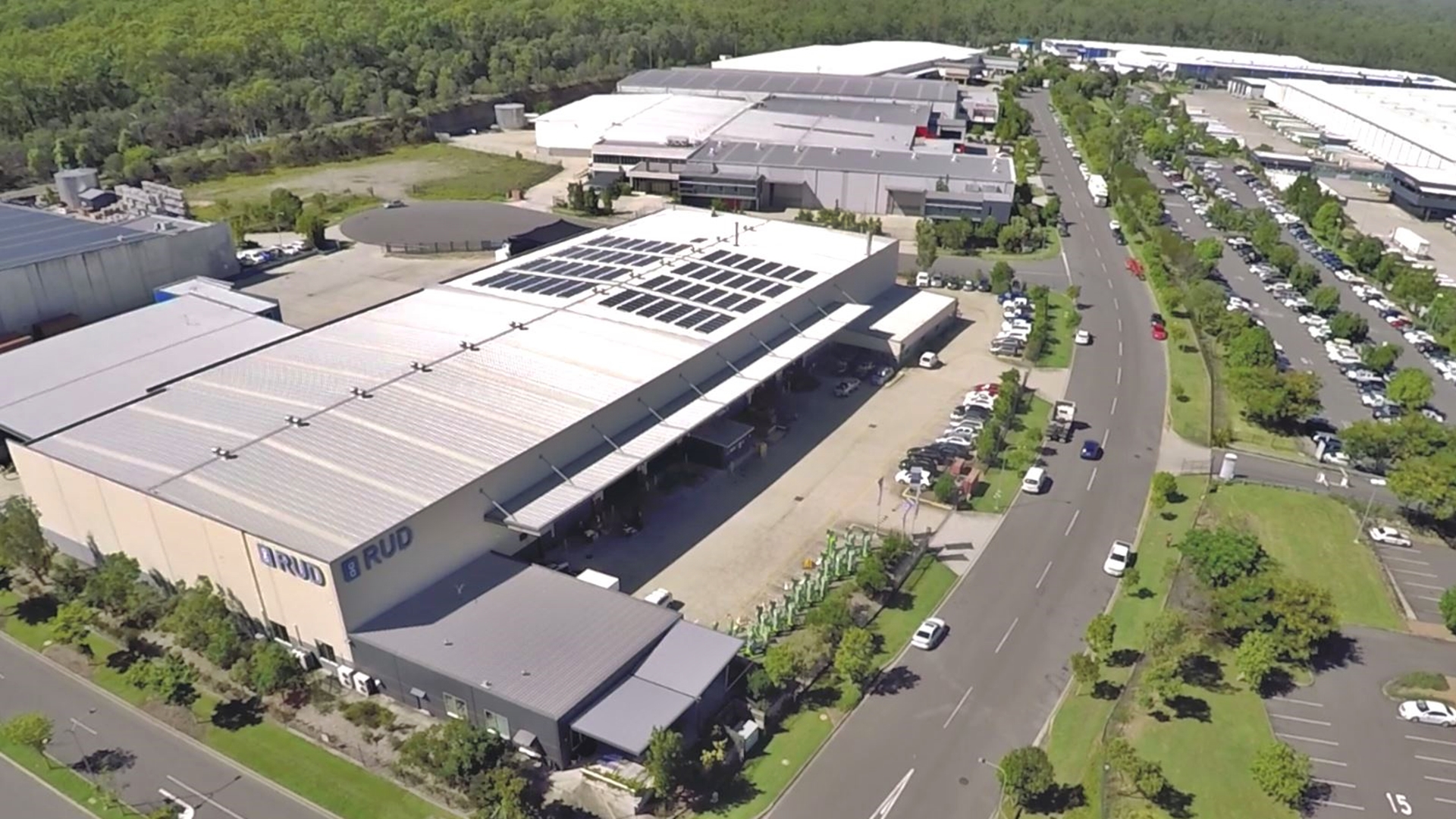
RUD Australia has an advanced 6000m2 engineering and manufacturing facility in Brisbane, which offers bespoke lifting and material handling solutions for the crane industry. The production facility includes expanded positional robotic welding technology and multiple 200/500-tonne test beds, ensuring quality work that exceeds industry standards.
RUD provides customised lifting kits and lashing solutions for the crane industry. RUD’s ICE Grade 120 chains can be tailored to meet specific site requirements. The ICE Grade 120 chain is 30% lighter than Grade 80, a critical safety factor. Additionally, when used with a balancer, a RUD ICE 16 mm chain can lift up to 48 tonnes, which is the highest in its capacity class. Mark Read of SureLift Crane Hire highlights the balancer as a "huge point of difference" that allows them to lift at a higher capacity while maintaining safety.
Brisbane-based Hulk Lifting consistently turns to RUD for lifting and lashing solutions. “Knowing that we’re using RUD’s products provides us with a sense of comfort and reassurance,” says Ben Rose, Director of Hulk Lifting. “RUD really are ‘best-in-show’ for us: through the design, manufacturing and final build stages; everything is simply top-notch.”
RUD designs and manufactures a range of lifting and spreader beams locally, specified to customer applications. We also offer over 700 boltable and weldable lifting points featuring load ranges all the way up to 250 tonnes.
RUD Australia is known for its unrivalled after-sales service and support, which customers highly value. As Mark Read of Surelift Hire notes, “RUD is always available to provide advice on maintenance, new products and different lifting solutions”, which is similarly echoed by Ben of Hulk Lifting, “Whenever we get something in from RUD, there’s always an engineer coming afterwards to inspect the product and ensure that it’s performing exactly as it should.”
The New RUD Sling Configurator
Configuring lifting chains for applications can be time-consuming and complex. Multiple factors influence safety, complicating the choice of the right sling chain. The new Sling Configurator from RUD makes it easier to configure the perfect chain sling for any lifting application in only six easy steps.
In addition to choosing between a VIP-100 and an ICE-120 chain, you also get a choice of components, information on the lifting accessories, tips on lifting and the option to save your chain configuration as a PDF or CAD file and email it to RUD.
The benefits of the RUD Configurator
Calculate lifting means in 6 easy steps
Get a 3D view of the final configuration
Compare components and parts
Download a CAD file that can be used in lift plans
The Sling Configurator gives you a list of the parts in your configuration, which makes it easy to discuss the sling chain with your team and contact us to place an order or for more information.
By combining a long-standing legacy of quality with cutting-edge technology and a strong focus on customer service and safety, RUD aims to be a preferred partner for crane operators seeking a safe and reliable investment.
RUD is holding an open event on 15 October at 12 Commerce Place, Larapinta, QLD 4110. We will showcase our lift technologies for the crane industry, including break tests for chains, lifting beams, and lifting points. We will also demonstrate our new robot and ICE Tensioner load cell technology. Limited spaces, so call us to book your seat!
Interested in our lifting, lashing and chain solutions? Call us on 07 3809 1300 or enquire here.
Copyright to RUD: This information is accurate at the time of publication, and RUD Australia takes no responsibility for any errors, inadvertent or otherwise.
In the challenging world of Australian heavy industry sectors, from construction sites in Sydney or Melbourne to remote mining operations in Western Australia, the safe and efficient operation of heavy material loads is critical. Companies use many products for lifting operations and the two primary ones among them are lifting and spreader beams.
This article delves into lifting and spreader beams, their technical differences and the benefits they add to the job site. We will also discuss how RUD, Australia’s leading lifting equipment provider, caters to clients such as Hulk Lifting and to companies in the crane industry.
What is the Difference between a Spreader Beam and a Lifting Beam?
While both lifting and spreader beams are designed to lift heavy loads, their principles and applications differ. Understanding this difference is key to selecting the right lifting beam or spreader beam for any task.
A spreader beam is a horizontal structure that distributes the weight of a load over multiple points, primarily by converting the lifting forces into compressive stress on the beam itself. The slings from the crane hook attach to the top of the spreader beam, while additional slings connect from the end of the beam down to the load. This ensures the lifting slings remain vertical, eliminating inward horizontal forces that could damage a long, flexible or fragile load. Spreader beams are ideal for lifting long objects like steel girders, pipes or precast concrete slabs, where a wide and stable lift is required to prevent the load from bending, buckling or shifting.
In contrast, a lifting beam is a simple device, typically with a single lifting point in the centre. The lifting beam is designed to withstand bending loads and is used for lifting compact or rigid objects. The load's slings are attached to the bottom of the beam, allowing the load to be lifted from a single overhead point. Lifting beams are useful in situations with low headroom, as their design minimises the vertical space needed for the lift. They are commonly used to lift heavy machinery components, large crates or engine blocks.
In summary, selecting one of the two depends on the load and the space available. A spreader beam is good to manage long, unwieldy loads by distributing forces, while a lifting beam provides a robust, low-profile solution for compact and heavy objects. For any project, consulting with a reputable spreader beam supplier or lifting beam manufacturer is crucial.
Enhancing Safety, Stability and Efficiency
The use of engineered lifting and spreader beams is beneficial beyond just getting the job done. Let’s have a look at the benefits.
Greater Safety: The most important benefit is safety. By distributing the load's weight evenly and preventing concentrated stress points, lifting and spreader beams reduce the risk of equipment failure, dropped loads and injuries. They keep slings from slipping and loads from tilting, creating a controlled and predictable lift. The robust design, in accordance with Australian Standards, provides operators with peace of mind
Increased Lifting Capacity: By spreading the load across multiple points, a spreader beam allows a lifting operation with higher capacity than a single-point lift. This is true for long loads, where the beam's design reduces the stress on the lifting equipment itself, allowing for safer handling of heavier items
Superior Load Stability and Protection: Spreader beams act as a stabilising force, preventing the load from swaying or rotating. This is critical when lifting delicate or irregularly shaped items, as it minimises the risk of damage to the load itself or surrounding equipment. For example, lifting a fragile glass panel or a high-value industrial component with a spreader beam ensures it remains level and secure throughout the entire process
Versatility and Adaptability: Many modern lifting and spreader beams are modular or adjustable, allowing them to be reconfigured for different loads and lifting angles. This versatility means that a single beam can be used for a wide range of jobs, reducing the need for multiple pieces of equipment and saving both time and money
RUD Australia: A Case Study in Engineering Excellence
For decades, RUD has been a global leader in lifting and lashing technology and this expertise is reflected in our Australian operations. Our state-of-the-art 6,000m² facility at 12 Commerce Place in Brisbane is a testament to our commitment to quality and innovation. Our production area is equipped with cutting-edge technology, including a SEVERT robotic welder, laser scanning capabilities and multiple test beds which allow us to design, manufacture and test custom lifting and spreader beams in-house.
The core of our success is our specialised engineering team, which utilises FEA (Finite Element Analysis) software to model and test every beam design before it is manufactured. This rigorous process ensures that each product is robust, optimised for weight reduction and certified. After fabrication, every beam undergoes a physical proof load test to guarantee its performance and compliance. This end-to-end flow in the design and manufacturing process minimises lead times and ensures reliability and safety for clients across the country.
A case study is our work with Hulk Lifting, a Brisbane-based company founded by industry veterans Ben Rose and Mitch Atkinson. We have partnered with Hulk Lifting since its inception in 2008, which is a strong endorsement of our solution-oriented approach. Our collaboration often results in customised lifting beams with specialised RUD lugs. Including a 31.5-tonne capacity W-ABA lug, which can meet specific lifting requirements. This partnership demonstrates how we use local manufacturing and global engineering knowledge to provide bespoke and safe lifting solutions.
Both lifting and spreader beams are critical to safety and efficiency. By embracing technically superior, high-quality lifting equipment, businesses can achieve smoother operations, greater productivity and most importantly, a safer working environment.
For more information on our lifting and spreader beams, call us on 07 3809 1300 or click here to submit an enquiry.
Copyright to RUD: This information is accurate at the time of publication, and RUD Australia takes no responsibility for any errors, inadvertent or otherwise.
DIN 580 eyebolts are among the most widely used lifting points in engineering and metal-processing industries. They are extensively used to lift motors, compressors and industrial equipment. In this article, we discuss why this common eyebolt may not always be the safest to use when the weight of the component to be lifted increases substantially.
The eye in a standard eyebolt is directly connected to the thread and cannot align itself with the direction of pull. This presents a problem with laterally mounted lashing points or in multi-leg applications. If the eye is loaded outside its plane during lifting, the DIN 580 eyebolt will rotate in the direction of the force. This can lead to either loosening or overtightening, increasing the risk of the bolt bending or breaking. Such failures can result in the load falling, potentially damaging the crane, jib, and chain slings and endangering operators. Therefore, in such situations, it is crucial to consider alternatives to traditional eyebolts.
Overcoming the Weak Point in Lifting and Lashing
Most countries lack awareness regarding the importance of lifting, lashing points and load securing systems. While manufacturers and operators rightly prioritise the performance and reliability of crane systems and chain slings, lifting points are often overlooked. High-quality lifting points with defined Working Load Limits (WLL) and certifications are often the exception rather than the rule. Instead, users frequently assume that standardised eyebolts are reliable for lifting high-quality machines and components.
Minimising Safety Risks with RUD Lifting Points
RUD has been a pioneer in developing and manufacturing lifting points that rotate in the direction of the load. With RUD eyebolts, the 360-degree adjustable eye automatically aligns itself with the direction of force as soon as it is loaded during lifting. This significantly mitigates most risk factors associated with eyebolt use in lifting.
However, safety is not limited solely to the eye's rotation. Although most eyebolts operate on the same principle, they are not all equal. The difference lies in manufacturing quality and operation. RUD lifting points are produced to the highest manufacturing standards and can vary in operation; some require tools, while others can be attached with a pre-assembled wrench.
The RUD VRS-F-Starpoint: Enhanced Safety and Convenience
The RUD VRS-F-Starpoint is designed for easy attachment, making it simple and safe for any operation. Its star profile wrench, which serves as an Allen key replacement, is permanently attached to the eye. This provides convenience even during repeated assembly and disassembly. If the bolt remains permanently on the VRS-F, a cranked socket wrench can be used for a single tightening.
The VRS series is available with WLL from 0.1 to 20 tonnes and in thread sizes M6 to M64. It offers significantly higher load capacities than other bolts of the same thread size. This is partly due to its increased load capacity, which allows safe lifting of up to several times the required WLL during vertical lifting operations (0 to 7 degrees). The VRS-F can even be mounted on small contact surfaces or in locations that are challenging due to other components, like hydraulic hoses and other attachments.
Tested and Certified Safety
In addition to robustness and flexibility, the VRS-F Starpoint is extremely durable. It is tested for 20,000 load cycles at 1.5 times overload, is 100 percent crack-tested, and offers four-fold safety against breakage. In Europe, the DGUV (German Legal Accident Insurance) seal confirms the component complies with international safety requirements.
Digitally Ready for the Future
RUD constantly innovates to future-proof its products. The VRS-F Starpoint comes with an RFID transponder as standard. Every RUD product with RFID can be read through the "BUDDYtron" smartphone app or NFC. Users can instantly identify components and access product-specific information such as user instructions and technical data sheets. This simplifies and enables faster planning and execution of lifting operations. Through the lifting accessories and lashing points check function, users can determine whether a component is suitable for any specific lifting operation. Additionally, they can click a picture and email images directly to RUD to get answers to general questions.
From material selection and design to integration of digital solutions, RUD VRS-F Starpoint eyebolts offer a high-quality and flexible solution for greater safety and efficiency in everyday lifting operations.
Copyright to RUD: This information is accurate at the time of publication, and RUD Australia takes no responsibility for any errors, inadvertent or otherwise.
Due to the extreme nature of the ocean environment, undertaking projects presents formidable challenges. Constructing subsea pipelines and platform foundations, for example, demands not only technological sophistication but also intricate logistical planning. Such endeavours are rigorous, requiring strict adherence to completion deadlines and to the highest safety standards.
The Pitfalls of Conventional Lifting in Subsea Environments
Accurate lifting and positioning of pipes and foundations are critical in these projects. However, factors such as poor visibility, strong waves, unexpected currents, difficult terrain, high water pressure, and buoyancy can significantly impede safe underwater load movement. Using conventional hooks in these conditions is risky because they are not designed for such extreme environments. Their attachment and detachment by Remotely Operated Vehicles (ROVs) become complex and time-consuming.
Moreover, conventional hooks are susceptible to load snagging and shedding. Contact with underwater objects can cause them to get stuck or even open unintentionally. This not only interrupts load movement but, if the hook opens, can result in the catastrophic loss of the load at sea.
Minimising Process Risks with the ROV-HOOK
To mitigate these substantial process risks, there is a high demand for lifting hooks that ROVs can manage efficiently. The ROV-HOOK, developed by RUD in collaboration with British pipeline specialist Subsea7, offers an ideal solution. Subsea7, a global leader in delivering offshore projects and services for the energy industry, partnered with RUD to address the rigging issues it faced with conventional ROV hooks.
The ROV-HOOK's design facilitates easy and quick attachment and detachment by ROVs, virtually eliminating load snagging and shedding. Its smooth, rounded profile, free from protruding parts, significantly reduces the risk of catching and prevents accidental opening. The safety latch securely locks in the closed position and only opens outwards, preventing inward pressure even under immense force. A double safety catch on the lever side stops the locking mechanism from being unintentionally unlocked by accidental contact. The ROV-HOOK can only be unlocked by simultaneously squeezing two opposing release levers, either manually or using an ROV manipulator. When the levers are released, the safety latch automatically closes.
Safety-Friendly Design for Optimal Performance
The RUD ROV-HOOK is engineered for optimal grip and is compatible with all standard ROV manipulators, including the 'grabber'. This minimises the time required for subsea attachment and detachment. It operates without restriction at depths of several thousand metres and is available in two versions with a maximum Working Load Limit (WLL) of 10 or 25 tonnes.
The ROV-HOOK boasts a fourfold safety margin against damage, tolerating four times its official maximum load in extreme circumstances. Each ROV-HOOK is also equipped with an RFID transponder featuring a unique identification number, allowing users to conveniently read vital information, such as the WLL, on location. This provides a high-quality, state-of-the-art hook solution that ensures safe lifting and positioning, including rapid attachment and detachment. It is already being used for subsea pipeline construction, platform foundation installation, and other subsea structures, including by its co-developer, Subsea7.
Copyright to RUD: This information is accurate at the time of publication, and RUD Australia takes no responsibility for any errors, inadvertent or otherwise.
Welcome aboard Australia’s leading material lifting and handling technology company. Our quarterly newsletter gives a sneak peek about our company, our products, news, blog posts, and everything happening at RUD in Australia and worldwide. Click the picture below to open the full view.
Safety is critical in any truck or bus workshop. The weight of the heavy vehicles can pose a risk if the right equipment is not used for lifting or hoisting. While heavy vehicle hoists are an integral part of the workshop for raising or lowering the vehicles, accessories can play an important part when combined with the hoists. We discuss why workshop accessories such as Vehicle Stands, A-Frame Trailer Adaptors and Small Wheel Adaptors can support any workshop and how they can enhance safety and optimise workflow.
Vehicle Stands
Vehicle stands act as a fail-safe support, preventing accidents if a hoist fails. In bus and truck workshops, they can be a safety net to avoid injury. Vehicle stands and ramps come under Australian standards AS/NZS 2538:2016, which mandate their design and safety. Vehicle stands can free up hoists for other vehicles and optimise productivity. Vehicle stands can provide easier maintenance access, such as tyre changes and brake repairs. Since they are adjustable, they can be set at any height, allowing comfortable access and reducing physical strain.
Feature
Safety Benefits
Convenience Benefits
Secondary Support
Prevents collapse from hoist failure; Reduces crushing risk
Frees up hoists for other vehicles/tasks
Adjustable Height
Ensures vehicle stability during work; Supports working at a comfortable height
Offers flexible working heights for various repairs
Stable Base
Enhances overall vehicle stability; Prevents tipping or shifting
Improves access for undercarriage work (tyres, oil, brakes, exhaust)
Clear Markings (Load Capacity, Warnings)
Provides clear guidance for safe use; Prevents overloading
Easy identification of safe use parameters
Robust Materials
Withstands heavy loads; Ensures structural integrity
Ensures long-lasting, reliable performance
Compliance with AS/NZS 2538:2016
Meets mandatory safety standards; Provides peace of mind
Happier team morale
A-Frame Trailer Adaptors
Endurequip A-Frame Trailer Adaptors are available with ratings up to 12 tonnes and are compatible with 89mm and 111mm Kingpin sizes. They enable easy trailer lifting for brake and exhaust system repairs.
These adaptors allow the workshops to service a broader range of trailers using current hoists. They offer a safe solution without special adaptors. They are designed for ease of use and stability, ensuring safe lifting of trailers.
Small Wheel Adaptors
Want to service smaller-sized vehicles? Small Wheel Adaptors (SWA) can do the job. When fitted with SWA, your heavy vehicle hoists can lift smaller vehicles such as cars, small trucks and minibuses. With a capacity of 2 tonnes (when used as a pair), SWAs offer a cost-effective alternative to separate car lifts, enabling workshops to service mixed fleets and expand into general automotive repair.
Click here for the Endurequip range of Workshop Accessories.
Safety, Efficiency, and Compliance
Australian workshops are required to comply with health and safety laws and Australian Standards. Compliance can be beneficial in not just preventing accidents or injuries but also reducing legal liabilities. Regular inspections and preventive maintenance are paramount.
A well-organised workshop with accessories can boost productivity, service bay utilisation, and workflow. Your heavy vehicle hoists can service a wider range of vehicles and are also freed for continuous use. Accessories help with quick turnaround times, better quality work, and increased daily service capacity.
Choosing high-quality, certified equipment from Endurequip or Finkbeiner ensures integration with your heavy vehicle hoists. Your additional investment can yield returns in the long term by enhancing safety, improving morale and boosting profitability.
Possible Hazard
Accessory
How it Mitigates
Safety/Efficiency Outcome
Vehicle Collapse / Instability
Vehicle Stands
Provide secondary support; act as a fail-safe against hoist failure; ensure vehicle stability
Prevent injuries, reduce downtime and repairs and ensure compliance
Injuries
Vehicle Stands
Create a stable working environment under lifted vehicles, preventing drops
Prevents injuries; improves worker confidence
Falls from Height
Vehicle Stands, A-Frame Trailer Adaptors, Small Wheel Adaptors
Allow mechanics to work at comfortable, stable heights, reducing fatigue
Improves working conditions; reduces risk of falls and injuries
Manual Handling Strain
Vehicle Stands
Support vehicles at heights, reducing bending, lifting, and fatigue-inducing postures
Reduces injuries; improves comfort and productivity
Limited Access / Inefficient Workflow
Vehicle Stands, A-Frame Trailer Adaptors, Small Wheel Adaptors
Free up hoists for continuous use; expand the range of vehicles/trailers that can be serviced; streamline setup and access
Increases workshop productivity; expands service capabilities; optimises space utilisation
Equipment Damage (Vehicle/Hoist)
Small Wheel Adaptors, A-Frame Trailer Adaptors
Ensure proper load distribution and secure engagement, preventing stress on hoist components or vehicle damage from improper lifting
Extends equipment lifespan; reduces repairs to vehicles and hoists
Elevate Your Standards and Your Success
Workshop accessories support heavy vehicle hoists, enhancing safety, optimising efficiency, and driving profitability. Our Vehicle Stands, A-Frame Trailer Adaptors, and Small Wheel Adaptors are indispensable to any heavy vehicle workshop. They support safety and vehicle stability and are compliant with Australian standards. The accessories also offer convenience and versatility by maximising hoist utilisation, streamlining jobs and boosting productivity. They can also reduce strain on mechanics and create a productive workforce. By investing in our accessories, you can help to create a safe and efficient environment, not just for your employees but also for your customers.
For more information on robust, Australian standards-compliant workshop accessories, call us on 07 3809 1300.
Copyright to RUD: This information is accurate at the time of publication, and RUD Australia takes no responsibility for any errors, inadvertent or otherwise.
RUD is a globally recognised leader in conveyor and drive systems. Beyond manufacturing, supplying and installing conveyor systems and components, RUD also provides comprehensive after-sales service and support. Our capabilities span the full lifecycle of conveying solutions - From initial design and engineering to manufacturing and ongoing operational support. Our commitment extends beyond our own systems; we offer expert advice and recommendations for all conveyor and drive installations, irrespective of the original manufacturer.
In Australia, RUD is a preferred partner for many companies requiring engineering, project planning, system commissioning, and ongoing servicing. We leverage our technical expertise and understanding of the Australian market to deliver the most appropriate solutions for your specific requirements.
As a technical expert, we possess high competency in designing and constructing conveyor systems for heavy bulk materials
We offer a variety of system solutions for conveying, driving, or lifting applications, including complete system integration
We construct and manufacture specialised bucket conveyors, scraper conveyors, and custom drive solutions for both conveying and lifting purposes
Our engineers possess extensive technical expertise, enabling them to solve complex conveyance in challenging conditions
A RUD service expert or application engineer can visit you for on-site support during system installation, reconstruction or routine maintenance
Our Services:
Consultation and recommendation for critical spare parts
Maintenance and retrofitting to enhance system performance and longevity
Replacement of other brands with suitable RUD alternatives for improved reliability
Product development and continuous improvement initiatives
In-depth technical consultation
Customisation and precise synchronisation of components to seamlessly integrate with your existing system
Provision of detailed, comprehensive technical recommendations
RUD's after-sales service is built on an extensive knowledge of diverse conveyor technologies. We have years of comprehensive expertise in material handling equipment, which empowers us to provide standard and bespoke solutions for horizontal, vertical, and inclined conveying requirements.
RUD's service experts and application engineers are available for on-site service support. These visits are crucial for smooth installations, managing complex updates and applying maintenance programs. We can advise clients to make well-informed decisions for their conveyor and drive systems through inspections and assessments.
Interested in our conveyor system solutions? Call us on 07 3809 1300 or enquire here.
Copyright to RUD: This information is accurate at the time of publication, and RUD Australia takes no responsibility for any errors, inadvertent or otherwise.
Off-The-Road (OTR) tyres are essential for loaders and haul trucks operating in mining and quarrying environments. However, sharp rocks, abrasive haul roads and harsh site conditions can cause punctures, cuts and rapid tyre wear, leading to costly downtime and reduced productivity. Tyre Protection Chains (TPCs) help protect tyres, improve traction and extend service life in demanding conditions.
Tyres are exposed to sharp-edged rocks or metal debris. Even water is detrimental to a tyre because a dry tyre, when subject to water, is more susceptible to punctures (See the comparison pictures of a dry tyre that is hard versus a wet tyre that can be cut by a knife). All these contribute to unplanned downtime and loss of productivity. In addition, the disposal of end-of-life tyres is an environmental challenge, with Australia discarding over 130,000 tonnes annually (Source: Tyre Stewardship Australia).
Operational Impact of OTR Tyres
OTR E2 tyres possess a Shore A Hardness of approximately 60. They are designed to optimise flexibility, load distribution, and cushioning for heavy-duty applications. However, this softness renders them vulnerable to damage in the harsh conditions prevalent in Australian mines, from the Pilbara's open-cut iron ore mines to Queensland's underground coal seams. Tyre wear is influenced by operator skill, weather conditions, equipment maintenance, and haul road conditions.
The huge size of mining machinery, such as haul trucks capable of transporting hundreds of tonnes or front-end loaders with large buckets, also imposes stress on the tyres. A single OTR tyre can exceed four meters in height and can weigh several tonnes. Whether bias or radial construction, exposure to jagged rocks and abrasive surfaces can lead to rapid degradation.
A single OTR tyre costs tens to hundreds of thousands of dollars. When a tyre is punctured or damaged, in addition to the immediate financial loss, unplanned downtime for repair or replacement impacts profitability. Common damage types include tread cuts, sidewall damage, chunking and bead failures, frequently aggravated by poor haul road conditions, overloading and incorrect inflation.
The Role of Tyre Protection Chains
Tyre Protection Chains (TPCs) are an ideal solution to protect tyres against damage and punctures. RUD manufactures TPCs from high-alloy, hardened steel, forming a close-mesh protective barrier that covers the tread and sidewalls. This robust mesh absorbs impacts from sharp objects and prevents catastrophic failure or premature wear.
RUD supplies 65% of the world's TPCs. By adopting new technology from long-established welding, forging and heat-treating methods, RUD has developed superior tyre protection and traction chains. The high-quality steel undergoes heat treatments and forging processes, enhancing wear resistance and durability. RUD TPC links ensure optimal grip and traction, even in challenging, wet, and slippery conditions. The additional chain weight is outweighed by the benefits of extended tyre life and improved machine uptime.
Benefits of Tyre Protection Chains
Implementing TPCs delivers measurable benefits for any mining or quarrying operation, positively impacting safety and reducing financial costs.
Enhanced Safety: RUD TPCs improve safety by providing superior traction and preventing machines from losing traction on loose or steep surfaces. They are a safety measure against sudden tyre failures (blowouts and rapid deflations), which can be catastrophic. Reduced tyre-related breakdowns also minimise personnel exposure during emergency repairs, aligning with Australian safety regulations on the site, particularly those identified in Recognised Standard 13.
Reduced Operating Costs: Tyres represent a large operating expense. TPCs extend tyre life, translating into fewer tyre purchases, reduced disposal costs and decreased labour for maintenance and replacement. By safeguarding against damage, TPCs enable mines and quarries to achieve the full lifespan of OTR tyres.
Increased Productivity and Machine Availability: TPCs impact productivity by reducing unplanned downtime. Tyre-related downtime for haul trucks or loaders can disrupt production. By ensuring machine availability and optimal performance, TPCs can minimise costly interruptions.
The Last Word
OTR tyres are fundamental to mines and quarries, but their potential for damage requires protection. TPCs are critical to safeguarding the tyres, enhancing safety and maintaining production. They are an investment that can reap benefits due to reduced costs, increased uptime, and a safer working environment.
For more detailed information, click the links below:
Interested in our tyre protection solutions? Call us on 07 3809 1300 or enquire here.
Copyright to RUD: This information is accurate at the time of publication, and RUD Australia takes no responsibility for any errors, inadvertent or otherwise.
Efficient vertical transport systems are crucial for industries that manage bulk materials such as agriculture, mining, and cement production. RUD Bucket Elevators are ideal and reliable vertical conveying systems to move materials safely and effectively with a low maintenance cost.
This article explains the benefits and applications of bucket elevators and the manufacturers across various industries. We also discuss how RUD can help choose the most appropriate bucket elevator suited to your requirements.
Types of Bucket Elevators
Bucket elevators come in two types: Chain and Belt. They transport bulk materials such as raw meal, dry dust, cement, etc., at various temperatures. The buckets are fixed to a chain or belt, conveying materials from the loading point to the discharge point in a vertical configuration. The system is enclosed, minimising material spillage and dust generation. The bucket elevator casings are self-supporting but require horizontal guides at least every 15 meters and below the elevator head.
Benefits of Bucket Elevators
Vertical Conveyance: RUD bucket elevators move large volumes of bulk materials vertically. This is beneficial to grain storage companies because the grains can be moved into silos without compromising the speed or capacity. Similarly, in mining, RUD elevators ensure the smooth movement of crushed ore through processing equipment
Strength and Durability: RUD bucket elevators are manufactured from wear-resistant components. In chain bucket elevators, chains provide the required strength to handle heavy and abrasive materials at higher temperatures. Whether moving crushed stones, ores, or coal in mining, or transferring grains or raw materials in cement plants, chain bucket elevators are built to withstand extreme conditions with minimal downtime. Textile or steel reinforced belt bucket elevators are ideal to transport free-flowing bulk materials, dust-free, in a continuous vertical conveyance to significant heights
Reduced Maintenance and Operational Costs: RUD bucket elevators can operate at peak efficiency with minimal maintenance and downtime. Chain elevators are inherently hard-wearing and resistant to wear and mechanical damage. Their unique design requires minimal lubrication and virtually no maintenance, leading to lower operating costs, reduced downtime, and extended system life. This cost-effectiveness is critical in industries like gas and cement manufacturing, where continuous production is required
Versatile Applications: RUD Bucket elevators can be adapted across numerous industries, including:
Chemical Industries: Safely convey fine powders and acidic substances without contamination or product damage
Agriculture: Transport seeds, grains, and fertilisers to storage silos or processing units
Mining: Convey heavy and coarse materials like rocks, coal, and ores
Cement: Move raw materials like limestone and finished cement within the plant
This versatility makes RUD bucket elevators an essential equipment for which bulk material handling is a priority.
Improved Safety and Environmental Protection: Safety and environmental factors are critical in the cement and mining industries, where dust poses health or contamination risks. With their enclosed structure, RUD bucket elevators minimise material spillage and dust emissions. Additional safety features, such as speed governors, overload protection and emergency stop functions, further ensure employee safety
Selecting a Bucket Elevator Manufacturer
Choosing the proper manufacturer is crucial for ensuring the long-term reliability of your material handling system.
What should you consider when choosing a bucket elevator?
Material Strength: RUD can select the best-suited bucket elevator system for your application, which withstands the challenges of vertical transport in extreme conditions
Customisation: RUD bucket elevators can be customised to meet the specific needs of different industries
After-sales Support: RUD offers technical support and spare parts across Australia, which are essential for minimising downtime and ensuring long-term system reliability
Conclusion
RUD bucket elevators are robust and efficient solutions for vertical conveying of bulk materials. By selecting RUD, you can ensure improved productivity, reduced downtime, and streamlined material handling processes.
Interested in our bulk-material conveying solutions? Call us on 07 3809 1300 or enquire here.
Copyright to RUD: This information is accurate at the time of publication, and RUD Australia takes no responsibility for any errors, inadvertent or otherwise.
Corrosion is a huge problem in refineries and chemical plants, so how can you ensure safe lifting in such environments?
In industries like oil refineries or petrochemical plants, lifting operations may have unforeseen risks due to substandard lifting points. Imagine this scenario - A tank needs to be lifted for maintenance. The operations team fixes the lifting chains to the welded eyelets on the tank. As the tank is lifted, one eyelet breaks because of a swivel movement. The tank sways to one side, and as the remaining chain cannot handle the load, the other eyelet also breaks, causing the multi-tonne tank to crash. Production is halted, and the unplanned downtime is estimated to cost hundreds of thousands of dollars. Seem familiar? Probably not if you are using RUD lifting points and lifting chains.
The Risk of Standard DIY Lifting Points
Even in everyday lifting operations that involve setup, dismantling, repairs or maintenance, manufacturers and operators of chemical and petrochemical refineries often use substandard lifting points. They can be simple, welded attachments that do not match the requirements of the weight to be lifted and do not have clearly defined nominal load capacities, safety factors, or certifications. Even if the cranes use specified lifting chains, it highlights the weakest link: the actual connection points.
Relying on such substandard lifting points is a critical safety risk. Many operators are not aware that such lifting points fail to meet safety requirements, and their functionality is assumed, even after years of exposure to operational stresses. Visible deformations on many lifting points, even after a single lifting, clearly indicate their inadequate safety.
Corrosion and Environmental Factors
The harsh operating environments of chemical and petrochemical refineries can accelerate the risks of substandard lifting points. High process temperatures, hot steam, noxious gases, dust, and outdoor elements can significantly impact components and their welded lifting points. While simple lifting points made of inferior structural steel can corrode easily and may be visible, they will not be so easily detectable with stainless steel. Stainless steel is used to prevent embrittlement and flaking of coatings, but the lifting point may not be rated for lifting or load bearing, which may lead to catastrophic failures.
RUD Stainless Steel Anchor Points
RUD's INOX-ABA, launched a few years ago, is a significant development suited for industries that face corrosion. It is manufactured in Germany and has been tested by DGUV. INOX-ABA is the first lifting point made from duplex steel 1.4462, offering superior corrosion resistance (PREN value 30.9 to 38.0).
High Performance and Broad Applicability
INOX-ABA lifting points are currently available with nominal working load limits of 0.8, 1.6, and 2.7 tonnes and are certified for maritime environments. They are part of the ABA family and were developed from the popular W-ABA weld-on lifting point for safe lifting in harsh environments.
Full WLL in any direction with 4:1 design factor
Clear marking of the WLL
Patented wear markings on the inside and outside
INOX-ABA can tolerate a broad temperature range from -40°C to +250°C with no reduction in WLL. It can withstand superheated steam and liquids with high chloride content and is long-term resistant to pitting and surface corrosion. A closed and circumferential fillet weld further protects it against rusting.
The high corrosion resistance of INOX-ABA ensures safe lifting over long periods. It is also safe for food processing because coatings or material particles cannot contaminate it. Patented wear indicators act as a safety visual aid and the magnetic properties of duplex steel 1.4462 aid in electromagnetic crack detection.
In addition, INOX-ABA lifting points allow for highly stable "black-and-white connections," enabling integration beyond stainless steel surfaces to structural steel components without compromising safety or corrosion resistance, offering broad utilisation across plants and refineries.
The introduction of duplex stainless-steel lifting points from RUD marks a new chapter in lifting technology for refineries. There is no justification to use unsafe and substandard lifting points that compromise safety. RUD’s corrosion-resistant lifting points guarantee safe lifting even after years of use and prevent contamination - benefits that substandard welded points cannot provide.
DIY points are not designed and rated for lifting. They are unsafe, potentially risky and may be illegal under safety standards. By contrast, investing in high-quality, rated lifting points with defined load capacities and safety factors effectively minimises risks to personnel and materials. In such cases, the responsibility of the load capacity rests on the manufacturer, ensuring user compliance. Investing in secure stainless steel anchor solutions for harsh environments should be the only long-term investment for safety.
Copyright to RUD: This information is accurate at the time of publication, and RUD Australia takes no responsibility for any errors, inadvertent or otherwise.
Welcome aboard Australia’s leading material lifting and handling technology company. Our quarterly newsletter gives a sneak peek about our company, our products, news, blog posts, and everything happening at RUD in Australia and worldwide. Click the picture below to open the full view.
RUD+Spanset Austria has moved into a new factory building, which recently went into operation.
RUD+Spanset is located in Friedburg and has been servicing customers in Austria for over 15 years. In 2013, the branch expanded into a new building to enable a larger storage space and service customers quickly and efficiently with a large portfolio of products.
RUD+Spanset are investing in the crucial Austrian market for an optimised logistics and assembly process. The factory was built with state-of-the-art construction, including photovoltaics and a heat pump system, which enables RUD+Spanset to set a benchmark in CO2-neutral, sustainable management.
Congratulations to the RUD+Spanset Team!
The Australian cement manufacturing industry relies heavily on efficient material handling for its complex processes, from raw material extraction to the final product. This article explores the crucial role of material conveying equipment in enhancing productivity, safety, and sustainability within Australian cement plants and highlights RUD Australia's tailored solutions.
Cement extraction is a complex process that requires efficient management of various raw materials. Given the logistics of manufacturing and the sheer volume and weight involved, material handling equipment is an essential component in any cement plant.
Since material handling equipment is used throughout the cement process, from extracting limestone to moving bulk clinker, proper use can enhance productivity and simplify operations.
As an innovative technological trendsetter, RUD provides a range of material handling solutions and equipment that can withstand the challenging conditions of the cement industry.
Significance of Material Handling Equipment in Cement Production:
Material conveying requires the safe and efficient transportation of raw materials (mainly limestone, gypsum, and fly ash) and bulk products (clinker). The right equipment can ensure safety, decrease downtime and ensure compliance with environmental and industrial standards.
Types of Material Handling Equipment for Cement Production
Bucket Elevators
Bucket Elevators transport bulk materials vertically, such as powdered lime scale or clinker. They also transfer, lift, convey, and store materials between different levels using less space and a large volume. Based on the application, a suitable (Chain or Belt) bucket elevator can be selected.
Benefits of Bucket Elevators:
They can move bulk material vertically
They keep the materials moving between the phases of production
They are suitable for both powdery and fine granular material
Drag Chain Conveyors
Drag Chain Conveyors can transport a wide range of bulk materials. Their operation is based on the continuous movement of a chain placed in a rectangular section steel trough with a dust cover, coupled to a drive gear and sprockets/wheels. Although the material is usually dragged along the bottom of the trough by the lower section of the chain, it is also possible to convey material in the upper part. The drag chain conveyors from RUD are high quality, with sturdy construction, simple to set up for easy maintenance and reliable.
Benefits of Drag Chain Conveyors:
Built to withstand heavy loads and rigorous operating conditions
Can be tailored to specific application requirements, ensuring optimal performance
Optimised power consumption to reduce operational costs
Come with a closed dust dust-free operation which reduces pollution
Surface Feeders
Surface Feeders or Chain-Driven Belt Feeders are rubber belted pan feeders specially designed to convey materials discharged by trucks. These conveyors can receive a wide range of bulk materials, minimise spillage, and are suitable for quarries and terminals. They are available as a fixed or mobile option with dust covers.
Benefits of Surface Feeders:
Can receive a rapid flow of material from tippers or trucks and convey them to a hauling and processing plant with a controlled and adjustable flow rate
Since they only require a small ramp for the trucks, they are a lower investment compared to traditional feeders
Apron Feeders
Apron feeders consist of a chain equipped with interconnected pans moving at a controlled speed. They transport bulk materials like limestone, clay, and gypsum from storage bins or hoppers to crushers or other processes. Apron feeders are ideal for transporting large-sized, abrasive, and sticky materials, ensuring a steady and regulated flow of material throughout the production line.
Benefits of Apron Feeders:
Apron feeders are built to withstand harsh conditions and heavy loads, ensuring long-lasting performance and minimal downtime
They can handle a wide range of materials, including different particle sizes and moisture content
Apron feeders provide precise control over the material flow rate, preventing bottlenecks and optimising production processes
Tips to Make Material Handling More Efficient in Cement Plants:
If your business involves large material handling equipment fitted with sensors, control systems, and automation technology, it may be possible to automate and operate the system ‘hands-off’, reducing labour costs while keeping production efficient. Modern bulk material handling equipment is designed to be energy-efficient, using electricity instead of fossil fuels.
Conclusion:
Effective material handling is crucial for the efficiency and success of cement manufacturing plants. RUD Australia can implement ideal bulk material handling solutions that facilitate production workflows, reduce operational costs, and improve safety levels.
As the cement manufacturing industry continues to grow and adapt in response to industry demands, there is a need to upgrade material handling equipment and improve the use of industrial material handling tools. Effective processing procedures are critical for efficient production which meets the standards required for safety and quality. From robust bucket elevators to reliable conveyor belt scrapers, RUD Australia offers innovative solutions that drive efficiency and sustainability.
Article copyright to RUD: This information is accurate at the time of publication, and RUD Australia takes no responsibility for any errors, inadvertent or otherwise.
RUD Australia celebrates RUD Germany headquarters' outstanding achievement in winning multiple prestigious awards in 2025, marking its 150th anniversary year.
Continuing from the "Excellence Award" received in February, RUD won the following awards:
2 awards from Deutschland Test.
Employer of the Year: This is in recognition of RUD's commitment to its employees and exceptional workplace culture
Company of the Year: This is in acknowledgement of superior overall performance across multiple categories
2 awards from WELT.
Entrepreneurial Responsibility: This is to recognise exemplary corporate ethics and dedication to social responsibility in metal and steel processing
Exemplary Customer Satisfaction: In recognition of the high quality and reliability of customer service processes
1 award from the F.A.Z. Institute.
Most Coveted Products & Services: This award is to highlight pioneering excellence in product quality and innovation
Jörg S. Rieger, Ph.D., member of the RUD family management team, expressed his delight at receiving so many awards. "This impressive list of honours confirms RUD’s leading position in the metal industry and its sustainable success strategy for employees, customers, and innovation - in our 150th anniversary year."
This achievement reaffirms the RUD Group's industry leadership and comprehensive commitment to excellence across diverse operational areas.
Article copyright to RUD: This information is accurate at the time of publication, and RUD Australia takes no responsibility for any errors, inadvertent or otherwise.
If you want to know how the team at RUD can help, please call07 3809 1300or fill out a formhere.
In the realm of industrial applications, the RUD Forked Link Chains stand out as a robust and versatile solution. Engineered with precision, this forged chain link system is designed to enhance operational efficiency, reduce maintenance costs, and ensure smooth operations across various industries.
Understanding the RUD Forky
The RUD Forky is crafted from drop-forged material, ensuring exceptional strength and durability. RUD's unique heat treatment process guarantees consistent material quality, making the Forky a reliable choice for demanding industrial environments. The chain's optimised grain structure further enhances its resilience and performance.
One of the standout features of the RUD Forky is its sophisticated wear indicator. This visible indicator allows easy monitoring of chain wear, enabling proactive maintenance and reducing the risk of unexpected breakdowns. This feature ensures operational continuity and significant cost savings.
Why does the RUD Forky stand out?
Material Strength and Durability: The RUD Forky's drop-forged material construction ensures high strength and durability, making it suitable for daily use in harsh industrial conditions.
Zero Downtime: The innovative wear indicator helps in scheduling maintenance proactively, thereby minimising downtime and enhancing overall operational efficiency.
Energy Efficiency: The Forky's advanced design includes optimised chain weight, which reduces energy consumption and operational costs. This feature also contributes to a lower carbon footprint, promoting sustainability in industrial operations.
Why is it a Good Decision to choose the Forky?
Choosing the RUD Forky is a good decision for the following reasons:
Space-Saving Design: The compact chain system of the RUD Forky requires less space compared to conventional options, allowing for more efficient use of available space.
Versatility: The RUD Forky is adaptable to various conveyor angles, including inclined, vertical, and horizontal applications. This versatility makes it suitable for a wide range of industrial processes.
Safety: The non-recirculating and slow conveying mechanisms of the Forky reduce the risk of dangerous explosions, ensuring a safer working environment.
Enhanced Strength: The RUD Forky offers enhanced strength and endurance, along with higher lateral stiffness. The wear indicator allows for quick visual wear inspections, facilitating timely maintenance decisions.
Reduced Wear and Tear: The Forky's design minimises friction, leading to lower wear and tear and longer operational life.
Load-Bearing Capacity: The specific draft angle of the Forky enables it to carry full loads efficiently without requiring additional tensioning of the link and scraper bar.
Applications of the RUD Forky
Forked-link chains are suitable for transporting powdered, flaky, grainy, and fragmentary bulk materials but not sticky bulk materials. The RUD Forky is suitable for a variety of industries, including paper production, construction, woodworking, food and feed production, plastics, mills, chemical industries, agriculture, ports and cargo handling, and recycling.
The RUD Forky is a strategic decision for any business aiming to enhance efficiency, reduce costs, and ensure smooth operations. Its robust construction, intelligent design, and versatile applications make it an asset in modern industrial settings. By minimising downtime and maintenance costs, the RUD Forky offers a reliable and cost-effective solution for various industrial applications.
Forky comes in 2 strand variants:
Single-strand variants 142 x 50 x 19, 142 x 50 x 29 and 260 x 75 x 31
Double-strand variants 142 x 50 x 19, 200 x 50 x 25 and 250 x 60 x 30
Article copyright to RUD: This information is accurate at the time of publication, and RUD Australia takes no responsibility for any errors, inadvertent or otherwise.
If you want to know how the team at RUD can help, please call07 3809 1300or fill out a formhere.
The modern construction landscape is dynamic and demanding, constantly pushing the boundaries of engineering projects. From towering skyscrapers to complicated infrastructure, success relies on efficient and reliable lifting solutions that can manage a wide range of challenges. This is where RUD steps in with a diverse range of innovative lifting solutions designed to tackle even the most demanding construction and infrastructure projects with precision and safety.
RUD - A Legacy of Innovation in Lifting Solutions
RUD has earned its reputation for excellence through decades of continuous innovation. Dedication to research and development has resulted in a comprehensive portfolio of lifting solutions meticulously engineered to meet the specific requirements of diverse construction projects.
Beyond the Traditional Hook
RUD's approach extends beyond the standard industry hook, offering a range of lifting devices tailored to meet the unique challenges in modern construction:
Heavy Lifting Specialists: For projects involving massive loads and demanding lifting capacities, RUD offers specialised lifting equipment like heavy-duty chain slings, shackles, eyebolts, and pre-cast lifting hoops. These components are crafted from high-strength steel, rigorously tested, and designed for maximum safety and durability under extreme conditions.
Be it our ICE Grade 120 chains, which are 30% lighter than the next nominal grade chain, or our VIP Maxi Construction Kit, which offers a WLL (Working Load Limit) of up to 126 tonnes for crane operators, choose from more than 700 tested boltable and weldable lifting points in load ranges up to 250t that meet maximum safety requirements in infrastructure projects.
Lifting/Spreader Beams: RUD offers a range of specialised products designed to handle specific challenges within the construction industry. Lifting and spreader beams are generally used where loads must be lifted and moved in a horizontal configuration and where the load is being lifted from a single lifting point. The load being lifted is spread over the length of the beam, giving an even distribution and a safer lift.
Addressing Unique Challenges in Construction Projects
RUD's diverse range of lifting solutions allows construction professionals to overcome a range of challenges faced in modern projects:
High-Rise Construction: Skyscrapers demand efficient and reliable lifting solutions. RUD's lifting solutions for construction cranes can handle the immense weight of structural elements, ensuring safe and controlled movement during the building process.
Prefabricated Construction: The increasing reliance on prefabricated components requires lifting equipment capable of handling large, pre-assembled sections with precision. RUD's spreader beams and custom lifting solutions are designed to lift and position these components, thereby streamlining the construction process.
Bridge Construction: Bridge construction involves lifting and appropriately positioning heavy structural elements. RUD offers Philipp Lifting Hoops, which are wire ropes that enclose a concrete core. Lifting hoops ensure the safe lifting and placement of bridge girders, decks, trusses, and other components.
Read how RUD Australia helped Universal Cranes with the Pacific Highway Exit 41 Upgradehere.
Wind Turbine Installation:Wind turbines' dizzying heights require sophisticated lifting equipment. RUD's specialised lifting solutions, including custom-designed lifting slings and Personal Fall Arrest products such as the PSA VRS-STARPOINT and the PSA INOX-STAR, ensure the safe and efficient installation of turbine blades, nacelles, and other key components.
Offshore Construction: Working in harsh marine environments demands robust lifting solutions. Weld-on products such as the INOX-ABA, made from duplex steel 1.4462, are corrosion resistant, provide reliable lifting capacity, and secure load handling for offshore projects.
Read how RUD Germany lifted a 25m long, 56 tonne lattice cage in Berlinhere.
A Focus on Safety and Efficiency
RUD's commitment to safety is ingrained in every aspect of its operations. We adhere to the highest industry standards, ensuring all our products are rigorously tested and certified to meet strict safety regulations. We also have a full engineering team at Brisbane who are experts in lifting solutions and offer compliance certification, including the capability to test fabricated goods and lifting devices with two 200-tonne tensile and one 500-tonne compression test bed.
Beyond safety, our lifting solutions are designed to maximise efficiency in construction projects. By providing reliable and adaptable products, we empower construction companies to streamline projects, reduce downtime, and complete jobs on time and within budget.
A Partner in Construction Success
RUD's innovative lifting solutions play a critical role in shaping the modern construction landscape, allowing contractors to tackle complex projects with confidence and efficiency. We provide a comprehensive range of lifting devices and manufacture bespoke solutions at our 6000m2 facility at Larapinta. We also provide testing and compliance services, including assessment and verification of engineered products and structures, third-party review, proof and destructive testing, materials analysis, major inspections, modifications, and repairs. Thus, you can be assured of our quality and certification, which exceed industry standards.
For specified products in construction and infrastructure projects, RUD can help with STEP or CAD files that integrate our products into your designs. Visit our Technical Downloads page to search for files or technical specifications. If you want to download our brochures or catalogues, you can also head to our Download Portal.
As the construction industry continues to evolve, RUD remains committed to developing innovative solutions that drive progress, enhance safety, and contribute to the successful completion of complex construction projects worldwide.
Article copyright to RUD: This information is accurate at the time of publication, and RUD Australia takes no responsibility for any errors, inadvertent or otherwise.
If you want to know how the team at RUD can help, please call 07 3809 1300 or fill out a form here.
Western Australia's maritime industry faces unique challenges, particularly with vessel access due to the region’s extremely high tidal ranges, which can reach up to 11 meters. These high tides complicate the boarding process from jack-up barges or jetties, posing safety risks to personnel and impacting operational efficiency. Traditional methods of vessel access often prove inadequate and potentially unsafe in these demanding environments.
This is why the RUD TECDOS system is recommended as an ideal solution.
Exceptional durability:
The extreme conditions of Western Australia's coastal waters require equipment designed for exceptional durability and reliability. The RUD TECDOS system is ideal because it is resistant to corrosion and engineered for long exposure to seawater, contamination, and environmental wear and tear arising from the constant buffeting of waves. TECDOS systems ensure long-lasting performance even in the most challenging environments.
Compact and easy to install:
A key advantage of the RUD TECDOS system is its compact design and simple installation process. This minimises disruption to ongoing operations and reduces the time required to integrate the access system into existing infrastructure. Reduced installation time minimises operational downtime and maximises project efficiency.
Tolerance to misalignment:
The TECDOS system is tolerant of misalignment. Currents, wave action, and the limitations of floating platforms can affect vessel positioning and alignment. The TECDOS system delivers reliable performance even when equipment is shifted or not perfectly aligned.
The RUD TECDOS system offers a comprehensive approach to vessel access challenges in harsh marine environments. By combining exceptional durability, compact design, and adaptability to misalignment, the system empowers marine operators to navigate the complex tidal conditions of Western Australia.
By leveraging RUD TECDOS, marine operators can enhance safety, streamline operations, and ensure reliable vessel access, thereby mitigating risks and maximising efficiency.
Article copyright to RUD: This information is accurate at the time of publication, and RUD Australia takes no responsibility for any errors, inadvertent or otherwise.
If you want to know how the team at RUD can help you, please call 07 3809 1300 or fill out a form here.
Welcome aboard Australia’s leading material lifting and handling technology company. Our quarterly newsletter gives a sneak peek about our company, our products, news, blog posts, and everything happening at RUD in Australia and worldwide. Click the picture below to open the full view.
RUD Australia celebrated 40 years in November 2024. From humble beginnings in 1984 in a garage on the south side of Brisbane to a 6000m2 facility in Larapinta QLD, including an office and warehouse in Perth, we have come a long way as one of the most trusted companies in the lifting, lashing and material handling industry.
Our journey continues:
1984 - Jonathan Street - RUD Australia started in November 1984 in Peter Nuttall Senior’s garage in Macgregor, Brisbane.
1991 - Success Street - RUD Australia built a 1500m2 facility at Success Street in Acacia Ridge.
2005 - West Link Place - RUD Australia moved into a 3000m2 facility at West Link Place, Richlands.
2008 - Bassendean, Perth - We expanded into Bassendean, Perth, with an office and warehouse to service the growing WA market.
2013 - Commerce Place - In 2013, we invested significantly in our long-term future with a 6000m2 facility that currently includes our head office, engineering, warehouse, and fabrication divisions.
We celebrated our 40th anniversary with a gala dinner event in Brisbane. The evening was filled with fun, entertainment, camaraderie and speeches, going down memory lane of the 40-year journey.
With a 40-year history in Australia, RUD is committed to excellence in chain technology. We strive to be at the forefront of technology and innovation, such as our latest 9-axis robotic welder, which will drive our growth through continuous improvement for the future.
You might have seen the well-known slogan printed on trucks: "Without trucks, Australia stops". The rumble of diesel engines has always been the soundtrack of Australian highways, and diesel trucks have long been an integral part of the economy, moving goods across the country's length and breadth.
As vehicle manufacturers display their latest electric vehicles, the question arises - How will the heavy industry change, and what challenges will the future hold? While electrification promises a quieter, cleaner, and more efficient future, transitioning comes with real challenges.
Heavy Loads require Stronger Roads
Due to their heavy battery packs, electric trucks and buses tend to be heavier than their diesel counterparts. Hence, there is a push to increase axle weight limits on certain roads. Higher axle loads carry the risk of quicker road deterioration and will require greater investment in road maintenance and upgrading.
This means:
Strength of Bridges:We need to investigate if the current bridges can handle the increased vehicle weight
Road Surface Integrity:We also need to determine how the increased weight can affect the road surface, particularly in traffic-prone regions
Safety Concerns:Are the current road safety measures adequate for heavier vehicles, or will they need to be upgraded?
Maintenance and Repair Challenges
There will also be changes in maintaining and repairing electric heavy vehicles, such as:
Specialised Tools and Equipment:Working on high-voltage systems requires specialised tools, equipment, and mechanics' training. This means bigger investments in upgrading workshop facilities and training programs
Battery Technology:The long-term durability and performance of battery packs are critical concerns. Maintaining and replacing batteries will require specialised knowledge and infrastructure
Data Analysis and Diagnostics:Electric vehicles generate vast amounts of data on vehicle performance and battery health. Analysing this data effectively will be crucial for predictive maintenance and optimising vehicle performance
Maintaining and repairing electric heavy vehicles requires a different skill set. Mechanics must understand high-voltage systems, battery technology, and sophisticated diagnostics. Workshops will need to invest in specialised tools, safety equipment, and ongoing training for their staff.
This change presents both opportunities and challenges. It could be an opportunity to upskill the workforce, attract a new generation of mechanics interested in technology, and create a better-skilled, more competitive industry. The government will have a supporting role as it funds the training programs and supports the development of a skilled workforce in this new field.
Breaking Down the Hurdles
One of the more significant challenges associated with the general use of heavy electric vehicles is the building up of sufficient charging infrastructure. Long-haul routes will require high-powered charging spots, while areas such as cities can accommodate charging needs based on the requirements of delivery trucks and buses.
This means heavy investments in the public and private sectors. Government incentives, partnerships with energy companies, and private investment in charging infrastructure will be crucial in ensuring this transition is seamless for the trucking industry.
The Human Element
This switch to electric trucks will also affect truck drivers. Though the initial investment might be higher, the long-term operating costs of electric trucks are bound to be lower. This could increase trucking companies' profitability and potentially higher wages for drivers.
It is also important to understand the transition from diesel to electric driving. Not everybody likes change. Experienced drivers should feel comfortable with the training and confident about operating electric-powered vehicles. Other support measures may also be required to ease drivers' transition to new technologies and the changing trucking industry landscape.
A Sustainable Future
The future is not just about technology; it also means Australia will have a greener future. Lower emissions and cleaner air allow healthier lives. A transition from diesel to electrical will require government, industry, and community cooperation. The future is indeed exciting for the heavy vehicle transport industry.
Australian Government Department of Infrastructure, Transport, Regional Development, Communications and the Arts - https://www.infrastructure.gov.au/
Article copyright to RUD Group. This information is accurate at the time of publication, and RUD Australia takes no responsibility for any errors, inadvertent or otherwise.
If you want to know how the team at RUD can help, please call07 3809 1300or fill out a formhere.
RUD Australia will be closed from Monday, 25th December, until 1st January inclusive.
For emergencies, please call our main line at 07 3809 1300, and one of our team will assist you.
Christmas/New Year Trading Hours:
Normal Trading Hours
Monday 23/12/2024 - Tuesday 24/12/2024
Closure Period
Wednesday 25/12/2024 - Wednesday 01/01/2025
Normal Trading Hours
From Thursday 02/01/2025
Across the world, RUD lifting points and chains are known for their pink colour (Often referred to as pinkies in Australia). Ever wonder why the colour pink? Read the story of how the RUD pink colour came to be and our 30-year journey since 1994.
The article below summarises the interview conducted with Hermann Kolb, Head of the RUD Group’s Lifting and Lashing Equipment Division in Germany. The original interviews can be read here and here.
In the world of lifting and lashing equipment, functionality and safety reign supreme, and branding takes second place. Yet, for the past three decades, RUD has broken the mould, blazing a new path with its signature pink colour for its lifting, lashing and chain products.
What started as a bold design choice in 1994 has become an industry-defining trademark. From technological advancements to innovative safety measures, RUD's pink lifting and lashing points and chains have reshaped the perception of industrial equipment while reinforcing the brand's commitment to excellence.
The Beginning of an Unmistakable Trademark
The story of RUD's pink lifting equipment began in 1994 with the development of the world’s first Grade 100 chain system. This ground-breaking advancement represented a significant leap in strength and durability, but RUD wanted to ensure it would also stand out visually in a traditionally conservative industry. Opting for colour as the differentiator, the company chose pink - a decision that was as daring as it was unconventional.
According to Hermann Kolb, the Head of RUD Group’s Lifting and Lashing Equipment Division, the colour pink was associated with progressiveness and modernity, making it an ideal choice to signal innovation. The new design was paired with the product designation VIP 100, where "VIP" stood for Verwechslungsfrei in Pink (non-mix-up in pink). The colour initially sparked internal debate, but it was embraced by employees and stakeholders who saw its potential to redefine RUD’s market presence.
Overcoming Industry Stereotypes
Launching pink-coloured lifting chains in a male-dominated, function-over-form industry came with its challenges. However, the team at RUD was determined and refused to compromise on the new colour.
Even after the initial scepticism, the decision to continue with the pink colour was challenging. “A RUD chain is a RUD chain,” Kolb states, reinforcing the company’s commitment to its brand identity. Over time, the pink colour gained acceptance, and customers began to associate RUD with pink lifting and lashing equipment - a connection that has strengthened the brand over the years.
Function Meets Form - Pink as a Safety Indicator
Beyond its aesthetic appeal, the pink coating on RUD’s products serves a critical functional purpose. When exposed to high temperatures exceeding 200°C, the colour darkens progressively, offering a visual indicator of heat exposure. This feature allows users to assess whether a component has been compromised and should be replaced. A brown-black colour, for instance, signals that the material has surpassed 300°C, potentially reducing its strength and requiring immediate replacement.
This innovative approach has set RUD apart in the industry. It provides an additional layer of safety while enhancing the practical value of its products. The heat-responsive colour chart developed by RUD is now a standard tool for professionals who rely on these components.
The Journey from Grade 100 to Grade 120
RUD’s commitment to innovation is reflected not only in the functionality of its products but also in the evolution of its iconic colour. The original, light pink, represented Grade 100 and remained the standard from 1994 until 2007. As RUD introduced Grade 120, we needed to differentiate the higher grade, which is why all ICE 120 products come with a darker shade called ICE pink. This subtle yet effective variation shows the quality differentiator for clarity.
Powder Coating - Durability Under Pressure
RUD’s pink coating is applied using advanced powder-coating technology, ensuring resilience against the rigours of industrial use. To further reinforce product traceability and safety, RUD incorporates permanent embossing such as manufacturer details, quality class, and batch numbers.
Customisation for Diverse Needs
While pink is RUD’s standard colour, we also cater for customer-specific requirements. Weldable lifting points are often integrated into machinery and vehicles, and in such cases, we offer customised coatings to match product functionality with ambience.
Similarly, our anchor points for personal fall arrest, such as the PSA VRS-STARPOINT or the PSA INOX-STAR, come in yellow. Although this colour is not dictated by any formal standard, it has become an industry norm, providing a clear visual distinction for components designed to secure people instead of lifting or lashing.
Market Reception and Customer Engagement
RUD launched the pink colour in 1994 at the Hanover Fair. Since then, trade fairs and conferences have proven to be important platforms to showcase the pink lifting and lashing equipment. The striking colour often sparks curiosity among visitors and initiates conversations, which has transformed the colour into a recognised brand identity.
Kolb, reflecting on the 30-year journey, affirms that, in hindsight, the decision was perfect and would be made again without hesitation. “We exceeded our expectations. The association ‘RUD = pink’ has achieved an extremely high level of acceptance, and I believe this will remain the case for a long time to come.”
The Future of Pink Innovation
As RUD celebrates 30 years of pink lifting points and chains, we continue to expand boundaries in safety, quality, and design. The enduring success of the pink colour branding demonstrates strategic foresight in shaping market perception.
In an industry driven by performance and reliability, RUD’s pink lifting equipment stands as a testament to the value of innovation - not just in technology but also in how a company chooses to define itself. For professionals worldwide, and especially in Australia, where "Pinkies" are a standard, RUD’s vibrant legacy is poised to continue for decades to come.
Article copyright toRUD Group. This information is accurate at the time of publication, and RUD Australia takes no responsibility for any errors, inadvertent or otherwise.
Christmas is not as much about opening our presents as opening our hearts - Janice Maeditere.
Christmas is the season of giving, and who does it better than an organisation that gives to kids? Sallyanne is very passionate during Christmas because she champions the Be An Elf charity, which proclaims its mission is to help transform lives, instil hope, and build a brighter tomorrow for children in need.
The#RUDstory is about our employees, the charities they support, the values they hold dear, and their experience of teamwork, challenges and motivation at RUD.
How many years have you been doing the Be An Elf charity?
My family has been supporting Be An Elf for the last seven years, and RUD Australia has been on board for the last six years. RUD's involvement has become a cherished tradition. RUD's commitment to Be An Elf has been long-term, with the team consistently contributing to the cause year after year.
The team at RUD plays a significant role in fulfilling the Wish Letters, gathering donations, and ensuring that the gifts are delivered to families in need during the holiday season. Their participation has made a meaningful difference to the children and families served by BE AN ELF and the larger community.
Can you tell us a bit more about the charity?
Certainly! Be An Elf is a community-driven charity that operates primarily during the Christmas season. It aims to help children and families in need by fulfilling their wishes and providing essential items. The charity connects local children, some of whom are dealing with homelessness or extreme poverty, with businesses, organisations, and individuals who are willing to donate.
Each year, Be An Elf collects "Wish Letters" written by children or their parents, detailing their requests for holiday gifts. These requests are often for basic necessities like shoes, bedding, clothes, or hygiene products rather than toys or luxury items. The goal is to help families who are struggling to make ends meet, especially during the festive season when the pressure to provide for children can be overwhelming.
Volunteers, including individuals and company employees (like the team at RUD Chains), read the letters, match them with donations, and assemble gift bags filled with the requested items. Volunteer Deliverers then distribute the gifts to families, ensuring they receive them before Christmas Eve.
The charity’s impact goes beyond just material support; it brings awareness to the hidden issues of poverty, domestic violence and homelessness that many Australians face, particularly those who live in marginalised communities. Be An Elf encourages people to reflect on the importance of community and the profound impact that simple acts of kindness can have. It's a powerful reminder that Christmas isn't just about celebration - it’s also about giving back and helping those who are less fortunate.
Through the initiative, Be An Elf fosters a sense of connection and compassion, reminding us all of the power of community in making the holiday season brighter for everyone, no matter their circumstances.
We have been seeing a lot of cost-of-living issues recently. Have you seen an increase in requests?
The rising cost of living has significantly increased the number of Wish Letters received by Be An Elf as more families are struggling to make ends meet. With soaring expenses for essentials such as food, rent, and utilities, many parents are left unable to afford even the simplest gifts for their children. This year, we have seen an influx of requests for necessities like school shoes, warm bedding, clothing, and basic hygiene products - items that should never feel like luxuries but have become unattainable for many.
Families who might not have sought assistance before are now reaching out due to financial pressure, and the stories in the letters reflect the hardships faced by everyday Australians. These letters give us a powerful glimpse into how the cost of living crisis is impacting children. Requests like "a can of Soap, Shampoo and Conditioner," "a proper pillow," or even "some snacks like biscuits" highlight the heartbreaking reality of what families are forced to prioritize just to get by.
How does RUD get involved in Be An Elf?
RUD gets deeply involved in Be An Elf by mobilising its employees to help fulfil the charity's mission during the Christmas season. Here’s how they typically get involved:
Adopting Wish Letters: Employees at RUD volunteer to read and adopt Wish Letters from children in need. These letters often contain requests for basic necessities like clothing, bedding, shoes, or hygiene products, which are crucial for families struggling with the rising cost of living.
Fulfilling Wishes: After adopting the letters, the RUD team members choose items from the list and donate them, ensuring that the children's specific wishes are met. This might include purchasing and preparing items like school shoes, toys, or essential household goods.
Gift Wrapping and Packaging: Once the gifts are collected, RUD volunteers help organise and package the donations into gift bags. These bags are then sent to Be An Elf's headquarters for final distribution to the families.
Support and Awareness: Beyond physical contributions, RUD also raises awareness and encourages other employees to get involved. They help spread the word about Be An Elf and rally support from their colleagues to contribute more Wish Letters and donations.
Do you have any additional comments?
I take great joy in leading the Be An Elf initiative and inspiring my colleagues at RUD to contribute more wish letters. It fills me with pride to work alongside such generous people, all united in making Christmas the most magical day of the year for everyone.
We are always looking for people in engineering, fabrication, welding, sales or marketing who believe that customers and culture are important. If there are no suitable roles,click hereto send us an expression of interest.
Falls from heights are a significant hazard in Australian workplaces, contributing to annual injuries and fatalities. According to Safe Work Australia, falls from a height were the second-highest contributor to worker fatalities, with a 71% increase from 17 to 29 deaths between 2022 and 2023. 1
Non-fatal falls also impose substantial financial burdens, with each incident costing employers downtime, medical expenses, and recovery costs. This underscores the critical need for robust height safety measures, with personal fall arrest systems playing a pivotal role in mitigating these risks.
The Australian Height Safety Landscape
Australia maintains a comprehensive legislative framework for workplace safety, particularly for working at heights.
A range of standards employed within this framework include:
AS/NZS 1891 (series); and
AS/NZS 5532:2013.
AS/NZS 1891 (series)
This standard series offers detailed guidance on the various aspects of personal fall arrest systems, including selection, use, and maintenance of industrial fall-arrest systems and devices.
AS/NZS 5532:2013
This standard specifies manufacturing requirements for single-point anchor devices used in harness-based work at height. It outlines the design, testing, and performance criteria that anchor devices must meet to ensure reliability during fall arrest scenarios.
The Role of Personal Fall Arrest Systems
Personal fall arrest systems are critical safety measures for workers operating at heights. Their effectiveness depends on proper selection, installation, and use, highlighting the necessity for comprehensive training. Personal fall arrest systems should serve as a final line of defence when other preventative measures, such as guardrails or safety nets, are not feasible.
Importance of Training
Workers utilising personal fall arrest systems must receive thorough training on the following:
Equipment Selection: Choosing appropriate personal fall arrest systems based on specific tasks and environmental conditions.
Proper Donning and Doffing: Ensuring correct fitting and adjustment for optimal function and safety.
Routine Inspections: Conducting regular checks to identify any damage or defects that could compromise safety.
Emergency Procedures: Being prepared to respond effectively in the event of a fall, including rescue operations and equipment handling.
RUD: Leading with Anchor Points
RUD offers a range of personal fall arrest system anchor points compliant with Australian standards:
PSA VRS-STARPOINT: A 360-degree rotatable anchor point designed for permanent installations on buildings and wind turbines.
PSA INOX-STAR: Similar to the VRS-STARPOINT but constructed from stainless steel, making it suitable for harsh environments.
Weld-on Anchor Points: RUD is preparing to release a range of weld-on anchor points with boltable plates, expanding secure anchoring options for various substrates.
All RUD fall arrest anchor points are tested and certified to meet AS/NZS 1891.4:2009 and AS/NZS 5532:2013, ensuring compliance with Australian safety regulations. A forthcoming weld-on duplex stainless steel anchor point will be suitable for corrosive environments.
Contact RUD for more information, applications and technical advice. Call 07 3809 1300 or email us here.
Article copyright toRUD Group. This information is accurate at the time of publication, and RUD Australia takes no responsibility for any errors, inadvertent or otherwise.
In the demanding world of construction and infrastructure projects, the safe and efficient lifting of heavy loads is critical. If you want to lift heavy loads from 85 tonnes upwards, look no further than the RUD WBPG, which offers safe lifting as a single product.
The amazing RUD WBPG is the best heavy-duty bootable lifting point in the market and can lift loads from 85 tonnes to 250 tonnes, which is a game changer for the construction and infrastructure industry!
RUD's Commitment to Safety and Efficiency:
RUD's decades of experience in lifting technology are evident in the WBPG hoist ring. The WBPG lifting point is designed for exceptional strength and durability, meeting and exceeding industry standards.
Benefits
Exceptional Load Capacity: The WBPG is available in size M48 with a Working Load Limit (WLL) ranging from 85 to 250 tonnes, making it the best choice for heavy lifting in construction and infrastructure projects.
Ball Bearing Mounted for Smooth Operation: The innovative ball bearing mounting ensures smooth operation even under heavy loads, reducing friction and wear on the lifting point. A crucial benefit for increased safety even with multiple uses.
Shackle Pivoting and Swivel Bolt: The WBPG features a 180° shackle pivot and a 360° swivel bolt with ball bearings, allowing for flexible load positioning and manoeuvring.
Removable Suspension Ring: The WBPG ring is designed to resemble a shackle, permitting secure attachment of hoops in heavy concrete sleepers. This makes it easier for your team to work faster and more efficiently.
Multi-directional Loading: The WBPG can be loaded from any side in the direction of the pivot, making it ideal for lifting and turning heavy loads.
Robust Design and Construction: RUD's lifting points are built to withstand dynamic loads of at least 20,000 cycles and are tested at an overload of 50%. All bolts undergo a 100% crack test, providing quadruple safety in every loading direction.
Selecting the Right Lifting Point
When choosing a lifting point for a construction or infrastructure project, it is essential to:
Determine the Total Weight. Accurately calculate the weight of the load being lifted.
Consider the Number of Lifting Points. The appropriate number of lifting points must be determined based on the shape of the load and installation position.
Account for Reduction Factors. Refer to operating instructions to factor in reductions due to tilt angles and temperature variations.
Select a Lifting Point with Sufficient WLL. To ensure a safe margin, choose a lifting point with a WLL that exceeds the weight determined in step 3.
RUD's WBPG: A Solution for Heavy Lifting Challenges
The RUD WBPG hoist ring is the best boltable lifting point in the market. It offers an exceptional solution for heavy lifting in the construction and infrastructure industries. Its robust design, high load capacity, and multiple safety features provide peace of mind and efficiency, ensuring the safe and successful completion of even the most demanding projects.
Read how the WBPG helped the world's largest crane manufacturer build an enormous ship crane that would be used for offshore applications in the oil and gas sector and wind farm installation and disassembly. Click here for the full article.
RUD Australia has a ready stock of VWBG 200t. Call 07 3809 1300 or email us here for more details on how it can meet your heavy-lifting needs.
The INOX-ABA weld-on lifting point, which is part of the ABA family, provides a robust and corrosion-resistant solution for lifting operations in challenging environments. This lifting point is forged from duplex stainless steel 1.4462 and offers superior resistance to pitting and surface corrosion, ensuring long-lasting performance even when exposed to corrosive elements like seawater.
Designed for Durability and Reliability
The INOX-ABA is forged from duplex stainless-steel 1.4462, known for its strength and resistance to corrosion. This material choice ensures that the anchor point can withstand demanding conditions often encountered in industries such as:
Paper and food processing: Hygiene quality control is very important in the paper and food industries to prevent contamination. INOX-ABA's duplex stainless-steel manufacturing prevents any potential leaching of coatings or particles, thereby safeguarding the process.
Petrochemical plants: The INOX-ABA’s resistance to corrosive chemicals and high temperatures makes it ideal for handling equipment and machinery in these challenging environments.
Maritime environments: The INOX-ABA is specifically designed to withstand the corrosive effects of saltwater, making it perfect for use on ships, rigs, and offshore installations.
Addressing Common Challenges
Most weld-on lifting points, while doing a great job, fall short in challenging environments. The INOX-ABA, however, addresses these shortcomings with its robust construction and comprehensive design features:
Corrosion Resistance: The duplex stainless-steel forging and closed fillet weld provides superior protection against rusting and pitting, ensuring the lifting point remains functional and safe even after prolonged exposure to corrosive elements.
Load in All Directions: The INOX-ABA has full WLL in any direction, providing a secure and reliable lifting solution regardless of the load's orientation.
Enhanced Safety: The INOX-ABA has a 4:1 design factor for safety compared to traditional lifting points, ensuring a wide safety margin in critical lifting operations.
Wear Indicators: Patented internal and external wear indicators permit easy inspection and monitoring of wear and tear, enabling timely maintenance and ensuring continued safety.
Adaptable and Versatile
The INOX-ABA is available in three load capacities (0.8t, 1.6t, and 2.7t) to accommodate a wide range of lifting applications. Its operating temperature ranges from -40°C to 250°C, further expanding its versatility, making it suitable for a variety of temperature environments. The duplex stainless-steel 1.4462 used in the INOX-ABA allows electromagnetic crack testing to ensure the integrity of the anchor point.
Welding Compatibility and Diverse Applications
The INOX-ABA's duplex stainless-steel construction is compatible with various materials, including structural steel, permitting seamless integration into diverse applications. This makes it ideal for use in container construction, particularly in the food production and oil & gas industries, where its resistance to corrosion and contamination is beneficial.
INOX-ABA is also becoming popular for use on cruise ships. It can perform a range of lifting tasks while seamlessly blending into the ship's stainless-steel environment. Its versatility and adaptability make it an asset in diverse industries, ensuring safety and reliability in challenging conditions.
A Comprehensive Solution
RUD's INOX-ABA weld-on lifting point represents a significant advancement in lifting solutions for harsh environments. Its robust construction, corrosion resistance, and comprehensive design features combine to provide a safe, reliable, and versatile solution for a wide range of industries. From heavy-duty lifting operations to fall protection applications (Only 1.6t), the INOX-ABA is a dependable and durable lifting point, ensuring the safety and efficiency of operations in even the most challenging conditions.
References:
Content is taken from www.rud.com.au and technical websites as given below:
IQA is Australia's premier conference for the quarrying industry. The 2024 theme of Innovate and Create was coined to drive innovation as a key strategy to create growth opportunities.
It was terrific to showcase our tyre chain solutions and connect with industry leaders.
🔹Tyre Protection & Traction Chains: Keep your operations moving safely. 🔹Lifting & Lashing: Reliable solutions for handling heavy loads. 🔹Engineered & Drive Technology: Innovative solutions for optimising your equipment.
We also participated in CICA 2024, the biggest conference for the crane industry in the southern hemisphere. The theme of Building a Sustainable Tomorrow resonated with the world-class lifting and lashing solutions we exhibited at the conference.
🔹 Lifting & Lashing Solutions: Reliable solutions for handling heavy loads. 🔹 Engineered Solutions: Innovations to optimise crane equipment. 🔹 ICE 120 Chain Range: The popular Grade 120 chain range.
At CICA, we also provided more details about our new products to be launched in 2025 - CCS-FASTLOXand PIP-RAPIDO, as well as our cool apps, Confitron and BUDDYtron.
If you want more details about our chain solutions, call us at 07 3809 1300 or email ushere.
Welcome aboard Australia’s leading material lifting and handling technology company.
Click the button to read about us, our products, news, blog posts and everything happening at RUD in Australia and around the world.
Part 2 of the 2-part article. Click here to read Part 1.
Apron feeders are reliable and efficient solutions for material handling. Their robust construction, versatility, and ability to handle a wide range of materials make them indispensable for maximising productivity and minimising downtime.
Advantages of RUD Apron Conveyors:
RUD's apron feeders increase efficiency and effectiveness for bulk material handling in high-temperature and high-abrasive applications.
Flexibility:
Low overall height of feeder for low clearance applications.
The design allows horizontal conveying and bunker-loading functions with an inclined section in one process.
Suitable for use as a feeder conveyor for a secondary crushing cycle or controlled product delivery.
Unique plug-in apron design for easy installation
Rollers can be located at the edge of the pans to reduce friction when required.
Durability:
Robust, simple and wear-resistant.
The absorption of higher bunker loads and impacts.
Components are made from heat-treated, high-strength, wear-resistant components to extend service life.
Highly wear-resistant chains and components.
No lubrication of the chain is required.
Reliability:
Overlapping apron plates even at deflection and inflection areas.
Highly calibrated and matched drive components and apron plates with high tolerances ensure accurate alignment and efficient movement of components and materials.
Market Growth and Future Trends:
The global apron feeder market is expected to grow significantly in the coming years, fuelled by increasing demand in many industries.
The demand for efficient and reliable material handling solutions, particularly in industries like mining and construction, is driving this growth. As the need for sustainable and environmentally friendly material handling practices increases, apron feeders are well-positioned to meet these demands with their inherent efficiency and low spillage characteristics.
Conclusion:
Apron feeders are a testament to engineering ingenuity. They combine robust construction with precise control for efficient and reliable material handling. Their versatility, durability, and low-maintenance characteristics make them a crucial component in various industries worldwide. As demand for sustainable and efficient material handling solutions grows, apron feeders will continue to play an essential role in driving innovation and productivity in the future.
If you want more details of our conveyor and drive systems, email us or call us on 07 3809 1300.
Article copyright to RUD Australia. This information is sourced from several references and is accurate at the time of publication. RUD Australia takes no responsibility for any errors, inadvertent or otherwise. Some pictures may be shown for illustration only.