Welcome to the third edition of the 2026 RUD Connect Newsletter.
In this issue, we discuss how heavy vehicle workshops are under increasing pressure to improve productivity, maximise floor space and service larger and more complex vehicles.
Workshop Lifting Solutions
RUD Australia offers Australian-made and German-made workshop lifting solutions to help workshops operate more efficiently.
Complete Workshop Solutions: RUD supplies complete workshop lifting solutions, including mobile heavy vehicle hoists, semi-scissor platform lifts, vehicle stands, ramps and workshop accessories.
Australian-Made Endurequip Portalift Hoist: Endurequip Portalift is Australia’s only Australian-made mobile heavy vehicle hoist manufactured in Brisbane and the only defence approved heavy vehicle hoist.
German-Engineered Finkbeiner Hoist: The German-made Finkbeiner wireless hoist is maintenance free and mobile for flexible workshop layouts.
Finkbeiner HDS Semi-Scissor Platform Lift: With exclusive Y-TEC semi-scissor technology, the Finkbeiner HDS provides an innovative, flexible lifting solution for all wheelbases and wash bays.
Built for Future Workshops: From transport operators and bus depots to rail maintenance, councils, mining and defence, RUD offers complete workshop lifting solutions.
Lifting Infrastructure Re-imagined
Australia’s heavy vehicle workshops are under pressure to improve productivity, reduce downtime and meet safety requirements. Modern lifting solutions such as the Finkbeiner HDS Semi-Scissor Lift help workshops maximise floor space, improve accessibility and enhance safety for long term operational efficiency. Click here to read the full article.
Industry Trade Shows & Events
2026 Australasian Bus & Coach Expo: 15/16 July at the Sydney Showground. Visit RUD Australia at Stand #150 to talk to us on lifting solutions designed to improve workshop safety, productivity and operational efficiency. Click here to read more in our news section.
2026 Land Forces: 6-8 October at the Perth Convention & Exhibition Centre
2026 IQA National Conference: 6-8 October at the Gold Coast Convention & Exhibition Centre
2026 CICA National Conference: 28-30 October at the Rydges Resort Hunter Valley
Team Member Spotlight
In this issue, we highlight Brett Beveridge, who is the National Sales Manager - Workshop Lifting Solutions, driving Endurequip and Finkbeiner brands and RUD steel handling products. Brett is a passionate sales leader with extensive experience across his career, including 12 years in the heavy lift engineering sector. He is committed to building strong customer relationships, developing high performing teams, and delivering practical solutions that create long term value for customers.
RUD Group News
RUD Group has been winning several awards in 2026, which is a testimony to the innovation and commitment to continuously improve quality and safety.
2026 Company of the Year - From ServiceValue on behalf of Deutschland Test
2026 Champions of the Year - From German Quality & Evaluation Society (DQBG)
2026 Product of the Year (BUDDYtron app) - From Baugewerbe magazine
Manufacturing Excellence
RUD’s vertically integrated German manufacturing process combines precision engineering, advanced production technology and full traceability to deliver safer, high-performance lifting and lashing equipment for demanding industries. Click here to read how RUD continues to support the Australian industry with reliable lifting solutions for long term durability.
This edition highlights RUD Australia's manufacturing capabilities and lifting and lashing solutions. It includes updates on networking events, trade shows and our latest blog articles covering the mining, infrastructure and industrial sectors.
What’s Inside This Edition
RUD Australia Manufacturing Capabilities
RUD Australia Production Focus
Industry insights from global RUD teams
Lifting and lashing solutions
2026 Australasia Bus & Coach Expo
Networking events at RUD Australia
Why Read the RUD Newsletter?
Stay informed on the latest developments in lifting technology and material handling solutions. Each edition provides practical insights from real-world applications across demanding industries such as mining, construction and heavy infrastructure.
Download or read the full April 2026 RUD Newsletter (PDF) below.
GIPO AG partnered with RUD to integrate high performance lifting and lashing points into mobile crushing plants, improving safety, enabling multi-directional load capacity and reducing engineering complexity.
Transporting large mobile crushing and screening plants requires engineered lifting and lashing solutions to ensure safety, compliance and efficiency. To address this, Swiss manufacturer GIPO AG partnered with RUD to integrate high performance, weldable lifting and lashing points directly into its machines.
Mobile crushers process hundreds of tonnes of rock, concrete and asphalt per hour across demolition, mining, quarrying and recycling applications. Moving equipment of this scale safely is critical to safeguard people, maintain uptime and ensure compliance.
Who is GIPO and why the partnership?
GIPO AG (Gisler Power), headquartered in Seedorf, Switzerland, designs and manufactures mobile crushing and screening plants for global use in aggregates, mining and recycling industries.
Transporting machines that often exceed 10 metres in length and 100 tonnes in weight presents huge challenges. While road transport via low loaders is most common, rail, sea and other specialised transport methods may also be required. Partial dismantling and reassembly are often required with such operations.
During transport, loads are exposed to dynamic forces from braking, acceleration and cornering. In some cases, lashing systems must withstand forces of up to 1.5 times the machine’s weight. This makes the correct design and placement of lifting and lashing points critical.
Focus on Lifting and Lashing Points
Lifting and lashing points are welded directly onto the machine frame and serve dual functions - securing loads during transport and enabling safe lifting using slings.
However, positioning these points is complex. Despite the large size of the machines, space for optimal load distribution is limited. Custom-built designs also make standardisation difficult, often requiring time consuming calculations for each configuration. Even compliant designs can introduce compromises that affect transport safety or load limits.
Collaboration Drives Innovation
By engaging RUD early in the design phase, GIPO gained access to advanced engineering expertise and load analysis. RUD recommended rigid, weldable W-ABA and L-ABA attachment points instead of conventional lifting eyes or movable lashing points. Forged from a single piece, the ABA models provide full load capacity in all directions, eliminating directional limitations and significantly improving design flexibility.
Rated from 0.8 to 31.5 tonnes with lashing capacities up to 20,000 daN, the ABA points are welded directly to the frame, eliminating crevice corrosion and ensuring durability in harsh environments. Integrated wear indicators also simplify inspection and maintenance.
Implementation in New Generation Equipment
The GIPO P 101 Giga and P 111 Giga impact crushers are the first models to feature these attachment points as standard. Depending on configuration, machines are equipped with 10-30 points designed to handle increased transport forces while supporting safe lifting, assembly and maintenance. This standardised approach reduces engineering effort, enables flexible lashing configurations and minimises the need for disassembly during transport.
Key Advantages of RUD:
The integration of RUD lifting and lashing points delivers benefits as below:
Reduced engineering and calculation time
Full load capacity in all directions
Improved safety margins across all load cases
Reduced need for machine disassembly
Transport limitations are now governed by vehicle capacity and road regulations rather than attachment point constraints. In addition, rigid attachment points simplify fabrication and painting while eliminating time, consuming measurements and angle adjustments and improving overall production efficiency.
Supporting Safer Transport and Compliance in Australia
Correctly rated lashing chains and components (LC)
Proper load distribution and tie-down methods
Certified and tested attachment points
Integrating lashing systems at the design stage improves safety, ensures compliance and reduces transport risk.
A Strong Engineering Partnership
The partnership between GIPO and RUD highlights how early integration of engineered solutions can enhance safety, efficiency and long term reliability. GIPO is now extending these solutions across its full range of crushing and screening plants, which serves as an example for heavy industry worldwide.
Article copyright to RUD Australia. This information is accurate at the time of publication, and RUD Australia takes no responsibility for any errors, inadvertent or otherwise.
How to Build the Perfect Chain Sling in 6 Simple Steps
Designing a lifting chain sling is more than selecting a chain and hooks. It requires accurate configuration, correct working load limit (WLL) calculations and a clear understanding of lifting angles, load distribution and operating conditions.
This guide shows how to build a compliant chain sling in 6 simple steps using the RUD Configurator, helping you improve safety, reduce errors and streamline your lifting design process.
The RUD Configurator is a free and straightforward chain sling calculator that helps engineers, riggers and lifting professionals design safer, more efficient slings with confidence. It helps save time on chain sling selection while improving application accuracy to create a safer lifting solution.
Click here to use the RUD Chain Sling Configurator to build your sling now.
Step 1: Choose the Chain Type for Your Lifting Chain Sling
The first step in any lifting chain sling configuration is selecting the correct chain type based on your lifting application and required working load limit (WLL).
The options we have included are:
Single-leg or multi-leg slings
Single endless or double endless chains
Next, we need to determine the load capacity and choose between 2 grades:
VIP Grade-100 - Strong and reliable, ideal for a wide range of lifting tasks across mining, construction and heavy engineering
ICE Grade-120 - Offers higher strength, reduced weight and excellent performance in demanding environments, including low temperatures
Selecting the proper chain system ensures the sling delivers the required strength, durability and operational performance. Learn more about calculating Working Load Limits (WLL) for chain slings using ChatGPT (Opens a new browser tab with ChatGPT).
Step 2: Adjust for Operating Conditions
Correctly accounting for environmental conditions is critical for lifting safety and compliance with Australian rigging standards. Factors such as temperature, shock loads, and chemical exposure can affect WLL.
VIP Grade-100 operates from -40°C to 200°C without WLL reduction
ICE Grade-120 operates from -60°C to 200°C, making it ideal for harsh conditions
ICE components are recommended in challenging environments due to their wear-resistant materials. Choosing the right chain for your conditions ensures safety and longevity.
Step 3: Select Suspension Components
Suspension components are critical rigging equipment that connect the sling to the crane and the load. Options include master links, hooks, connecting elements, shortening elements and balancers. For guidance on selecting compatible components, see rigging hardware selection best practices using ChatGPT (Opens a new browser tab with ChatGPT).
The Configurator offers compatible suspension components based on your selections, helping ensure correct load distribution during crane lifting operations.
Step 4: Add Shortening Components
To balance loads or correct asymmetry, shortening components such as shortening hooks or shortening claws allow precise adjustment of sling length without compromising safety.
These components increase versatility and adaptability across different lifting scenarios. The Configurator highlights compatible options and shows how they integrate into the overall chain sling assembly.
This step ensures the sling functions safely and effectively under real-world conditions.
Step 6: Select End Components
End components attach the sling directly to the load.
Common options include:
Hooks
Shackles
End links
Specialised lifting connectors
Selecting the correct end fittings is essential for secure load attachment and overall lifting system safety. The Configurator allows you to compare compatible options and confirm suitability.
Review the 3D Model and Export the Design
Throughout the process, you can visualise the sling in 3D. As components are added, the Configurator generates a realistic model, helping confirm the configuration before finalising the setup.
Once complete, users can:
Download free finished chain sling CAD files and PDF documents for easy integration into engineering drawings, lift plans and project documentation
Export PDF specifications for lift plans
Share the configuration with colleagues or project teams
Send the design directly to RUD for quoting or technical support
This integration ensures the chain sling design fits seamlessly into project planning and lift documentation.
Why Use a Chain Sling Calculator?
A chain sling calculator removes manual guesswork and improves accuracy in lifting load calculations. Instead of relying on charts or spreadsheets, users can configure a compliant sling based on real-world conditions. This makes it easier to standardise safe lifting practices across projects and teams.
Some of the key benefits are:
Improved lifting safety and compliance
Accurate working load limit (WLL) calculations
Faster rigging design and selection
Reduced risk of incorrect sling configuration
Easy export of CAD drawings and lift documentation
Removing the Guesswork from Chain Sling Design
Designing a lifting chain sling no longer requires manual calculations or complex charts. The RUD Configurator is a free, easy-to-use chain sling calculator that helps you design accurate, compliant and safe lifting solutions.
By improving selection speed, application accuracy and safety, it enables engineers and rigging professionals to make confident decisions for every lift.
Click here to start building your chain sling today. Email us or call us on 07 3809 1300.
Article copyright to RUD Australia. This information is accurate at the time of publication, and RUD Australia takes no responsibility for any errors, inadvertent or otherwise.
RUD Lifting Innovation Event.
RUD Australia’s October 2025 Lifting Innovation Event showcased live demonstrations, breaking tests and the Configurator sling chain calculator, highlighting safer, more efficient lifting solutions while connecting industry leaders and CICA delegates in Brisbane.
RUD Australia held a Lifting Innovation Event in October 2025, exclusively for the crane industry. We invited Crane Business Owners, Lifting Operations Managers, Lifting Engineers and Industry Partners to an engaging showcase and demonstration of lifting design, equipment technology, and innovation, timed alongside CICA 2025.
Insightful conversations on how our solutions are enhancing safety, efficiency and productivity across various industries
A great opportunity to connect with CICA delegates and local industry leaders at our state-of-the-art 6000m2 factory/warehouse in Brisbane
A huge thank you to everyone who joined us - your enthusiasm, discussions and collaboration made the event a fantastic success. We are proud to continue leading the way in lifting innovation and safety excellence across Australia.
Part 2 of the 2-part article. Click here to read Part 1.
This article explains how advanced motion control, compliant load securing and certified testing protect wind turbine components, improving safety, reducing crane time and supporting reliable wind farm development in Australia.
Motion Control for Wind Farm Installations
Lifting long and slender wind turbine components requires stability as well as strength. Motion control systems, including engineered lift points, guide mechanisms and controlled tag line systems, help minimise rotation and pendulum movement during installation. This is particularly important in outback Australian wind farm locations where wind conditions can change rapidly. Improved motion control reduces corrective crane movements, lowers crane time and enhances crew safety during complex wind turbine lifts.
Lashing Equipment & Load Securing for Wind Turbine Transport
Transporting wind turbine components across Australia requires certified lashing equipment and compliant load securing systems. Integrated lifting and lashing solutions are essential to prevent transport related damage before components reach site. RUD’s Grade 120 ICE chain systems and lashing equipment provide:
High strength-to-weight performance
Certified load restraint
Reduced risk of blade or nacelle damage
Compliance with Australian load restraint guidelines
By integrating lifting and lashing equipment into a complete material handling strategy; wind energy operators reduce transport incidents and protect components across the supply chain.
Testing, Certification & Compliance
Compliance and traceability are critical in major wind energy infrastructure projects. Certified lifting and lashing equipment should include:
Load testing
Non-destructive inspection (NDT)
Documented certification
Full traceability of lifting points and assemblies
Comprehensive testing ensures load paths and fabricated components meet Australian standards before operation. For EPC contractors and project owners, this documentation simplifies audits and strengthens regulatory confidence across wind farm developments.
Planning Wind Turbine Lifting Early
For optimal performance, lifting equipment selection should begin during the wind farm design phase, not just prior to mobilisation. Project planners should:
Define lift points during engineering reviews
Engage lifting specialists early
Confirm certification and compliance requirements
Plan for spare parts and inspection intervals
Consider monitoring systems where required
Early coordination ensures lifting and lashing equipment is engineered specifically for each wind energy project, reducing installation challenges and improving long term reliability.
Supporting Australia’s Growing Wind Energy Industry
As Australia’s wind energy capacity continues to grow, so does the need for advanced wind turbine lifting and lashing equipment. Through modular spreader beams, component-specific lifting systems, integrated Grade 120 lashing equipment and certified testing and inspection services, RUD Australia supports wind farms across manufacturing, transport, installation and maintenance.
The result is safer wind turbine lifts, faster project schedules, reduced downtime and lower lifecycle costs, ensuring high value turbine components remain protected throughout their operational life.
Frequently Asked Questions
What chains are used for wind turbine transport? Certified Grade 120 lifting chains are commonly used for heavy duty load securing during wind turbine transport across Australian wind farms.
How do you ensure lifting compliance in Australia?
Compliance is ensured through load testing, certification, documented traceability and adherence to Australian standards for lifting and lashing equipment.
If you want more details of our wind turbine lifting and lashing solutions, email us or call us on 07 3809 1300.
Article copyright to RUD Australia. This information is accurate at the time of publication, and RUD Australia takes no responsibility for any errors, inadvertent or otherwise.
This edition highlights the success behind RUD Australia - the people. We discuss teamwork, safety and innovation where every individual's contribution drives a shared goal. We also cover the trade shows for 2026 and our latest blog articles.
What’s Inside This Edition
RUD Australia's people and culture
RUD Germany as Most Desirable Employer
Lifting and lashing solutions
2026 Trade Shows
2026 Charities
Latest blog articles
Why Read the RUD Newsletter?
Stay informed on the latest developments in lifting technology and material handling solutions. Each edition provides practical insights from real-world applications across demanding industries such as mining, construction and heavy infrastructure.
Download or read the full January 2026 RUD Newsletter (PDF) below.
Australia’s growing wind energy sector demands engineered lifting and lashing solutions to safely and efficiently handle longer blades, heavier nacelles and taller towers across installation, transport and maintenance.
Delivering safe and efficient wind turbine lifting in Australia requires more than standard rigging gear. It demands engineered lifting equipment, certified lashing systems and technical expertise that protect high value components throughout the wind energy project lifecycle.
Engineering Support Across the Wind Farm Lifecycle
From manufacturing facilities to remote wind farm sites, lifting and lashing solutions must integrate seamlessly.
This end-to-end capability ensures continuity between manufacturing, transport, installation and maintenance, reducing risk while improving efficiency across Australian wind farms.
Why Lifting Innovation Matters in Wind Energy
Every wind turbine lift carries risk. Incorrect rigging, unpredictable weather conditions or inadequate planning can lead to:
Blade or tower deformation
Extended alignment time at height
Increased crane hours
Higher labour costs and project delays
Engineered lifting equipment reduces these risks by aligning beam geometry precisely with designated lift points. Using in-house finite element analysis (FEA), lifting systems can be validated to control bending forces and ensure safe load distribution.
Certified lifting equipment manufactured and inspected to Australian standards minimises downtime, reduces corrective work onsite and offshore and shortens wind farm installation schedules.
Modular Spreader Beams for Wind Turbine Lifting
Modular spreader beams remain central to safe wind turbine lifting. Multi-point lifting reduces bending stress on long components such as blades and tower sections.
Modern modular lifting beams:
Adapt to different turbine models
Evenly distribute loads across multiple lift points
Are validated through engineering analysis
Can be reused across multiple wind energy projects
This modular approach supports reusability and lowers total lifecycle costs - a key consideration in large scale Australian wind farm developments. Custom lifting beam configurations further ensure correct load paths and safe lifting geometry for specialised turbine components.
Component-Specific Wind Turbine Lifting Equipment
Wind turbine components require precision handling to protect composite blade surfaces, machined interfaces and internal assemblies.
Specialised lifting equipment for wind energy projects includes:
Blade lifting tools
Nacelle and hub lifting fixtures
Generator lifting systems
Rotor and tower handling equipment
Using purpose designed lifting equipment improves control, protects high-value assets and reduces reliance on improvised rigging methods. This shortens alignment time and enhances safety during wind farm construction and servicing.
If you want more details of our lifting and lashing solutions for the wind energy sector, email usor call us on07 3809 1300.
Article copyright toRUD Australia. This information is accurate at the time of publication, and RUD Australia takes no responsibility for any errors, inadvertent or otherwise.
Frequently Asked Questions
What lifting equipment is used for wind turbine installation in Australia?
Wind turbine installation in Australia uses modular spreader beams, blade lifting tools, nacelle lifting fixtures and certified Grade 120 chains to distribute loads safely and comply with Australian standards.
Why are modular spreader beams important for wind farms?
Modular spreader beams distribute loads evenly across multiple lift points, reducing bending stress on long blades and tower sections while ensuring safe wind turbine lifting.
What are sudden shock loads and how to avoid them?
The RUD ACP-TURNADO lifting point eliminates dangerous shock loads caused by standard shackles jamming during rotation. By featuring a unique spring-loaded mechanism that automatically aligns with the direction of force, it ensures smoother, safer handling and protects expensive equipment from damage.
In the injection moulding sector, particularly within the automotive supply chain, handling heavy moulds is a daily operational critical task. Activities such as lifting, rotating and opening these moulds carry inherent safety risks. Moreover, given the urgency of automotive production schedules, even minor delays or mishaps can have serious consequences.
Every mould must be lifted in and out of the injection-moulding machine with precision. Tight schedules mean that delays in tool handling can disrupt production lines, potentially incurring penalties from vehicle manufacturers. Consequently, safe and efficient handling is essential, not only for productivity but for the protection of workers and equipment.
Sudden Loads and Stress Points
When moulds are turned while suspended, the lifting system is often subjected to "shock loads." These occur when standard lifting points become stuck in a 90-degree position during the turn. As the lifting point snaps back into alignment with the direction of the force, the load shifts abruptly, placing immense strain on the bolts, shackles and crane components.
These sudden movements can cause:
Severe wear on crane brakes and components
Damage to expensive tools or moulds
Serious safety risks for personnel
Maintaining efficiency under time pressure while reducing these risks and ensuring safety remains one of the biggest challenges in tool handling.
Enter A Smarter Lifting Solution - ACP-TURNADO
To eliminate these risks, RUD developed the ACP-TURNADO, an advanced lifting point designed to prevent shock loads and unintentional load drops.
The core innovation of the ACP-TURNADO is a unique spring-loaded mechanism that ensures the shackle automatically aligns in the direction of the pull. This means it cannot get stuck in the dangerous 90-degree “worst-case” position. The result is smoother lifting and rotating, without sudden impacts or excessive shear forces.
Key Features of the ACP-TURNADO
Automatic alignment in the direction of force - eliminates shock loading
Higher load capacity by up to 30% compared with similar lifting points
Versatile range of availability from M8 to M100 (½" to 4") for a wide range of applications
RFID-equipped for quick identification and digital documentation
DGUV-approved, tested to 20,000 load cycles and compliant with European and US (ASME) standards
All ACP-TURNADO variants also include wear indicators for easy inspection. From size M36, they also include torque and load data on the bushing, as well as angle markings for quick alignment checks.
Lifting and Lashing
The ACP-Turnado is not limited only to lifting. It can also be used as a lashing point for securing loads during transport or between production and storage. Its automatic alignment in the pulling direction helps maintain correct load restraint.
Safety Note: A lifting point used for lashing (Safety Factor 2:1) must not be reused for lifting (Safety Factor 4:1).
This dual functionality makes the ACP-Turnado particularly valuable in injection-moulding environments where moulds are frequently moved between production, maintenance and storage areas.
Smarter and Connected Handling
RUD offers digital tools to make lifting operations safer and more efficient. ACP-TURNADO lifting points include integrated RFID transponders. This allows users to instantly access manuals, inspection records and technical data sheets, streamlining compliance and maintenance.
Safe and Efficient
The ACP-Turnado is more than a lifting or lashing point - it’s a safety engineered system for modern manufacturing. By combining automatic alignment, robust construction and digital traceability, it helps automotive and industrial operators to:
Prevent shock loads and equipment wear
Increase operational safety
Maintain efficient and traceable workflows
In demanding environments like injection moulding, the ACP-Turnado delivers the reliability and safety required to keep production moving efficiently and without compromise.
RUD offers certified, durable slings for crane operations. Click here for our ICE Grade-120 and VIP Grade-100 Chain Slings. Do you want more information on our lifting solutions? Call us on 07 3809 1300 or email us.
Original article in German by Fabian Bihlmaier, Product Manager Lifting, RUD Group in Kuhn Fachmedien. English article copyright to RUD Australia. This information is accurate at the time of publication, and RUD Australia takes no responsibility for any errors, inadvertent or otherwise.
RUD Lifting Solutions in the Singleton Bypass Project.
RUD supplied engineered Philipp Cast-in Lifting Hoops for the $700 million Singleton Bypass Project, supporting the safe lifting and installation of 100-tonne precast concrete bridge girders. The solution improved lifting safety, simplified installation, reduced equipment requirements and helped keep the project on schedule. Early collaboration with RUD’s engineering team also optimised design efficiency, reduced consumable costs and provided fast onsite support throughout the project.
The Singleton Bypass is a $700 million project jointly managed by the Commonwealth and the NSW State Government. The New England Highway carries approximately 26,000 vehicles daily, including over 3,700 heavy vehicles. The bypass will alleviate traffic congestion by circumventing five sets of traffic lights in Singleton's CBD. When finished, it is expected to improve travel times, freight efficiency and safety for local and interstate motorists.
RUD Solutions
RUD supplied Philipp Cast-in Lifting Hoops for the bridge girders, which are a safe and efficient solution for lifting heavy prestressed units such as beams, decks, and girders. The cast in lifting hoops have a fully engineered design and are Working Load Limit (WLL) colour-coded for easy visual checks. They eliminate the need for specialist lifting clutches or equipment, making them simple to use and a more efficient method for large precast elements.
RUD has a team of design engineers to tailor lift designs to specific projects, with a focus on simple installation and safe and efficient final installation, including consideration for temporary works.
RESULTING BENEFITS
Lifting Hoops
Safer to use
Can be inspected easily (no cover/sheath compared to strand lifters)
Easy to install
No heavy and awkward lifting clutches required
Minimal lead time
Easy to handle
Testimonial
"When you are casting 100T concrete girders, there is little margin for error, and big savings can be generated if cost-effective solutions are provided. The benefit of engaging RUD was reflected in the fact that all girders were installed on time and without incident. I could call RUD anytime and they were at my disposal if there were onsite changes or questions.
Getting RUD involved early in the design phase assisted in the optimisation of walkways and produced savings on consumables. RUD are very pragmatic in their recommendations and utilise their extensive experience to problem-solve issues ahead of time.
As a business, we could not have been more impressed with Matt and the team. The advantage RUD provides is a solution-focused engineering team with a quick turnaround time".
Do you want more information on infrastructure solutions? Call us on 07 3809 1300 or email us.
Article copyright to RUD Australia. Pictures are used from Transport for NSW. This information is accurate at the time of publication, and RUD Australia takes no responsibility for any errors, inadvertent or otherwise.
At RUD, we set new benchmarks in lifting safety and performance with our DNV-certified lifting and lashing solutions. Engineered for corrosion resistance, reliability and versatility, our lifting points and chain systems are purpose-built to perform in the most demanding maritime and offshore environments - from shipyards to oil rigs and offshore wind farms.
Not every lifting point, chain or accessory can endure the extreme challenges of the maritime environment. Salt water, constant humidity and salty air can accelerate corrosion and fatigue, compromising the safety and longevity of conventional lifting components. Conditions can be unforgiving on vessels, oil rigs or offshore wind platforms, particularly in regions such as the North Sea or the Roaring Forties in the Southern Hemisphere. Few lifting points, hooks, and chain assemblies are engineered to maintain integrity in these environments.
Lifting and Lashing Solutions for Ships, Offshore Wind Farms and Oil Rigs
RUD continuously develops and tests lifting and lashing solutions that meet the demanding requirements of offshore and maritime operations. RUD’s range of lifting points, chain suspensions and underwater hooks is widely used on freighters, cruise ships, research vessels, drilling rigs and offshore wind farms.
We have a range of products certified to DNV-ST 0377 and DNV-ST 0378, which are suitable for ships and offshore lifting applications. These certifications confirm that RUD lifting equipment complies with international safety, reliability and performance standards under the most severe operating conditions. The DNV-ST 0377 certification covers lifting points and chains suitable for loading and unloading ships in ports and sheltered waters and handling supplies, spare parts, lifeboats and gangways. The DNV-ST 0378 certification applies to lifting equipment used on offshore platforms - including the construction of rigs and wind farms, transfer of personnel and materials and maintenance activities in open-sea conditions.
Engineered for Extreme Conditions
Corrosion resistance and reliability are critical for maritime and offshore projects. We invest heavily in research and development to use advanced materials, protective coatings and surface treatments. This ensures that our lifting and lashing points remain safe and operational under constant exposure to salt water and harsh climates. Our engineering teams design every product for superior fatigue resistance and load distribution - from bolt-on lifting points to weld-on load rings and multi-leg chain slings. This ensures maximum performance even under dynamic conditions such as wave motion and suspended loads at sea.
Our commitment to innovation has resulted in products like the RUD ROV-HOOK, which has revolutionised underwater lifting technology. Designed for use with remotely operated vehicles (ROV), it enables secure engagement and release of loads at depths of hundreds or thousands of metres, while maintaining saltwater resistance and operational reliability.
Comprehensive Range of DNV-Certified Lifting Points and Chain Assemblies
We continue to expand our DNV-certified product range. Some of our certified products are the W-ABA weld-on lifting point, VLBG-PLUS and VLBS in both bolt-on and weld-on variants and several components of the VIP Grade-100 Chain Suspension System. The VIP Grade-100 range includes round steel chains, single, double and four-strand heads (type VAK), end links (type VA and VB), clevis shackles (VVGS), clevis hooks (VCGH) and VIP multi-shortening claws. These systems offer high strength, precise adjustability and outstanding reliability for both onshore and offshore applications.
We have extended our certified portfolio to include the RBG, VRBG, VRBK and VRBS bolt-on and weld-on ring blocks. Our recently launched INOX-ABA stainless steel weld-on lifting point is engineered for exceptional corrosion resistance and is popular on major cruise ships to secure lifeboats, entertainment systems and heavy equipment. The 1.6-tonne version is also PPE-certified as a personal fall-arrest anchor point, offering additional versatility and safety for crew operations.
The Importance of DNV Certification
For shipbuilders, offshore contractors and maintenance teams, DNV certification is more than a mark of quality – it is a prerequisite for approval. DNV certificates confirm that the lifting means meet international safety and engineering standards for use in marine and offshore environments. By certifying to DNV-ST 0377 and DNV-ST 0378, we provide our customers with the assurance that RUD lifting and lashing solutions meet or exceed global performance benchmarks. This means our products are trusted across Australia’s ports, shipyards and in offshore projects around the world.
Proof of Quality Beyond the Ocean
While these certifications are essential for maritime use, they also reinforce our broader commitment to quality across all industries. Our products are designed and manufactured to the highest standards, ensuring safety, reliability and longevity, whether used on a ship, in a mine or on a construction site.
In Australia, RUD’s lifting and lashing points are extensively used in the mining, defence, energy, transport, and infrastructure sectors. With working load limits (WLL) ranging from 0.5 tonnes to 250 tonnes, our range supports everything from precision lifting to heavy-duty rigging operations. Every RUD product is backed by German engineering excellence, Australian manufacturing expertise and a culture of safety and innovation that defines everything we do.
Setting the Standard for Maritime and Offshore Operations
As Australia’s trusted partner for lifting and lashing solutions, we work closely with shipbuilders and offshore operators to ensure their lifting systems comply with DNV requirements and perform efficiently in harsh marine conditions.
Whether you need a weld-on lifting point, bolt-on load ring or complete chain suspension assembly, our team can recommend the ideal configuration for your operation. We also provide engineering support, load testing and inspection guidance to help ensure every lift meets the highest safety standards.
We are here to help
At RUD, we are always committed to setting standards for innovation, safety and compliance with global standards. Whether your operation is in the oil, gas and offshore wind power locations in North-West Australia or the Bass Strait, RUD lifting and lashing solutions deliver reliability, durability and peace of mind.
Do you want more information about our products? Call us on 07 3809 1300 or email us.
RUD will be at the 2025 Indo-Pacific Conference. Visit our Defence Jobs Qld Area booth from 4-6 Nov 2025at the InternationalConvention Centre to discuss our lifting/tiedown points in accordance with MIL-STD-209K & STANAG 4062.
Welcome aboard Australia’s leading material lifting and handling technology company. Our quarterly newsletter gives a sneak peek about our company, our products, news, blog posts and everything happening at RUD in Australia and worldwide. Click the picture below to open the full view.
When it comes to lifting chains and rigging equipment, every second counts. Traditional shackles, bolts, nuts and cotter pins are reliable but time-consuming. Parts can be lost, tools are required, the wrong assembly risks safety and frequent handling leads to wear.
Enter the RUD CCS FASTLOX, a transformative innovation from RUD designed to eliminate many of those pain points in one go. Helping crews who rely on RUD lifting equipment, RUD chains and RUD lifting lugs to work faster, safer and smarter.
What is CCS FASTLOX?
The CCS FASTLOX is a clickable clevis shackle designed for ease of use in industrial lifting and rigging applications.
The key features include:
Tool-free mounting and dismounting: No more bolts, nuts or cotter pins to handle
Audible “click” noise: Confirms the pin is fixed correctly
Automatic locking mechanism: Ensures the connection is secure every time
Integrated RFID transponder: Simplifies inspection documentation and traceability across all RUD lifting points
What Sets CCS FASTLOX Apart?
The CCS-FASTLOX stands out for its speed, safety, and simplicity; redefining the lifting and rigging process while upholding RUD’s reputation for reliability in demanding industries
Real Time Savings
Traditional shackles require tools and multiple steps, slowing operations. The CCS-FASTLOX cuts down mounting and dismounting time by up to 80%, enabling more lifts in less time and delivering significant efficiency gains across projects
Enhanced Safety
With no manual bolting needed, the built-in locking mechanism removes the risk of incorrect assembly. An audible click confirms secure engagement, eliminating issues like missing cotter pins or loose bolts and ensuring a safe, consistent connection every time
Durability and Versatility
Engineered for harsh conditions, the CCS-FASTLOX is ideal for direct chain connections, lifting beams, and spreader bars. Available in Grade 100 (VIP) and Grade 120 (ICE) materials, it combines strength, flexibility, and innovation to offer a superior alternative to traditional hooks
Digital Integration with RFID
Each unit includes an RFID transponder for instant, contactless identification during inspections. This simplifies compliance, reduces paperwork, and provides quick access to digital records, enhancing traceability and maintenance efficiency
Perfect for a Wide Range of Industries
Whether operating cranes on a construction site, managing offshore lifting gear, or coordinating warehouse logistics, the CCS-FASTLOX delivers tangible benefits.
It is ideal for industries where:
Lifting chains must be mounted and removed regularly
Safety standards require detailed inspection and documentation
Tool access is limited (offshore, high-rise, confined spaces)
Time pressures make traditional rigging impractical
Flexibility is required across different lifting configurations
From mining and manufacturing to infrastructure and logistics, the CCS-FASTLOX helps crews get to work faster, while maintaining the world-class safety and performance expected from RUD.
For teams already using RUD lifting points, RUD eye bolts, or pinky lifting lugs, this next-generation shackle represents the future of safe, efficient and traceable lifting operations.
Do You Want More Information on the CCS-FASTLOX? Call us on 07 3809 1300 or email us.
Article copyright to RUD Australia. This information is accurate at the time of publication, and RUD Australia takes no responsibility for any errors, inadvertent or otherwise.
Selecting the proper chain is critical for safe lifting operations. Remove the guesswork of choosing the right chain length and components with the Australian RUD Sling Configurator, which helps you select the best RUD Grade-100 and Grade-120 chains for your requirements.
Configuring lifting chains does not have to be time-consuming or complicated. Traditionally, this involved multiple decisions such as selecting the chain grade, lifting angles, end components and load requirements. It also required manually cross-referencing charts, part numbers and technical specs.
But with the NEW RUD Sling Configurator, you can design, configure and create the proper chain sling for any lifting application. And in only six easy steps. So, whether you are an engineer wanting to do a lift plan, a rigging specialist or a lifting equipment supplier, the RUD online tool makes it faster and easier with a step-by-step process that ensures your final setup is safe and optimised for your specific lifting needs.
What You Can Do with the Sling Configurator?
Build your chain sling in 6 simple steps
Walk through a guided process from start to finish, selecting your suspension parameters and elements, shortening elements and intermediate parts
Choose between VIP-100 and ICE-120 chain systems
The Sling Configurator includes both VIP Grade-100 and ICE Grade-120. Each grade has its advantages depending on your application, from high-strength lifting to cold-temperature performance
Select compatible components
View and compare a full range of chain slings, hooks, links and connectors
Get expert lifting tips and product information
Every step includes suggestions and best practices that are built into the process, so you know what you are selecting every time
Visualise with a live 3D model
Watch your configuration come to life as a 3D render to ensure it is exactly what you require
Download CAD files and PDFs
Export your design for documentation, lift plans or to share with your team for discussion
Send your configuration to RUD
You can finalise your design and email it directly to the RUD Australia team for fast, accurate quoting and further support if required
If you want more details of our lifting and lashing solutions, email us or call us on 07 3809 1300.
Article copyright to RUD Australia. This information is accurate at the time of publication, and RUD Australia takes no responsibility for any errors, inadvertent or otherwise.
German Chancellor Friedrich Merz congratulates the RUD Group on its 150th anniversary.
Founders and Core Business
RUD was founded by Carl Rieger and Friedrich Dietz in 1875. The family-owned company has it’s roots in round steel chains which over the years have been included in hoists, conveyor systems, slings and traction chains. The RUD product range is extensive, including high-quality lifting and lashing points, drives and conveyor components. It also offers custom systems for mechanical engineering, logistics and defence technology.
Global Demand and Philosophy
RUD's products are reputed and sought after worldwide, from the mining sector to agriculture. The company's core philosophy remains unchanged: a strong focus on research and development. The numerous patents and awards amply demonstrate the commitment to innovation. As a fifth-generation family business, RUD also prioritises consistency, cultivating long-term partnerships and supporting its employees.
Social Commitment and Global Reach
Beyond its business operations, RUD maintains a strong presence across the community and charities. The Otto Rieger Foundation and the Trude Eipperle Rieger Foundation, both founded 50 years ago, support cultural and social projects in the East Württemberg region. The company also has a long-standing partnership with the Bundesliga football club 1. FC Heidenheim.
Today, RUD operates in more than 120 countries, employs around 1,700 people and generates annual sales of over 250 million euros. Its production sites are in Germany, Australia, Brazil, China, India, Romania and the USA. The Erlau brand, part of the RUD Group, specialises in tyre protection chains as well as interior and exterior furnishings.
"Friedensinsel": A Place of Partnership
The company's headquarters in Unterkochen has been known as "Friedensinsel" (Island of Peace) since 1898. The future for RUD is characterised by an optimistic vision: to be digital, sustainable and international. As Dr. Joerg S. Rieger, a member of the management board, says, "150 years of RUD -that's 150 years full of passion, innovative spirit and solidarity. We would like to thank everyone who has accompanied us on this journey and look forward to everything that lies ahead."
Milestones in Company History
1875: Carl Rieger and Friedrich Dietz established the chain forge and factory
1906: RUD introduces electric chain welding, revolutionising the industry
1935: The company launches its first track anti-skid chain
The RUD Group is pleased to announce the official launch of RUD Lifting Switzerland - a brand-new local competence centre and logistics hub in Bischofszell, Thurgau.
This new venture makes RUD more accessible to our customers in Switzerland. Henceforth, all RUD lifting, lashing, and chain components will be available quickly through smart logistics and expert support through the team led by Managing Director Uwe Lieber. Together with sales and distribution partners, RUD is ready to elevate service and reliability to the next level.
At RUD, we believe in more than just products - we believe in solutions that make lifting and lashing safe, efficient and future-proof. With the new office, we are combining global strength with local know-how. Click here for a list of our worldwide locations.
Founded in Germany in 1875 and celebrating 150 years in 2025, the RUD Group is a global leader in chain technology and lifting solutions. It currently employs over 1,700 employees and sells products in more than 140 countries. RUD was founded by the Rieger family, which continues to blaze a path with a strong legacy of innovation, quality, and technical excellence.
RUD Australia was established in 1984 and has been led by the Nuttall family since its inception. For the past 40 years, it has been supporting the crane industry with innovative lifting and lashing solutions through local offices across Australia and New Zealand.
RUD's focus on safety is exemplified by the quality of its products, especially the ICE 120 chain slings, which are manufactured to meet the highest safety standards for crane operators and on-site staff. Mark Read, Director of SureLift Crane Hire, a long-term RUD customer, attests to the quality of RUD's chain slings, testifying that they are the "best chains in the industry". SureLift Crane Hire, which started with one crane in Moranbah, Queensland, now operates over 16 cranes and exclusively uses RUD products because of their performance, which Mark believes "embodies the message of safety."
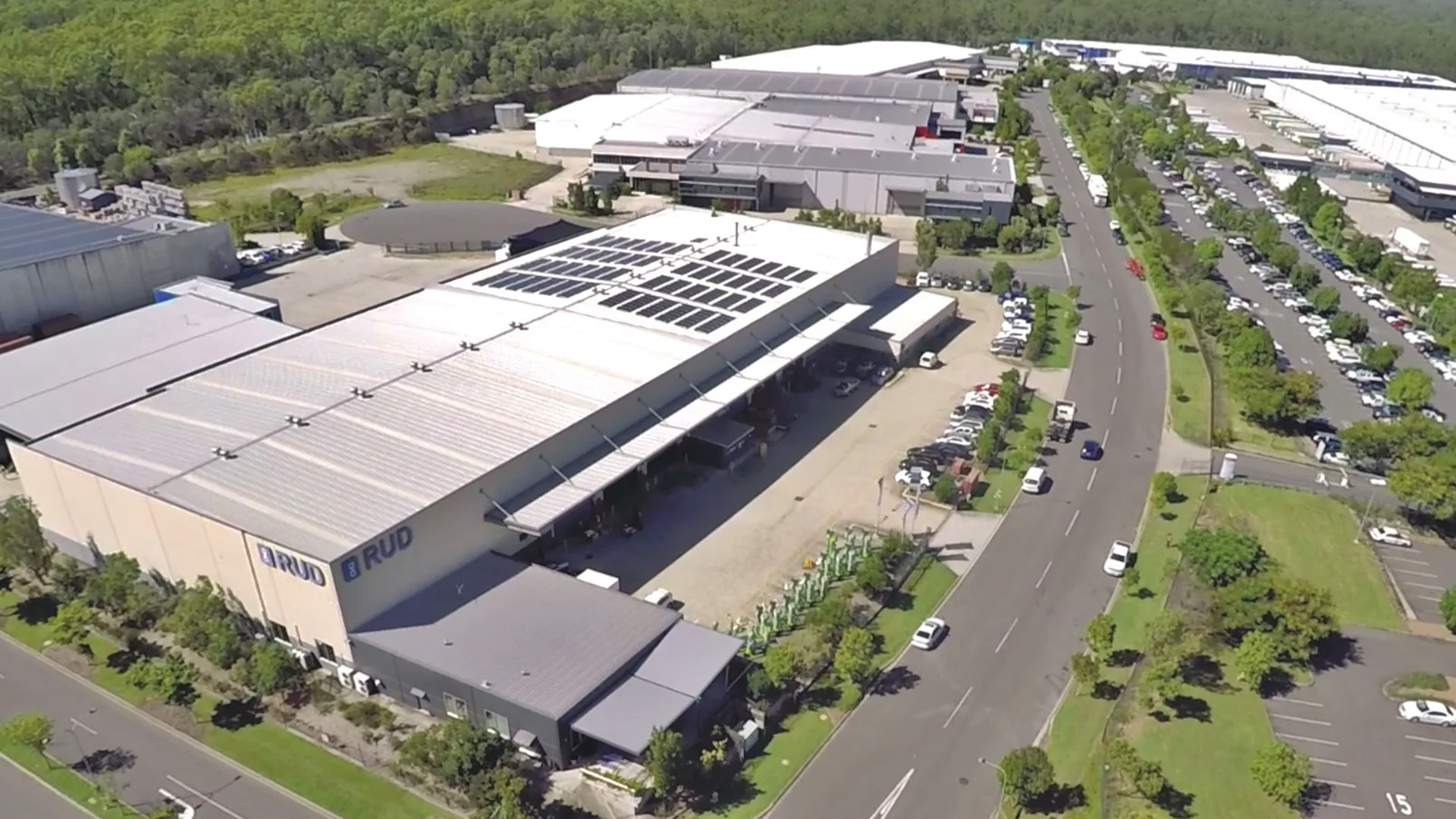
RUD Australia has an advanced 6000m2 engineering and manufacturing facility in Brisbane, which offers bespoke lifting and material handling solutions for the crane industry. The production facility includes expanded positional robotic welding technology and multiple 200/500-tonne test beds, ensuring quality work that exceeds industry standards.
RUD provides customised lifting kits and lashing solutions for the crane industry. RUD’s ICE Grade 120 chains can be tailored to meet specific site requirements. The ICE Grade 120 chain is 30% lighter than Grade 80, a critical safety factor. Additionally, when used with a balancer, a RUD ICE 16 mm chain can lift up to 48 tonnes, which is the highest in its capacity class. Mark Read of SureLift Crane Hire highlights the balancer as a "huge point of difference" that allows them to lift at a higher capacity while maintaining safety.
Brisbane-based Hulk Lifting consistently turns to RUD for lifting and lashing solutions. “Knowing that we’re using RUD’s products provides us with a sense of comfort and reassurance,” says Ben Rose, Director of Hulk Lifting. “RUD really are ‘best-in-show’ for us: through the design, manufacturing and final build stages; everything is simply top-notch.”
RUD designs and manufactures a range of lifting and spreader beams locally, specified to customer applications. We also offer over 700 boltable and weldable lifting points featuring load ranges all the way up to 250 tonnes.
RUD Australia is known for its unrivalled after-sales service and support, which customers highly value. As Mark Read of Surelift Hire notes, “RUD is always available to provide advice on maintenance, new products and different lifting solutions”, which is similarly echoed by Ben of Hulk Lifting, “Whenever we get something in from RUD, there’s always an engineer coming afterwards to inspect the product and ensure that it’s performing exactly as it should.”
The New RUD Sling Configurator
Configuring lifting chains for applications can be time-consuming and complex. Multiple factors influence safety, complicating the choice of the right sling chain. The new Sling Configurator from RUD makes it easier to configure the perfect chain sling for any lifting application in only six easy steps.
In addition to choosing between a VIP-100 and an ICE-120 chain, you also get a choice of components, information on the lifting accessories, tips on lifting and the option to save your chain configuration as a PDF or CAD file and email it to RUD.
The benefits of the RUD Configurator
Calculate lifting means in 6 easy steps
Get a 3D view of the final configuration
Compare components and parts
Download a CAD file that can be used in lift plans
The Sling Configurator gives you a list of the parts in your configuration, which makes it easy to discuss the sling chain with your team and contact us to place an order or for more information.
By combining a long-standing legacy of quality with cutting-edge technology and a strong focus on customer service and safety, RUD aims to be a preferred partner for crane operators seeking a safe and reliable investment.
RUD is holding an open event on 15 October at 12 Commerce Place, Larapinta, QLD 4110. We will showcase our lift technologies for the crane industry, including break tests for chains, lifting beams, and lifting points. We will also demonstrate our new robot and ICE Tensioner load cell technology. Limited spaces, so call us to book your seat!
Interested in our lifting, lashing and chain solutions? Call us on 07 3809 1300 or enquire here.
Copyright to RUD: This information is accurate at the time of publication, and RUD Australia takes no responsibility for any errors, inadvertent or otherwise.
In the challenging world of Australian heavy industry sectors, from construction sites in Sydney or Melbourne to remote mining operations in Western Australia, the safe and efficient operation of heavy material loads is critical. Companies use many products for lifting operations and the two primary ones among them are lifting and spreader beams.
This article delves into lifting and spreader beams, their technical differences and the benefits they add to the job site. We will also discuss how RUD, Australia’s leading lifting equipment provider, caters to clients such as Hulk Lifting and to companies in the crane industry.
What is the Difference between a Spreader Beam and a Lifting Beam?
While both lifting and spreader beams are designed to lift heavy loads, their principles and applications differ. Understanding this difference is key to selecting the right lifting beam or spreader beam for any task.
A spreader beam is a horizontal structure that distributes the weight of a load over multiple points, primarily by converting the lifting forces into compressive stress on the beam itself. The slings from the crane hook attach to the top of the spreader beam, while additional slings connect from the end of the beam down to the load. This ensures the lifting slings remain vertical, eliminating inward horizontal forces that could damage a long, flexible or fragile load. Spreader beams are ideal for lifting long objects like steel girders, pipes or precast concrete slabs, where a wide and stable lift is required to prevent the load from bending, buckling or shifting.
In contrast, a lifting beam is a simple device, typically with a single lifting point in the centre. The lifting beam is designed to withstand bending loads and is used for lifting compact or rigid objects. The load's slings are attached to the bottom of the beam, allowing the load to be lifted from a single overhead point. Lifting beams are useful in situations with low headroom, as their design minimises the vertical space needed for the lift. They are commonly used to lift heavy machinery components, large crates or engine blocks.
In summary, selecting one of the two depends on the load and the space available. A spreader beam is good to manage long, unwieldy loads by distributing forces, while a lifting beam provides a robust, low-profile solution for compact and heavy objects. For any project, consulting with a reputable spreader beam supplier or lifting beam manufacturer is crucial.
Enhancing Safety, Stability and Efficiency
The use of engineered lifting and spreader beams is beneficial beyond just getting the job done. Let’s have a look at the benefits.
Greater Safety: The most important benefit is safety. By distributing the load's weight evenly and preventing concentrated stress points, lifting and spreader beams reduce the risk of equipment failure, dropped loads and injuries. They keep slings from slipping and loads from tilting, creating a controlled and predictable lift. The robust design, in accordance with Australian Standards, provides operators with peace of mind
Increased Lifting Capacity: By spreading the load across multiple points, a spreader beam allows a lifting operation with higher capacity than a single-point lift. This is true for long loads, where the beam's design reduces the stress on the lifting equipment itself, allowing for safer handling of heavier items
Superior Load Stability and Protection: Spreader beams act as a stabilising force, preventing the load from swaying or rotating. This is critical when lifting delicate or irregularly shaped items, as it minimises the risk of damage to the load itself or surrounding equipment. For example, lifting a fragile glass panel or a high-value industrial component with a spreader beam ensures it remains level and secure throughout the entire process
Versatility and Adaptability: Many modern lifting and spreader beams are modular or adjustable, allowing them to be reconfigured for different loads and lifting angles. This versatility means that a single beam can be used for a wide range of jobs, reducing the need for multiple pieces of equipment and saving both time and money
RUD Australia: A Case Study in Engineering Excellence
For decades, RUD has been a global leader in lifting and lashing technology and this expertise is reflected in our Australian operations. Our state-of-the-art 6,000m² facility at 12 Commerce Place in Brisbane is a testament to our commitment to quality and innovation. Our production area is equipped with cutting-edge technology, including a SEVERT robotic welder, laser scanning capabilities and multiple test beds which allow us to design, manufacture and test custom lifting and spreader beams in-house.
The core of our success is our specialised engineering team, which utilises FEA (Finite Element Analysis) software to model and test every beam design before it is manufactured. This rigorous process ensures that each product is robust, optimised for weight reduction and certified. After fabrication, every beam undergoes a physical proof load test to guarantee its performance and compliance. This end-to-end flow in the design and manufacturing process minimises lead times and ensures reliability and safety for clients across the country.
A case study is our work with Hulk Lifting, a Brisbane-based company founded by industry veterans Ben Rose and Mitch Atkinson. We have partnered with Hulk Lifting since its inception in 2008, which is a strong endorsement of our solution-oriented approach. Our collaboration often results in customised lifting beams with specialised RUD lugs. Including a 31.5-tonne capacity W-ABA lug, which can meet specific lifting requirements. This partnership demonstrates how we use local manufacturing and global engineering knowledge to provide bespoke and safe lifting solutions.
Both lifting and spreader beams are critical to safety and efficiency. By embracing technically superior, high-quality lifting equipment, businesses can achieve smoother operations, greater productivity and most importantly, a safer working environment.
For more information on our lifting and spreader beams, call us on 07 3809 1300 or click here to submit an enquiry.
Copyright to RUD: This information is accurate at the time of publication, and RUD Australia takes no responsibility for any errors, inadvertent or otherwise.
DIN 580 eyebolts are among the most widely used lifting points in engineering and metal-processing industries. They are extensively used to lift motors, compressors and industrial equipment. In this article, we discuss why this common eyebolt may not always be the safest to use when the weight of the component to be lifted increases substantially.
The eye in a standard eyebolt is directly connected to the thread and cannot align itself with the direction of pull. This presents a problem with laterally mounted lashing points or in multi-leg applications. If the eye is loaded outside its plane during lifting, the DIN 580 eyebolt will rotate in the direction of the force. This can lead to either loosening or overtightening, increasing the risk of the bolt bending or breaking. Such failures can result in the load falling, potentially damaging the crane, jib, and chain slings and endangering operators. Therefore, in such situations, it is crucial to consider alternatives to traditional eyebolts.
Overcoming the Weak Point in Lifting and Lashing
Most countries lack awareness regarding the importance of lifting, lashing points and load securing systems. While manufacturers and operators rightly prioritise the performance and reliability of crane systems and chain slings, lifting points are often overlooked. High-quality lifting points with defined Working Load Limits (WLL) and certifications are often the exception rather than the rule. Instead, users frequently assume that standardised eyebolts are reliable for lifting high-quality machines and components.
Minimising Safety Risks with RUD Lifting Points
RUD has been a pioneer in developing and manufacturing lifting points that rotate in the direction of the load. With RUD eyebolts, the 360-degree adjustable eye automatically aligns itself with the direction of force as soon as it is loaded during lifting. This significantly mitigates most risk factors associated with eyebolt use in lifting.
However, safety is not limited solely to the eye's rotation. Although most eyebolts operate on the same principle, they are not all equal. The difference lies in manufacturing quality and operation. RUD lifting points are produced to the highest manufacturing standards and can vary in operation; some require tools, while others can be attached with a pre-assembled wrench.
The RUD VRS-F-Starpoint: Enhanced Safety and Convenience
The RUD VRS-F-Starpoint is designed for easy attachment, making it simple and safe for any operation. Its star profile wrench, which serves as an Allen key replacement, is permanently attached to the eye. This provides convenience even during repeated assembly and disassembly. If the bolt remains permanently on the VRS-F, a cranked socket wrench can be used for a single tightening.
The VRS series is available with WLL from 0.1 to 20 tonnes and in thread sizes M6 to M64. It offers significantly higher load capacities than other bolts of the same thread size. This is partly due to its increased load capacity, which allows safe lifting of up to several times the required WLL during vertical lifting operations (0 to 7 degrees). The VRS-F can even be mounted on small contact surfaces or in locations that are challenging due to other components, like hydraulic hoses and other attachments.
Tested and Certified Safety
In addition to robustness and flexibility, the VRS-F Starpoint is extremely durable. It is tested for 20,000 load cycles at 1.5 times overload, is 100 percent crack-tested, and offers four-fold safety against breakage. In Europe, the DGUV (German Legal Accident Insurance) seal confirms the component complies with international safety requirements.
Digitally Ready for the Future
RUD constantly innovates to future-proof its products. The VRS-F Starpoint comes with an RFID transponder as standard. Every RUD product with RFID can be read through the "BUDDYtron" smartphone app or NFC. Users can instantly identify components and access product-specific information such as user instructions and technical data sheets. This simplifies and enables faster planning and execution of lifting operations. Through the lifting accessories and lashing points check function, users can determine whether a component is suitable for any specific lifting operation. Additionally, they can click a picture and email images directly to RUD to get answers to general questions.
From material selection and design to integration of digital solutions, RUD VRS-F Starpoint eyebolts offer a high-quality and flexible solution for greater safety and efficiency in everyday lifting operations.
Copyright to RUD: This information is accurate at the time of publication, and RUD Australia takes no responsibility for any errors, inadvertent or otherwise.
Welcome aboard Australia’s leading material lifting and handling technology company. Our quarterly newsletter gives a sneak peek about our company, our products, news, blog posts, and everything happening at RUD in Australia and worldwide. Click the picture below to open the full view.
Welcome aboard Australia’s leading material lifting and handling technology company. Our quarterly newsletter gives a sneak peek about our company, our products, news, blog posts, and everything happening at RUD in Australia and worldwide. Click the picture below to open the full view.
Welcome aboard Australia’s leading material lifting and handling technology company. Our quarterly newsletter gives a sneak peek about our company, our products, news, blog posts, and everything happening at RUD in Australia and worldwide. Click the picture below to open the full view.
RUD Australia celebrated 40 years in November 2024. From humble beginnings in 1984 in a garage on the south side of Brisbane to a 6000m2 facility in Larapinta QLD, including an office and warehouse in Perth, we have come a long way as one of the most trusted companies in the lifting, lashing and material handling industry.
Our journey continues:
1984 - Jonathan Street - RUD Australia started in November 1984 in Peter Nuttall Senior’s garage in Macgregor, Brisbane.
1991 - Success Street - RUD Australia built a 1500m2 facility at Success Street in Acacia Ridge.
2005 - West Link Place - RUD Australia moved into a 3000m2 facility at West Link Place, Richlands.
2008 - Bassendean, Perth - We expanded into Bassendean, Perth, with an office and warehouse to service the growing WA market.
2013 - Commerce Place - In 2013, we invested significantly in our long-term future with a 6000m2 facility that currently includes our head office, engineering, warehouse, and fabrication divisions.
We celebrated our 40th anniversary with a gala dinner event in Brisbane. The evening was filled with fun, entertainment, camaraderie and speeches, going down memory lane of the 40-year journey.
With a 40-year history in Australia, RUD is committed to excellence in chain technology. We strive to be at the forefront of technology and innovation, such as our latest 9-axis robotic welder, which will drive our growth through continuous improvement for the future.
Falls from heights are a significant hazard in Australian workplaces, contributing to annual injuries and fatalities. According to Safe Work Australia, falls from a height were the second-highest contributor to worker fatalities, with a 71% increase from 17 to 29 deaths between 2022 and 2023. 1
Non-fatal falls also impose substantial financial burdens, with each incident costing employers downtime, medical expenses, and recovery costs. This underscores the critical need for robust height safety measures, with personal fall arrest systems playing a pivotal role in mitigating these risks.
The Australian Height Safety Landscape
Australia maintains a comprehensive legislative framework for workplace safety, particularly for working at heights.
A range of standards employed within this framework include:
AS/NZS 1891 (series); and
AS/NZS 5532:2013.
AS/NZS 1891 (series)
This standard series offers detailed guidance on the various aspects of personal fall arrest systems, including selection, use, and maintenance of industrial fall-arrest systems and devices.
AS/NZS 5532:2013
This standard specifies manufacturing requirements for single-point anchor devices used in harness-based work at height. It outlines the design, testing, and performance criteria that anchor devices must meet to ensure reliability during fall arrest scenarios.
The Role of Personal Fall Arrest Systems
Personal fall arrest systems are critical safety measures for workers operating at heights. Their effectiveness depends on proper selection, installation, and use, highlighting the necessity for comprehensive training. Personal fall arrest systems should serve as a final line of defence when other preventative measures, such as guardrails or safety nets, are not feasible.
Importance of Training
Workers utilising personal fall arrest systems must receive thorough training on the following:
Equipment Selection: Choosing appropriate personal fall arrest systems based on specific tasks and environmental conditions.
Proper Donning and Doffing: Ensuring correct fitting and adjustment for optimal function and safety.
Routine Inspections: Conducting regular checks to identify any damage or defects that could compromise safety.
Emergency Procedures: Being prepared to respond effectively in the event of a fall, including rescue operations and equipment handling.
RUD: Leading with Anchor Points
RUD offers a range of personal fall arrest system anchor points compliant with Australian standards:
PSA VRS-STARPOINT: A 360-degree rotatable anchor point designed for permanent installations on buildings and wind turbines.
PSA INOX-STAR: Similar to the VRS-STARPOINT but constructed from stainless steel, making it suitable for harsh environments.
Weld-on Anchor Points: RUD is preparing to release a range of weld-on anchor points with boltable plates, expanding secure anchoring options for various substrates.
All RUD fall arrest anchor points are tested and certified to meet AS/NZS 1891.4:2009 and AS/NZS 5532:2013, ensuring compliance with Australian safety regulations. A forthcoming weld-on duplex stainless steel anchor point will be suitable for corrosive environments.
Contact RUD for more information, applications and technical advice. Call 07 3809 1300 or email us here.
Article copyright toRUD Group. This information is accurate at the time of publication, and RUD Australia takes no responsibility for any errors, inadvertent or otherwise.
In the demanding world of construction and infrastructure projects, the safe and efficient lifting of heavy loads is critical. If you want to lift heavy loads from 85 tonnes upwards, look no further than the RUD WBPG, which offers safe lifting as a single product.
The amazing RUD WBPG is the best heavy-duty bootable lifting point in the market and can lift loads from 85 tonnes to 250 tonnes, which is a game changer for the construction and infrastructure industry!
RUD's Commitment to Safety and Efficiency:
RUD's decades of experience in lifting technology are evident in the WBPG hoist ring. The WBPG lifting point is designed for exceptional strength and durability, meeting and exceeding industry standards.
Benefits
Exceptional Load Capacity: The WBPG is available in size M48 with a Working Load Limit (WLL) ranging from 85 to 250 tonnes, making it the best choice for heavy lifting in construction and infrastructure projects.
Ball Bearing Mounted for Smooth Operation: The innovative ball bearing mounting ensures smooth operation even under heavy loads, reducing friction and wear on the lifting point. A crucial benefit for increased safety even with multiple uses.
Shackle Pivoting and Swivel Bolt: The WBPG features a 180° shackle pivot and a 360° swivel bolt with ball bearings, allowing for flexible load positioning and manoeuvring.
Removable Suspension Ring: The WBPG ring is designed to resemble a shackle, permitting secure attachment of hoops in heavy concrete sleepers. This makes it easier for your team to work faster and more efficiently.
Multi-directional Loading: The WBPG can be loaded from any side in the direction of the pivot, making it ideal for lifting and turning heavy loads.
Robust Design and Construction: RUD's lifting points are built to withstand dynamic loads of at least 20,000 cycles and are tested at an overload of 50%. All bolts undergo a 100% crack test, providing quadruple safety in every loading direction.
Selecting the Right Lifting Point
When choosing a lifting point for a construction or infrastructure project, it is essential to:
Determine the Total Weight. Accurately calculate the weight of the load being lifted.
Consider the Number of Lifting Points. The appropriate number of lifting points must be determined based on the shape of the load and installation position.
Account for Reduction Factors. Refer to operating instructions to factor in reductions due to tilt angles and temperature variations.
Select a Lifting Point with Sufficient WLL. To ensure a safe margin, choose a lifting point with a WLL that exceeds the weight determined in step 3.
RUD's WBPG: A Solution for Heavy Lifting Challenges
The RUD WBPG hoist ring is the best boltable lifting point in the market. It offers an exceptional solution for heavy lifting in the construction and infrastructure industries. Its robust design, high load capacity, and multiple safety features provide peace of mind and efficiency, ensuring the safe and successful completion of even the most demanding projects.
Read how the WBPG helped the world's largest crane manufacturer build an enormous ship crane that would be used for offshore applications in the oil and gas sector and wind farm installation and disassembly. Click here for the full article.
RUD Australia has a ready stock of VWBG 200t. Call 07 3809 1300 or email us here for more details on how it can meet your heavy-lifting needs.
The INOX-ABA weld-on lifting point, which is part of the ABA family, provides a robust and corrosion-resistant solution for lifting operations in challenging environments. This lifting point is forged from duplex stainless steel 1.4462 and offers superior resistance to pitting and surface corrosion, ensuring long-lasting performance even when exposed to corrosive elements like seawater.
Designed for Durability and Reliability
The INOX-ABA is forged from duplex stainless-steel 1.4462, known for its strength and resistance to corrosion. This material choice ensures that the anchor point can withstand demanding conditions often encountered in industries such as:
Paper and food processing: Hygiene quality control is very important in the paper and food industries to prevent contamination. INOX-ABA's duplex stainless-steel manufacturing prevents any potential leaching of coatings or particles, thereby safeguarding the process.
Petrochemical plants: The INOX-ABA’s resistance to corrosive chemicals and high temperatures makes it ideal for handling equipment and machinery in these challenging environments.
Maritime environments: The INOX-ABA is specifically designed to withstand the corrosive effects of saltwater, making it perfect for use on ships, rigs, and offshore installations.
Addressing Common Challenges
Most weld-on lifting points, while doing a great job, fall short in challenging environments. The INOX-ABA, however, addresses these shortcomings with its robust construction and comprehensive design features:
Corrosion Resistance: The duplex stainless-steel forging and closed fillet weld provides superior protection against rusting and pitting, ensuring the lifting point remains functional and safe even after prolonged exposure to corrosive elements.
Load in All Directions: The INOX-ABA has full WLL in any direction, providing a secure and reliable lifting solution regardless of the load's orientation.
Enhanced Safety: The INOX-ABA has a 4:1 design factor for safety compared to traditional lifting points, ensuring a wide safety margin in critical lifting operations.
Wear Indicators: Patented internal and external wear indicators permit easy inspection and monitoring of wear and tear, enabling timely maintenance and ensuring continued safety.
Adaptable and Versatile
The INOX-ABA is available in three load capacities (0.8t, 1.6t, and 2.7t) to accommodate a wide range of lifting applications. Its operating temperature ranges from -40°C to 250°C, further expanding its versatility, making it suitable for a variety of temperature environments. The duplex stainless-steel 1.4462 used in the INOX-ABA allows electromagnetic crack testing to ensure the integrity of the anchor point.
Welding Compatibility and Diverse Applications
The INOX-ABA's duplex stainless-steel construction is compatible with various materials, including structural steel, permitting seamless integration into diverse applications. This makes it ideal for use in container construction, particularly in the food production and oil & gas industries, where its resistance to corrosion and contamination is beneficial.
INOX-ABA is also becoming popular for use on cruise ships. It can perform a range of lifting tasks while seamlessly blending into the ship's stainless-steel environment. Its versatility and adaptability make it an asset in diverse industries, ensuring safety and reliability in challenging conditions.
A Comprehensive Solution
RUD's INOX-ABA weld-on lifting point represents a significant advancement in lifting solutions for harsh environments. Its robust construction, corrosion resistance, and comprehensive design features combine to provide a safe, reliable, and versatile solution for a wide range of industries. From heavy-duty lifting operations to fall protection applications (Only 1.6t), the INOX-ABA is a dependable and durable lifting point, ensuring the safety and efficiency of operations in even the most challenging conditions.
References:
Content is taken from www.rud.com.au and technical websites as given below:
CCS-FASTLOX - The First-Ever Clickable Clevis Shackle.
PIP-RAPIDO - The First-Ever Plug-In Lifting Point.
We will soon launch two innovative products - the clickable shackle CCS-FASTLOX and the pluggable lifting point PIP-RAPIDO for speedier and simplified load lifting.
In comparison with conventional fork-head shackles, the extremely robust CCS-FASTLOX can be used without any tools at all - i.e. without a separate bolt, nut and cotter pin. To assemble it, the user simply pushes the bolt through the shackle and clicks it into a safety mechanism attached to the side, automatically keeping it in position. This means it takes up to 80% less time to assemble and dismantle the shackle. The CCS-FASTLOX will be available in Grade 120 (ICE) and Grade 100 (VIP) and nominal sizes from 4 to 16 (ICE) or 6 to 22 (VIP).
One possible application is using the CCS-FASTLOX in combination with the new pluggable lifting point PIP-RAPIDO with a self-locking fixing mechanism. It was developed to supplement boltable and weldable lifting points and is, in particular, intended for easy assembly on through-hole fixtures – such as flanges – and holes with undercuts. To fix it in place, the locking elements are unlocked at the locking bolt and the bolt is inserted into the through-hole fixture. As soon as the bolt is in position, the locking mechanism automatically engages, making a safe connection between the load and the lifting point possible.
Thanks to this mechanism, PIP-RAPIDO can be installed much more quickly than conventional boltable lifting points. It is also suitable for scenarios where a boltable lifting point is unsuitable because it is not possible to fit a nut from below - for example, when it is assembled on flanges that are stacked on top of one another.
CCS-FASTLOX - The First-Ever Clickable Clevis Shackle.
PIP-RAPIDO - The First-Ever Plug-In Lifting Point.
All RUD products are equipped with an integrated RFID transponder as standard, which allows users to retrieve the factory ID number using an NFC-based reader or smartphone. Stay tuned for more information.
RUD will exhibit at the Crane Industry Conference - CICA 2024 at the Adelaide Convention Centre from 17-19 October 2024. Visit our booth #2 to discuss our lifting and lashing solutions for the crane industry.
If you want more details of our lifting and lashing solutions, call us on 07 3809 1300 or email us here.
Welcome aboard Australia’s leading material lifting and handling technology company.
Click the button to read about us, our products, news, blog posts and everything happening at RUD in Australia and around the world.
When a foundry in Italy found itself in a hot problem, they turned to RUD.
Foundries are notoriously harsh environments. They get hot, insanely hot. Red-hot loads demand equipment that can withstand extreme temperatures while ensuring safe and efficient operation.
A foundry in Italy needed to move scorching hot steel bars that were long and weighed thousands of kilos. They were also square-shaped with a unique profile that required a unique lifting solution.
The Situation
The project had several challenges:
Extreme Temperatures: The bars reached a staggering 300°C, requiring a heat-resistant lifting mechanism to protect operators and equipment.
Weight and Size: Each bar measured 12 meters long and weighed a hefty 2,400 kg, requiring a robust lifting solution with a high working load limit (WLL).
Square Geometry: The square profile of the bars (14x14 cm and 16x16 cm) demanded a unique clamping mechanism for secure grip and transport stability.
A Unique Solution
RUD has been in the lifting business for years and knows steel like the back of our hand. So, we took our knowledge of high-quality clamps and chains and devised a custom system to handle this hot situation.
Built to Last: We customised a robust system that weighed 150 kg with a working load limit (WLL) of 2,500 kg. This was a rock-solid solution that provided stability and safety. The system's core component was a RUD VIP-2-strand sling, which hooked into the crane for a secure connection.
Versatile Clamping: The clamping mechanism was versatile and could adjust to slight size differences (14x14 cm and 16x16 cm) without a problem. This ensured a secure grip regardless of minor size discrepancies, preventing potential slippage during transport - the last thing you need when dealing with red-hot metal!
Safety First Followed by Efficiency: Safety is paramount in a foundry for both the employees and the equipment. Our safety-friendly design ticked all the boxes. We made it semi-automatic with a lever system for hooking and unhooking the bars. This kept the operators far away from the intense heat. The lever also controlled the rotation and locking of the clamps, ensuring the bars stayed put throughout the entire process. The clamps themselves were attached to super-strong 8mm RUD VIP Grade 100 sling chains - chosen specifically for their exceptional heat resistance and strength.
Game Change for the Client
This custom system has been a game-changer for the foundry, improving operations on the floor. It moves the steel bars with ease, keeping things efficient while prioritising operator safety. This project is a perfect example of how RUD combines high-quality lifting components with custom-designed solutions. This tailored approach sets RUD apart from the competition. We don't just sell products; we deliver solutions for even the most challenging high-temperature lifting situations.
This project shows our commitment to exceeding customer expectations. By combining our expertise in lifting with a dedication to custom design, we ensure safety, efficiency, and happy customers, no matter how hot the job gets.
If you want more details of our lifting and lashing solutions, email us or call us on 07 3809 1300.
Article copyright toRUD Group andRUD Australia. This information is accurate at the time of publication, and RUD Australia takes no responsibility for any errors, inadvertent or otherwise. Some pictures are shown for illustration only.