Apron feeders are crucial components of material handling in many industries. Their robust construction and precise control capabilities make them uniquely suited for transporting challenging materials, such as high-temperature materials, in demanding environments.
Understanding the Mechanics of Apron Feeders:
Apron feeders are conveyors in which material is carried on overlapping steel plates, known as "aprons," that travel over sprockets, rollers, and gears. These components are fabricated from high-strength steel and designed to withstand significant wear and tear. Motors and gearboxes power the feeder, enabling controlled movement of the aprons and the material they carry. RUD apron feeders are connected by conveyor chains driven by a calibrated toothed pocket wheel.
The overlapping design of the plates is critical because it ensures smooth and consistent material flow while eliminating spillage. This feature makes apron feeders ideal for handling materials that are difficult to transport, such as:
Abrasive materials: Sand, gravel, crushed rock, and similar materials that can damage conventional conveyor systems.
Sticky materials: Clay, cement, and other materials with high viscosity that tend to cling to surfaces.
Hot materials: Molten metals, slag, and other materials requiring heat-resistant components.
Lumpy materials: Coal, ore, and other materials with irregular shapes and sizes can clog conventional conveyors.
Advantages of Apron Feeders:
The unique design and construction of apron feeders offer several advantages, cementing their position as the preferred solution for material handling in various industries.
The benefits of apron feeders are:
Precise Control: Apron feeders allow operators to precisely adjust material flow rate, ensuring efficient production and minimising waste.
Minimal Spillage and Dust: The overlapping aprons effectively contain material, significantly reducing spillage and dust generation, improving worker safety and minimising environmental impact.
Exceptional Durability and Low Maintenance: Apron feeders are built to last, with high-strength components capable of handling heavy loads and harsh conditions. This translates to minimal downtime and reduced maintenance costs.
Adaptability: The design can be customised with different apron widths, lengths, and materials to cater to specific application requirements. This adaptability allows for effective handling of various material types and volumes.
Preserving the Material: Apron feeders minimise material degradation when moving products.
Applications of Apron Feeders:
Apron feeders play an important role in many industries, such as:
Mining: Transporting the ore, coal, and other minerals from the site to the processing plant.
Cement and Aggregates: Handling raw materials like limestone, clay, and sand in cement plants.
Power Plants: Transporting coal and other fuel sources to boilers.
Metal and Steel: Moving raw materials and finished products in production.
Apron feeders are reliable and efficient solutions for material handling. Their robust construction, versatility, and ability to handle a wide range of materials make them indispensable for maximising productivity and minimising downtime.
To be continued ...
If you want more details of our conveyor and drive systems, email us or call us on 07 3809 1300.
Article copyright to RUD Australia. This information is accurate at the time of publication, and RUD Australia takes no responsibility for any errors, inadvertent or otherwise. Some pictures are for illustration only.
Exciting 2 new products coming soon ...
CCS-FASTLOX - The First-Ever Clickable Clevis Shackle.
PIP-RAPIDO - The First-Ever Plug-In Lifting Point.
We will soon launch two innovative products - the clickable shackle CCS-FASTLOX and the pluggable lifting point PIP-RAPIDO for speedier and simplified load lifting.
In comparison with conventional fork-head shackles, the extremely robust CCS-FASTLOX can be used without any tools at all - i.e. without a separate bolt, nut and cotter pin. To assemble it, the user simply pushes the bolt through the shackle and clicks it into a safety mechanism attached to the side, automatically keeping it in position. This means it takes up to 80% less time to assemble and dismantle the shackle. The CCS-FASTLOX will be available in Grade 120 (ICE) and Grade 100 (VIP) and nominal sizes from 4 to 16 (ICE) or 6 to 22 (VIP).
One possible application is using the CCS-FASTLOX in combination with the new pluggable lifting point PIP-RAPIDO with a self-locking fixing mechanism. It was developed to supplement boltable and weldable lifting points and is, in particular, intended for easy assembly on through-hole fixtures – such as flanges – and holes with undercuts. To fix it in place, the locking elements are unlocked at the locking bolt and the bolt is inserted into the through-hole fixture. As soon as the bolt is in position, the locking mechanism automatically engages, making a safe connection between the load and the lifting point possible.
Thanks to this mechanism, PIP-RAPIDO can be installed much more quickly than conventional boltable lifting points. It is also suitable for scenarios where a boltable lifting point is unsuitable because it is not possible to fit a nut from below - for example, when it is assembled on flanges that are stacked on top of one another.
CCS-FASTLOX - The First-Ever Clickable Clevis Shackle.
PIP-RAPIDO - The First-Ever Plug-In Lifting Point.
All RUD products are equipped with an integrated RFID transponder as standard, which allows users to retrieve the factory ID number using an NFC-based reader or smartphone. Stay tuned for more information.
RUD will exhibit at the Crane Industry Conference - CICA 2024 at the Adelaide Convention Centre from 17-19 October 2024. Visit our booth #2 to discuss our lifting and lashing solutions for the crane industry.
If you want more details of our lifting and lashing solutions, call us on 07 3809 1300 or email us here.
Part 2 of the 2-part article. Click here to read Part 1.
A Comprehensive Range of Lashing and Anchoring Solutions
RUD offers a comprehensive range of solutions, addressing both lashing and anchoring needs:
High Capacity Lashing Points: These lashing points are engineered for multi-directional load capacity with a 2:1 safety factor against breakage. They are clearly labelled with their tensile strength for easy identification during setup.
L-ABA: Forged with one-piece construction for exceptional strength. Click to view the product.
LPW: Patented 90° design for efficient load support, featuring a noise-dampening holding spring. Click to view the product.
Secure Anchor Points: These products offer a 4:1 safety factor against breakage. They feature clear WLL labels and undergo electromagnetic crack testing for maximum reliability.
W-ABA: One of the best-selling products, the W-ABA comes with an annealed base for superior wear resistance. Click to view the product.
VRBS: Features 180° pivoting for versatility with split force introduction for optimal load distribution. Click to view the product.
VLBS: Also features 180° pivoting for versatility and a high safety factor due to an undetachable suspension ring and weld-on block. Click to view the product.
Benefits of RUD's Lashing System:
Enhanced Load Control
High-capacity lashings effectively manage the heavyweight and shifting forces during transportation, ensuring stability even on challenging terrain.
Reduced Tipping Risk
Strategically placed anchor points prevent tipping during turns and manoeuvres, offering peace of mind for drivers navigating tight corners and uneven roads.
Durability and Reliability
Robust, wear-resistant materials ensure long-lasting performance for multiple journeys, reducing maintenance costs and downtime.
The Bottom Line: Choosing the Right Partner
The successful transport of Pasquale Maraffa's oversized boiler highlights the crucial role of proper lashing and anchoring technology in handling heavy, high-centre-of-gravity loads. By partnering with RUD, transport and freight companies can ensure safe and efficient delivery, even for the most demanding projects.
Investing in robust lashing solutions is not an expense; it is crucial to ensure the safety and success of every transport operation.
RUD will exhibit at the National Bus & Coach Show at the Brisbane Convention and Exhibition Centre from 17-18 September 2024. Visit our booth DB33 in Hall 3 to discuss our lashing solutions and hoists for the heavy vehicle industry.
If you want more details of our lashing solutions for the transport industry, call us on 07 3809 1300 or email us here.
Article copyright to RUD Group. This information is accurate at the time of publication, and RUD Australia takes no responsibility for any errors, inadvertent or otherwise.
This is a 2 part article.
Transporting large bulky equipment with a high centre of gravity is a challenge. In the world of heavy transportation, hauling oversized equipment presents unique challenges. From navigating tight corners to tackling unpredictable terrain, every journey demands meticulous planning and a deep understanding of load-securing techniques.
This is true when dealing with extremely heavy loads with a high centre of gravity, like massive boilers transported to industrial sites. Continue to read how an Italian freight company used RUD expertise to transport a huge boiler.
Pasquale Maraffa, owner of an Italian freight company, recently faced such a challenge. His team was contracted to transport a colossal boiler, weighing over 200 tonnes and towering 16 meters high, to a refinery. The large size and weight of the load required careful planning because even a slight incline in the road could put immense stress on the lashing components. Adding to the complexity, narrow turns posed a significant risk of the load tipping over.
For Pasquale, the success of this project rested on choosing the right partner-one with a clear understanding of load securing and a proven track record of handling such demanding tasks. That partner was RUD, known worldwide for advanced lashing technology solutions.
The Importance of Lashing Expertise
While many transport companies acknowledge the importance of weather considerations and route planning, the crucial aspect of lashing point capabilities often gets overlooked. This is where RUD's expertise shines. We understand that every lashing point on a trailer must be carefully evaluated to ensure its capacity matches the load's weight and the stresses it will encounter during transport.
For Maraffa, this project highlighted the importance of choosing a partner like RUD, which offers comprehensive lashing technology solutions tailored to specific needs. Instead of relying on generic solutions, RUD provides a customised approach, including:
Clear Working Load Limits (WLL)
All RUD products are clearly labelled with their safe working capacity, ensuring proper use and preventing accidents.
Technical Expertise
RUD offers custom lashing solutions based on the specific load characteristics and transportation requirements, creating a bespoke system for each transport.
Customisation
RUD can even customise lashing products to match the brand colours of trailer manufacturers, adding a touch of visual professionalism to the trailer.
Optimised Lashing Design
RUD products are designed with rounded and durable shapes to minimise wear and tear, guaranteeing long-lasting performance.
Investing in robust lashing solutions is not an expense; it is crucial to ensure the safety and success of every transport operation.
RUD will exhibit at the National Bus & Coach Show at the Brisbane Convention and Exhibition Centre from 17-18 September 2024. Visit our booth DB33 in Hall 3 to discuss our lashing solutions and hoists for the heavy vehicle industry.
If you want more details of our lashing solutions for the transport industry, call us on 07 3809 1300 or email us here.
Article copyright to RUD Group. This information is accurate at the time of publication, and RUD Australia takes no responsibility for any errors, inadvertent or otherwise.
The National Bus and Coach Show 2024 will be held at the Brisbane Convention and Exhibition Centre from September 17 to 18, 2024.
This show will bring together the latest technology in the bus and coach space, including zero-emissions, bio-fuel and autonomous vehicles.
RUD is known for Endurequip Portalift, the only Australian-made, chain-driven mobile heavy vehicle hoist manufactured in Brisbane. It symbolises quality and technology for the most arduous Australian applications. In 2024, RUD is offering a high-quality German wireless mobile heavy vehicle hoist, Finkbeiner, which is reputed around the world for quality and innovation.
Some of the solutions we provide in the heavy vehicle workshop industry are:
Endurequip - Australian-Made Chain-Driven Mobile Heavy Vehicle Hoist
Finkbeiner - German-Made Wireless Hoist
Heavy Vehicle Hoist Accessories
Lifting & Lashing Solutions
Streamline your efficiency and minimise downtime with our mobile heavy vehicle hoist range, which provides a solution for every workshop application across Australia. Whether you operate a large fleet or a specialised repair shop, our heavy vehicle hoists deliver the lifting capacity and portability so your heavy vehicle servicing can operate smoothly.
We also offer a range of premium accessories designed to seamlessly integrate with your hoists, such as vehicle stands, vehicle ramps and small wheel adaptors.
Visit our booth DB33 in Hall 3 at the Brisbane Convention and Exhibition Centre from 17-18 Sep 2024 to discuss our automotive workshop solutions.
For more information on RUD Heavy Vehicle Hoist Solutions, click here to fill out our form or visit our contact page to send us an enquiry.
Land Forces 2022 attracted 20,000 visitors over 3 days, with 810 exhibitors from 25 countries.
The RUD Group is a globally certified supplier for defence systems and equipment for land, air and sea. We provide standard and customised applications for the defence force that meet and exceed the industry's exacting standards.
Some of the solutions we provide to the ADF and defence contractors are:
Lightweight Load Securing and Lashing Systems
Customised Engineered Lifting Designs
General Fabrication of critical Defence components
The world's largest range of patented Lifting and Lashing Points
Non-skid Tyre chains for traction and safety
Material Handling and Automation solutions for defence facilities
The only Australian Made Heavy Vehicle Hoist
1000+ RUD components with NATO Stock Numbers (NSNs)
RUD is also involved in the ongoing maintenance of defence vehicle equipment. Whether it’s peacekeeping missions, field studies, tactical assessments or high-risk military projects, our defence clients can rely on our solutions to see their work through to completion.
Visit our booth E175 in the Queensland Govt Pavilion at the Melbourne Convention Centre from 11-13 Sep 2024 to discuss our Lifting, Lashing, Drive and Engineering Solutions.
For more information on RUD Solutions for the Defence Industry, click here to fill out our form or visit our contact page to send us an enquiry.
Part 2 of the 2-part article.Click hereto read Part 1.
Continuing into Part 2 to understand the different aspects of the mobile heavy vehicle hoist industry, ensuring you choose the right hoist for your needs and budget.
Mobility and Manoeuvrability
Choose a hoist with suitable wheels and steering mechanisms to navigate your work environment efficiently, especially in tight spaces.
Both Endurequip and Finkbeiner are extremely mobile, allowing you to easily position them anywhere in the workshop for on-site repairs.
Long-Term Investment
Investing in a high-quality hoist is a long-term investment that will benefit from an extended lifespan, reduced maintenance costs, and a higher resale value.
Endurequip Portalift has a unique chain drive system featuring top-of-the-line RUD calibrated chain and pocket wheels, which lasts for decades even with frequent use. Finkbeiner has a hydraulic drive, which is virtually maintenance-free, saving money in the long run.
Manufacturer Reputation
Research the manufacturer's reputation for quality, reliability, and after-sales service. Look for companies with a track record of producing durable and dependable equipment.
RUD is a world-class engineering company that has been offering lifting, lashing, drive technology and bespoke engineered solutions in Australia for the last 40 years. Finkbeiner is reputed around the world for its state-of-the-art design, quality, and reliability having pioneered the first hydraulic hoist in 1967.
RUD is reputed for its extensive Australia-wide network of service agents for workshop lifting solutions.
Finding the Right Partner
Once you have narrowed down your requirements, choose a reputable company that can provide expert advice and support. A reliable company or distributor can assist with choosing the right model and commissioning it with ongoing service.
Investing in the Right Mobile Heavy Vehicle Hoist
Choosing a mobile heavy vehicle hoist is not just a purchase; it's an investment in your workshop’s efficiency, safety, and profitability. While the initial cost of a high-quality hoist might seem higher, it translates into long-term benefits. Investing in a robust and reliable hoist ensures smooth operations, minimal downtime, and a safer working environment, ultimately contributing to your success.
Summary
In Australia's diverse landscape, choosing the right mobile heavy vehicle hoist is crucial. Don't be swayed by low pricing which could potentially compromise safety and performance. Invest in a high-quality hoist to reap the benefits of durability, reliability, and long-term cost savings.
Remember, a quality hoist is an investment in your business's efficiency and safety, contributing to its success for years to come.
If you want more details of our heavy vehicle lifting solutions, call Brett on 0439 707 805 or email him here.
Article copyright to RUD Group. This information is accurate at the time of publication, and RUD Australia takes no responsibility for any errors, inadvertent or otherwise.
This is a 2 part article.
Australia's vast and diverse landscape, scattered from bustling metropolises to remote outback towns, requires reliable and robust equipment. A mobile heavy vehicle hoist is an indispensable tool for maintenance, repairs, and inspections for businesses operating in the truck and bus maintenance and repair industries. However, navigating the vehicle hoist market can be challenging, with a wide choice of brands and models varying in quality and price.
This article will help you understand the different aspects of the mobile heavy vehicle hoist industry, ensuring you choose the right hoist for your needs and budget.
Understanding Australian Landscape
Australia's unique geography dictates different requirements for mobile hoists. In metros along the east and west coast, the workshop layout and space limitations can influence the choice of hoists. Also, the use of technology is more prevalent in metros, where there is a high demand for devices that work on wireless signals. In contrast, the outback demands heavy-duty models capable of handling harsh weather conditions. Hence, a robust hoist is preferred, which can withstand the rigours of the dusty and harsh outback.
A Balancing Act between Quality and Price
There are many hoist companies in Australia that differ in quality, features, and price. It is a well-known fact that most of the time, the cheapest purchase can work out more expensive in the long run. Cutting corners on quality can lead to costly consequences. While price can appear attractive during purchase, it is important to consider the build and safety features to ensure your team is confident to work on vehicles when they are hoisted in the air.
Below are some points you need to consider when choosing a mobile heavy vehicle hoist:
Lifting Capacity
Determine the maximum weight you need to lift, ensuring the hoist has sufficient capacity to handle your specific needs.
RUD Heavy Vehicle Hoists - Endurequip and Finkbeiner are built to handle a wide range of heavy vehicles. We offer lifting capacities from 30 to 170 tonnes in combination with up to 20 hoist sets.
Durable Construction
Choose hoists that are built with high-grade steel and robust components that are designed to withstand heavy loads and frequent use.
Both Endurequip (Made in Australia) and Finkbeiner (Made in Germany) hoists are built with quality steel, ensuring quality construction during manufacture. Endurequip is built to the strictest Australian standards (2550.9.1996, AS/NZS 2538:2004, ISO9001) and is the only Australian-made and Australia’s No. 1 mobile heavy vehicle hoist.
Advanced Safety Features
Check for multiple safety mechanisms, including emergency lowering systems and locking mechanisms, to ensure the safety of both personnel and equipment.
Both Endurequip and Finkbeiner include a range of safety features, such as emergency stops, remote control, and a keyed safety lock to ensure your team works safely and confidently on every heavy vehicle repair job.
Article copyright to RUD Group. This information is accurate at the time of publication, and RUD Australia takes no responsibility for any errors, inadvertent or otherwise.
Part 2 of the 2-part article. Click hereto read Part 1.
Load securing during transportation faces many challenges, especially when dealing with loads that have sharp edges. The sharp edges pose a risk to the integrity of lashing equipment and can potentially lead to accidents, jeopardising the safety of vehicle occupants and other road users. Hence, understanding the potential dangers associated with sharp edges is critical to ensure safe and efficient transportation. Read Part 2 below.
Reduction of Lashing Capacity
With loads where the lashing chain goes over sharp edges, we recommend reducing the Lashing Capacity (LC) by 25% or using a larger chain size. The Load Restraint Guide 2018of the National Transport Commission (NTC) outlines the rules for lashing loads with sharp edges.
For example, if a lashing chain has a rated capacity of 10,000 daN, the effective securing capacity with a sharp corner load would be reduced by 25%, to 7500 daN.
ICE Grade 120 Lashing Chains
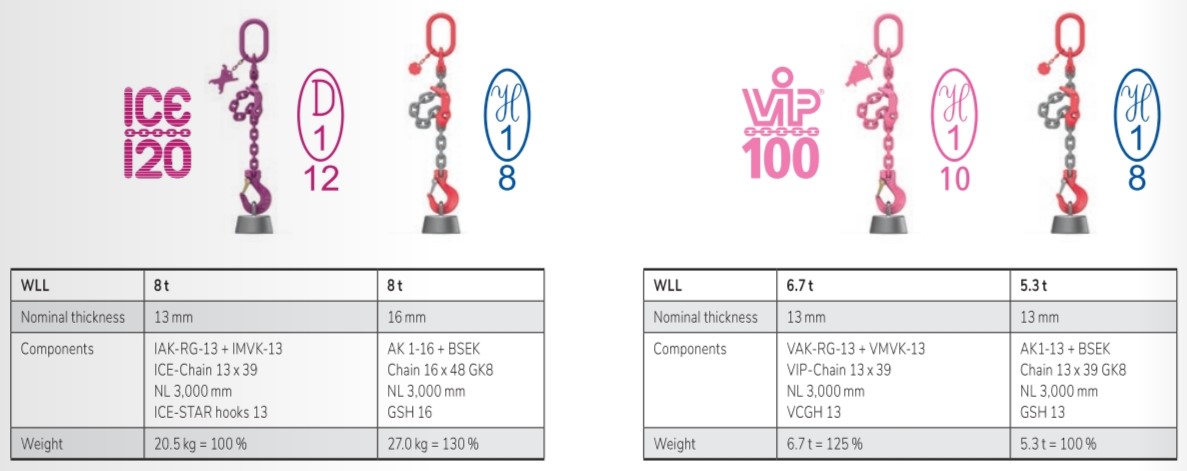
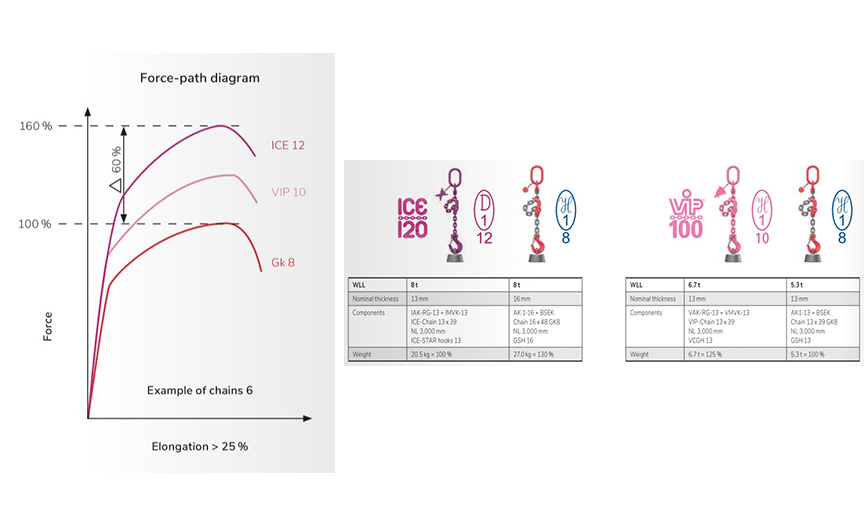
ICE Grade 120 lashing chain can replace a Grade 80 lashing chain of the next largest nominal thickness in direct lashing. ICE 120 is lighter than Grade 80 by 45% and has a breaking force up to 60% higher than Grade 80. This means that by using an ICE 120 lashing chain, you can have a large weight reduction with easier assembly and better safety.
How can Endless Chains help?
In situations where suitable lashing points are unavailable or the existing points are unsuitable, using hooks or shackles for connecting the lashing chain can expose the connecting element to bending stresses. This can compromise the integrity of the connection and lead to potential failure.
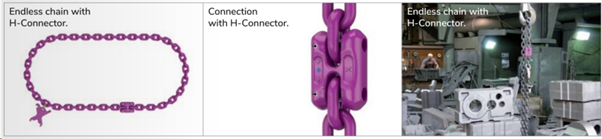
Endless chains, designed to eliminate the need for separate hooks or shackles, provide a safer alternative. With an endless chain, the lashing capacity remains consistent throughout the entire chain loop, eliminating the potential weak points associated with hooks or shackles. Moreover, doubling up an endless chain reduces the effects of sharp edges, as the load is distributed across a larger surface area, which limits the stress on individual chain links.
ICE-Endless-Chain and ICE-Multi-shortening Claw
When combined with the ICE-Endless Chain, the ICE-Multi-shortening claw forms a closed chain system that is easily adjustable and can be opened without tools. This flexibility allows for convenient use in situations where the load's dimensions may vary. This configuration is particularly beneficial for securing loads with unconventional shapes, such as stone blocks or concrete, which may lack dedicated lashing points.
The advantages of such a configuration are:
The endless chain can be opened without tools and
Is adjustable in its endless chain diameter.
Conclusion:
Understanding and addressing the challenges posed by sharp edges during load securing is crucial for ensuring safe and efficient transportation. By implementing the guidelines of the Load Restraint Guide and utilising appropriate protective measures such as edge protectors and endless chains, we can effectively mitigate the risks associated with sharp edges, ensuring the integrity of the lashing equipment and the safety of all road users.
Article copyright toRUD Group. This information is accurate at the time of publication, and RUD Australia takes no responsibility for any errors, inadvertent or otherwise.
This is a 2 part article.
Load securing during transportation faces many challenges, especially when dealing with loads that have sharp edges. The sharp edges pose a risk to the integrity of lashing equipment and can potentially lead to accidents, jeopardising the safety of vehicle occupants and other road users. Hence, understanding the potential dangers associated with sharp edges is critical to ensure safe and efficient transportation.
Sharp edges can cause considerable wear and tear on lashing equipment, primarily due to the concentrated stress they can impose on the lashing material. The repetitive bending and flexing of the lashing equipment as it goes over these edges can lead to fatigue, weakening the material and potentially causing failure. This failure can result in a sudden snap, a gradual weakening, or a distortion in the equipment's shape, resulting in a compromised load restraint system and a potential safety hazard.
In this article, we will address the question of what is considered a sharp edge and what measures should be taken to ensure safety when working with such angles.
Australian National Transport Commission and sharp edges
The National Transport Commission (NTC), in its Load Restraint Guide 2018, emphasises the importance of protecting lashing chains from sharp edges. This guide outlines a clear correlation between the sharpness of a corner and the chain's lashing capacity, highlighting the critical need to consider the load's geometry when selecting and using lashing equipment.
As per the guide, the lashing chain should be protected over sharp edges or rough surfaces to maintain its full lashing capacity.
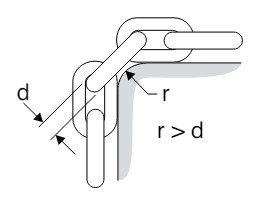
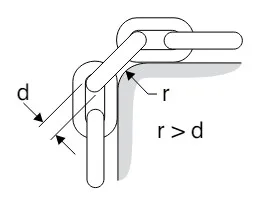
When the corner radius (r) is less than the chain size (d), the chain's lashing capacity is reduced by 25%. The above figure is taken from the Australian Load Restraint Guide 2018.
Understanding the Corner Radius and Chain Diameter
When assessing load-securing options, the radius of the sharp edge should be considered in relation to the degree of flexibility of the lashing equipment. The corner radius (r) refers to the radius of the curve at the corner of the load, while the chain diameter (d) refers to the diameter of the chain link. Understanding the relationship between the two is critical because it influences the choice of lashing equipment.
To ensure safe and effective load securing, the corner radius should always be greater than the chain diameter. This ensures smooth chain movement over the corner without any risk of jamming, kinking, or undue stress. When the corner radius is less than the chain diameter, the chain experiences increased bending stress, leading to potential damage and reduced functionality.
Protective measures must be implemented to reduce the risk when the corner radius is smaller than the chain diameter. Edge protectors are an excellent option because they serve as an intermediary between the chain and the load, preventing direct contact and protecting the chain from premature wear and tear.
To be continued ...
Article copyright toRUD Group. This information is accurate at the time of publication, and RUD Australia takes no responsibility for any errors, inadvertent or otherwise.
Welcome aboard Australia’s leading material lifting and handling technology company.
Click the button to read about us, our products, news, blog posts and everything happening at RUD in Australia and around the world.
When a foundry in Italy found itself in a hot problem, they turned to RUD.
Foundries are notoriously harsh environments. They get hot, insanely hot. Red-hot loads demand equipment that can withstand extreme temperatures while ensuring safe and efficient operation.
A foundry in Italy needed to move scorching hot steel bars that were long and weighed thousands of kilos. They were also square-shaped with a unique profile that required a unique lifting solution.
The Situation
The project had several challenges:
Extreme Temperatures: The bars reached a staggering 300°C, requiring a heat-resistant lifting mechanism to protect operators and equipment.
Weight and Size: Each bar measured 12 meters long and weighed a hefty 2,400 kg, requiring a robust lifting solution with a high working load limit (WLL).
Square Geometry: The square profile of the bars (14x14 cm and 16x16 cm) demanded a unique clamping mechanism for secure grip and transport stability.
A Unique Solution
RUD has been in the lifting business for years and knows steel like the back of our hand. So, we took our knowledge of high-quality clamps and chains and devised a custom system to handle this hot situation.
Built to Last: We customised a robust system that weighed 150 kg with a working load limit (WLL) of 2,500 kg. This was a rock-solid solution that provided stability and safety. The system's core component was a RUD VIP-2-strand sling, which hooked into the crane for a secure connection.
Versatile Clamping: The clamping mechanism was versatile and could adjust to slight size differences (14x14 cm and 16x16 cm) without a problem. This ensured a secure grip regardless of minor size discrepancies, preventing potential slippage during transport - the last thing you need when dealing with red-hot metal!
Safety First Followed by Efficiency: Safety is paramount in a foundry for both the employees and the equipment. Our safety-friendly design ticked all the boxes. We made it semi-automatic with a lever system for hooking and unhooking the bars. This kept the operators far away from the intense heat. The lever also controlled the rotation and locking of the clamps, ensuring the bars stayed put throughout the entire process. The clamps themselves were attached to super-strong 8mm RUD VIP Grade 100 sling chains - chosen specifically for their exceptional heat resistance and strength.
Game Change for the Client
This custom system has been a game-changer for the foundry, improving operations on the floor. It moves the steel bars with ease, keeping things efficient while prioritising operator safety. This project is a perfect example of how RUD combines high-quality lifting components with custom-designed solutions. This tailored approach sets RUD apart from the competition. We don't just sell products; we deliver solutions for even the most challenging high-temperature lifting situations.
This project shows our commitment to exceeding customer expectations. By combining our expertise in lifting with a dedication to custom design, we ensure safety, efficiency, and happy customers, no matter how hot the job gets.
If you want more details of our lifting and lashing solutions, email us or call us on 07 3809 1300.
Article copyright toRUD Group andRUD Australia. This information is accurate at the time of publication, and RUD Australia takes no responsibility for any errors, inadvertent or otherwise. Some pictures are shown for illustration only.
Cement asphalt plants use bucket elevators to move the material to the plant mixing tower. Bucket elevators used in asphalt plants should withstand high material temperatures (frequently reaching 180-200°C) and operate at high capacity (e.g. up to 100-200 tonne/hour).
An asphalt plant in South Australia had operational capacity problems and frequent DIN bracket-type bucket elevator system breakage. The plant was only producing 85,000t annually, which was quite low compared to the standard 100t per hour over a 2,000-hour system life (200,000t per year). In addition, they experienced significant downtime due to replacing the chains and brackets every 8-12 months, negatively impacting their efficiency and throughput.
The Challenges with the Current System
The current system had a few shortcomings, such as:
Low chain hardness: Forged chain links were wearing faster due to lower hardness.
Small wheel diameter: The small wheels did not fit the chain size, accelerating wear in the interlink area.
Single-link contact: Each wheel rotated and pivoted the bucket on a single link, concentrating the centrifugal load and causing high interlink wear.
In comparison to the short life of the DIN system, RUD endless chains only need to be replaced after producing approximately 200,000t. The bucket attachments, however, can be replaced after approximately 400,000t, which was a huge advantage to the plant. The RUD system is superior, with endless chains and bucket attachments, doubling the chain life and increasing component life by four times.
Description of the problem:
The chain contact with the DIN shackles was wearing out faster in the interlink area because it had lower hardness. The wheel diameter was also too small for optimal chain life. All the centrifugal load was applied on the bucket shackle as it moved around the wheel, resulting in higher interlink wear.
Some of the issues the plant was facing were:
High temperature - Resulting in the tempering of the forged shackles.
Head wheels getting worn - Because they were non-hardened.
High link wear due to the small diameter of the wheels and single link contact.
Noisier operation due to chain and shackles not being matched. For example, an 18mm chain was used for a 20mm shackle.
Why did the client approach RUD?
Most bulk material handling sites in Australia using the DIN shackle system are gradually being replaced with the RUD 2WIN solution. The 2WIN system has a 3-link interlink contact, which makes conveyors more stable and provides longer component life.
The client was aware that RUD had successfully completed many upgrades of 2WIN conversions, so they invited RUD to propose a full conversion plan.
Some of the reasons for approaching RUD were:
Limited availability: The original 20mm shackles required frequent replacement and became difficult to source globally.
Enhanced chain performance: The 19x75 chain spacing offered improved pitch length and higher hardness (82hV, a 10% increase).
Superior hardening: Continuous chain case hardening provided significant advantages over existing chain hardness.
The RUD Solution:
RUD implemented the 2WIN solution with a 3-link contact with the 19x75 chain, making the conveyor stable even on smaller-diameter wheels. This included replacing the treads with hardened wheels which fitted the existing casings. The treads were a bolt-on design for easy installation and replacement when required. The added benefit was that the capacity could be maintained or even increased with bucket spacing on a 19x75 chain.
RUD bucket elevator systems offer a range of proven, high capacity and flexible solutions for all vertical handling applications. The hardened steel chain systems support large capacity conveying, providing maximum throughput.
Increased Efficiency - Ultra-hardened chain R100 chain systems handle larger capacities and process more material.
Easy Adaptability - Perfect for a lump or granular material.
Simplified Maintenance - Easy access casings facilitate fast replacement of teeth, treads, and wheel segments.
The Result:
Regular chain wear measurements will be monitored with a service and support plan to maximise chain life and performance. We use predictable life projections for scheduled maintenance to avoid unplanned downtime. Most of our component kits are planned and delivered well before a shutdown. Backup kits are supplied before planned outages to avoid unscheduled downtime.
A Win-Win Situation
The RUD 2WIN system ensures efficient operation in the demanding hot asphalt environment for many years. The 2WIN attachment, fixed on the bucket, distributes load, and extends the bucket lifespan. Additionally, these attachments are replaced only with every second chain change, maximising efficiency. Full tensioner wheel contact minimises tread wear and extends chain life. The hardened RUD components are superior to the previous wheel, and the treads only require changing every second chain set.
This upgrade with the 2WIN system is a WIN-WIN for both RUD and the client.
If you want more details of our conveyor and drive systems, email us or call us on 07 3809 1300.
Article copyright toRUD KettenandRUD Australia. This information is accurate at the time of publication, and RUD Australia takes no responsibility for any errors, inadvertent or otherwise. Some pictures are for illustration only.
Secure and reliable lashing points are critical when transporting heavy machinery and cargo. These critical components guarantee the safety of goods in transit and minimise potential damage and costs. In addition, appropriately secured loads significantly reduce the risk of accidents caused by shifting cargo, protecting drivers, passengers, and other road users*.
* If you want more details on the importance of load securing, including the NHVR Load Restraint Guide, read our 2-part article published earlier:
Imagine a scenario where a load shifts unexpectedly during transport in your heavy vehicle. Not only could it damage the cargo itself, but it also poses a significant risk of accidents for drivers, passengers, and other road users. This is why proper load restraint using certified lashing equipment, as mandated by the Australian Load Restraint Guide, is absolutely crucial.
RUD: A Global Leader in Lashing Solutions
RUD is a world leader in the lifting and lashing industry and offers a comprehensive selection oflashing pointswith capacities ranging from3,000 to 32,000 daN. These lashing solutions cater to diverse sectors, including thelashing of heavy and large loadsin cargo transportation, vehicle transport, railway operations, and construction equipment.
Uncompromising Quality and Compliance
RUD takes quality and compliance seriously. All RUD lashing points undergo rigorous 100% crack testing and adhere to the strictest quality control procedures. This ensures that you receive reliable and compliant products that meet the demands of heavy vehicle transport.
Flexibility and Adaptability for Optimised Loading and Unloading
Regarding efficiency, RUD's lashing points are designed for unmatched flexibility during loading and unloading operations. The compact designs with large eye diameters allow greater versatility when using different lashing equipment. The diverse welding surfaces enable easy and seamless integration into the truck or trailer chassis during the build process.
For instance, theRUD OPTILASH-CLICKsystem stands out for its versatility. It can be moved along the chassis, reducing the required number of lashing points. This translates to cost savings and lighter weight for your heavy vehicle.
Benefits of Choosing RUD Lashing Points
There are numerous advantages to incorporating RUD lashing points into your transport operations:
Multi-directional lashing capability: Ensures comprehensive load security from all angles.
Two-fold safety factor: Provides exceptional reliability against breakage for peace of mind.
Marked tensile strength: Lashing capacity (LC) is marked in daN for accurate load identification.
Smooth, rounded shapes: Minimises wear and tear on lashing equipment.
Optimal connection sizes: Delivers secure and efficient attachment for your cargo.
The RUD Lashing Point Range
To cater to various load-securing needs in transport, RUD offers a comprehensive range of lashing points, including weld-on and bolt-on options.
There are several compelling reasons to choose RUD for your lashing point requirements:
Unmatched Expertise: RUD brings decades of global experience and leadership in lifting and lashing technology to the table.
One-Stop Solution: We offer a comprehensive range of load-securing solutions backed by a reliable service network.
Optimised Shapes: RUD's lashing points are designed with rounded shapes and no sharp edges to minimise wear and tear on your lashing equipment.
Clear Markings: Lashing load specifications are marked for easy reference during loading and transport.
Custom Branding: RUD lashing points can be custom-painted to match the colour of your vehicle and chassis.
By partnering with RUD for your lashing point needs, you are guaranteed exceptional quality, superior safety, and efficient operation of all your load securing and lashing requirements. RUD lashing points are available through a network of Australia-wide distributors. If you want to know your nearest RUD distributor, email us or call us on 07 3809 1300.
Article copyright toRUD KettenandRUD Australia. This information is accurate at the time of publication, and RUD Australia takes no responsibility for any errors, inadvertent or otherwise. Some pictures are for illustration only.
Part 2 of the 2-part article.Click hereto read Part 1.
Risk Analysis: A Crucial Step for Integrated and Attachable Lifting Points
A comprehensive risk analysis is mandatory before conducting a lift, whether utilising integrated or attachable lifting points. This analysis should consider the following key aspects regarding lifting points:
The lifting point or lifting eye should not have any sharp edges.
The lift point must be suitable for the hooks/shackles/slings being used.
Wall thicknesses and edge distances must be assessed to ensure the load can be transferred appropriately into the structure.
The product-specific marking must be provided.
Lifting Point Selection Criteria
Choosing the appropriate lifting point is crucial for ensuring the safety and efficiency of any lifting operation. Here are some key factors to consider during the selection process:
Mass and Centre of Gravity: The payload's mass and centre of gravity are the primary determinants. Lifting points with a Working Load Limit (WLL) equal to or exceeding the load weight must be selected. Additionally, the centre of gravity will influence the number and placement of lifting points required for balanced lifting.
Number of Lifting Points and Lifting Configuration: The number of lifting points depends on the number of legs in the lifting sling and the desired lifting configuration (single-leg, multi-leg). The chosen configuration will impact the overall WLL of the lifting system.
Deduction Factors: External factors like tilt angle and temperature fluctuations can affect the WLL of a lifting point. Deduction factors specific to the anticipated lifting scenario should be considered during selection.
Lifting Point Type and WLL: Based on the load weight, lifting configuration, and deduction factors, a lifting point with an appropriate WLL and suitable type (boltable, weldable, rigid, swivel) must be chosen.
Verification and Documentation
The selected lifting point should possess a valid test certificate conforming to the relevant standards. This certification verifies that the manufacturer adheres to stringent testing protocols, including proof load application, destructive tensile tests, and crack detection procedures.
Design and Calculation Resources
Providing engineers access to 2D/3D CAD design documents and calculation programs can significantly enhance the lifting point selection process. These resources allow engineers to incorporate lifting points directly into technical drawings while considering factors impacting WLL calculations, such as:
The number of lifting strands/legs.
Potential angle variations during the lift.
The symmetry or asymmetry of the lifted object.
Simplified Lifting Point Inspection with RFID Technology
Regular inspection and maintenance of lifting points are essential for safe operation. RUD offers lifting points equipped with RFID transponders. These transponders contain unique identification numbers that a dedicated reader can scan to transmit data to cloud-based software. This technology simplifies inspection recordkeeping and allows for convenient access to vital lifting point information.
Click here to see the RUD ACP-TURNADO, the world’s first intelligent lifting point with RFID.
Lifting Point Purchasing Checklist
To streamline the selection process, consider this checklist when purchasing lifting points:
Is the lifting point type specified in the project plan?
How many lifting points are needed per component?
What is the required WLL for the lifting point?
Are there any specific design dimensions to consider?
What are the anticipated loading directions for the lifting point?
Are there any necessary approvals or certifications required for the lifting point?
By following these guidelines and utilising available resources, you can ensure the selection of the most suitable lifting points for your specific lifting applications, promoting a safe and efficient operation. RUD Australia has a team of experienced, CPEng-qualified engineers who can assist you in selecting the correct lifting points for your application.
Article copyright to RUD Group. This information is accurate at the time of publication, and RUD Australia takes no responsibility for any errors, inadvertent or otherwise.
This is a 2 part article.
Lifting points are fundamental elements within any lifting system. They are the crucial connection between lifting equipment (cranes, hoists) and the load itself, facilitating lifting, rotating, and manoeuvring operations. Common lifting point examples include eyebolts, swivel load rings and pad eyes, which connect to lifting chains using hooks, shackles, or other dedicated connectors. Modern lifting points are engineered to ensure safe load handling and to prevent damage throughout the lifting and transportation process.
Integrating Lifting Points at the Design Stage
With over 140 years of experience, RUD recognises that lifting points are often overlooked during the initial design phase. This can lead to complications and potential safety hazards later in the project. Incorporating lifting points should be prioritised from the outset to prevent such issues. This includes considering lifting requirements throughout the product lifecycle, from production and internal transportation to delivery, installation, assembly, and even potential relocation or decommissioning. Implementing lifting points at each stage minimises risk and promotes smooth operation. During the design phase, collaboration between the engineering, production, logistics, and supply chain management teams ensures proper lifting point integration.
Evolution of Lifting Points: From Simple Eye Bolts to Modern Safety Standards
Over time, lifting point design has evolved to comply with changing regulations and safety requirements. Four decades ago, DIN 580 eyebolts were the most prevalent lifting point option. However, a series of accidents in German underground operations, attributed to eyebolt breakage, necessitated stricter standards. These types of incidents regarding the misuse of collared eyebolts led to the development of modern lifting points, offering significantly higher safety margins against breakage in all directions. As a result, collared eyebolts such as DIN 580 and AS 2317.1 eyebolts are no longer the preferred choice for lifting points.
The Role of Lifting Points in Conjunction with Lifting Equipment
Lifting points play a vital role when working with lifting equipment like cranes, crane trucks, and material-handling machinery. Lifting chains that connect the machine to the load rely on these critical components. In Australia, specific standards for lifting (e.g. AS 4991, AS 3775.2, AS 3776) set the requirements for various lifting gear, prioritising operator safety. This focus on safety emphasises the importance of selecting the most suitable lifting gear for each application.
Types of Lifting Points: Boltable vs. Weldable, Rigid vs. Swivel
Lifting points are generally categorised into two primary types: boltable and weldable. Boltable options are the most common due to their versatility, allowing for easy assembly and disassembly as needed. They are available for standard thread sizes, offering maximum flexibility. Conversely, weldable lifting points are permanently affixed to the load. Their primary advantage is eliminating accidental unscrewing or over-tightening during load rotation or turning. Beyond these classifications, lifting points can also be rigid or swivelling. Rigid variants, such as collared eyebolts or pad eyes, lack adjustability in the pulling direction. Swivel lifting points, on the other hand, offer greater flexibility. They are commonly employed in multi-strand lifting applications, as they can automatically align themselves with the lifting force during load handling.
Advantages of Lifting Points with Swivel and Rotation Capabilities
Lifting points specifically designed for rotating and turning applications offer additional benefits, translating into increased value. These points often integrate ball bearings, enabling a full Working Load Limit (WLL) under rotation. This makes them ideal for scenarios requiring load manipulation during lifting. The ball bearings significantly reduce sudden and unwanted movements during rotation, a crucial safety feature. Achieving smooth, impact-free rotation under load is only possible with these bearings.
WLL is a critical industry term indicating the working load a lifting point can be subject to. Selecting appropriate lifting points necessitates a thorough understanding of their WLLs. Several factors influence a lifting point's WLL, including its attachment method, positioning, load symmetry, and the number of lift points used.
To be continued ...
Article copyright to RUD Group. This information is accurate at the time of publication, and RUD Australia takes no responsibility for any errors, inadvertent or otherwise.
Introduction:
Germany, with 34 million tons of cement production, is Europe's leading cement producer*. When TBA, a renowned concrete supplier needed assistance to lift the roof of a concrete silo used for an infrastructure project, they turned to RUD.
The Challenge:
The project required lifting and placing a roof on top of a silo located near Unterkochen.
The project presented several challenges for the lifting operation:
Logistics: The circular silo roof was 10 meters in diameter, 3 meters in height and weighed 16 tonnes. Lifting such an object requires careful planning.
Inclement Weather: The project location was known for inclement weather conditions from strong crosswinds and average temperatures of 2°C.
Limited Lifting Space: The lift was done using a crane with double hooks. This required precise planning of the lifting equipment to maintain safe load capacity within the permissible range while ensuring sufficient chain length.
The Solution:
Due to the heavy lift and the lifting configuration, RUD engineers proposed that a 13mm, 2 x 2-strand ICE 120 chain was ideal for the operation. To maintain the chain's working load limit (WLL) within safe parameters, it was calculated that a minimum length of 6.402 meters was required for low sling angles.
However, there were only 2 x 7-metre 2-strand chains and 2 x 4-metre chains in stock. Instead of postponing the project to another date, we decided to use IH (ICE-H) Connectors to extend the 4-metre chains.
The I-H Connectors are a fast, simple, and cost-effective solution for converting ICE chains into endless configurations. They are compact, easier to manage than conventional chain connectors, and flexible enough to fit the ICE chain.
Once the chains were extended to the necessary length, ICE Star Hooks were attached to the chain ends. Due to their innovative skeletal design, ICE Star Hooks can be used in temperatures from -60°C to 300°C and are up to 25% lighter than Grade 80 hooks of the same WLL.
This solution enabled a safe and secure lift of the silo roof. The roof was lifted to its final height of 35 meters above ground for the final assembly.
Products used in the project:
ICE 120 2-strand 13mm chains
ICE H-Connectors
ICE ISAK Masterlinks
ICE IMVK Shortening Claws
ICE Star Hooks
Conclusion:
This project demonstrates how RUD's innovative lifting solutions, such as the flexible ICE Chains, can solve complex lifting challenges. RUD is the innovator and sets standards for lifting technologies through expertise and flexible solutions to ensure safe and successful operation even in challenging conditions.
* The European Cement Association. Key Facts & Figures: Main World Producers in 2018; The European Cement Association: Brussels, Belgium, 2020
Article copyright to RUD Ketten and RUD Australia. This information is accurate at the time of publication, and RUD Australia takes no responsibility for any errors, inadvertent or otherwise. Some pictures are for illustration only.
Welcome aboard Australia’s leading material lifting and handling technology company.
Click the button to read about us, our products, news, blog posts and everything happening at RUD in Australia and around the world.
Part 2 of the 2-part article.Click hereto read Part 1.
Lifting chain safety depends on selecting the correct chain grade, ensuring proper certification and conducting regular inspections. Grade identification markings, traceability systems and electromagnetic crack testing all play an important role in preventing lifting incidents. Choosing the right lifting chain requires consideration of load weight, attachment points, operating conditions and Working Load Limit (WLL) requirements to ensure safe and efficient lifting operations.
Identifying Chain Grades
Lifting chains are stamped with their grade for easy identification. Grade 80 and Grade 100 lifting chains use the “(H)” stamp followed by the corresponding number:
H8 for Grade 80
H10 for Grade 100
Grade 120 lifting chains use the “(D)” stamp. It is important to note that hoist chains cannot be used for lifting applications. Hoist chains are stamped with letters to prevent potentially dangerous mix-ups with lifting chains.
Safety Certifications and Testing
Safety is critical in lifting operations. Lifting chains should always be approved by relevant regulatory bodies, such as DGUV in Germany. Traceability is also important for lifting chain safety and compliance. Batch codes and RFID chip tracking, offered by RUD, assist with identification and inspection management. Regular inspections and electromagnetic crack testing are essential to maintaining lifting chain integrity and operational safety. Electromagnetic crack testing should be conducted every three years as part of ongoing inspection procedures.
Choosing the Right Lifting Chain
Selecting the correct lifting chain depends on several operational and environmental factors.
RUD assists customers in selecting the appropriate chain suspension for lifting applications based on:
Load type and weight
Attachment points
Presence of sharp edges or rough surfaces
Required Working Load Limit (WLL)
Load centre of gravity
Operating temperature range
Ease of operational safety checks
Choosing the correct lifting chain helps improve lifting safety, operational efficiency and compliance with lifting standards.
Conclusion
Understanding the types, grades and applications of lifting chains is essential for safe and efficient lifting operations.
Safety should always remain the priority by:
Following lifting regulations and standards
Conducting regular inspections and testing
Selecting the appropriate lifting chain for the application
Ensuring traceability and compliance
Proper lifting chain selection and maintenance help reduce operational risks and improve lifting performance across industrial applications.
Frequently Asked Questions
How can lifting chain grades be identified?
Lifting chain grades are identified through stamped markings on the chain. Grade 80 uses H8, Grade 100 uses H10 and Grade 120 uses a D stamp.
Can hoist chains be used for lifting?
No. Hoist chains are not designed for lifting applications and are marked differently to prevent unsafe use.
Why is lifting chain certification important?
Certification ensures the lifting chain complies with recognised safety and performance standards required for lifting operations.
What inspections are required for lifting chains?
Lifting chains require regular visual inspections and electromagnetic crack testing to identify wear, damage or fatigue.
What factors should be considered when selecting a lifting chain?
Factors include load weight, attachment points, sharp edges, Working Load Limit (WLL), centre of gravity, temperature range and inspection requirements.
What is electromagnetic crack testing?
Electromagnetic crack testing is a non-destructive inspection method used to detect cracks or defects within lifting chains to improve operational safety.
Click hereto download our Lifting Points and Lifting Means Catalogues.
Article copyright to RUD Australia. This information is accurate at the time of publication, and RUD Australia takes no responsibility for any errors, inadvertent or otherwise. Some pictures are for illustration only.
This is a 2 part article.
Lifting chains are critical components in material handling and heavy lifting applications. Grade 80, Grade 100 and Grade 120 lifting chains each offer different levels of strength, weight reduction and durability. Modern lifting chains provide superior adjustability, temperature resistance and sharp-edge performance compared to wire rope and synthetic slings, making them ideal for demanding industrial environments.
What are Lifting Chains?
The age-old proverb, "A chain is only as strong as its weakest link," first used in Thomas Reid’s “Essays on the Intellectual Powers of Man” in 1786, perfectly encapsulates the critical role of lifting chains in material handling. This article delves into the world of lifting chains, exploring their types, grades, uses, and essential safety considerations.
Lifting chains are crucial connectors between a load and a lifting hook. They are typically secured to a designated lifting point on the load, ensuring safe and secure lifting. Lifting chains form part of chain suspensions, which, along with the chains, include a master link, end components like hooks, connecting or shortening components and balancers if required.
Evolution of Lifting Chains
Modern lifting chains have significantly improved compared to their predecessors. While older chains suffered from lower material strength and cumbersome weight, today’s lifting chains offer high strength, durability and cost-effectiveness, making them the preferred choice for lifting and lashing applications. Modern lifting chains also weigh considerably less for the same Working Load Limit (WLL), which is beneficial when lifting heavy loads.
Types of Lifting Equipment
While wire rope and synthetic slings offer alternative lifting options, they have limitations, particularly in terms of adjustability, susceptibility to sharp edges and performance under extreme temperatures.
Lifting chains stand out because of their:
Adjustability - Length can be easily modified using additional components.
Sharp-edge resistance - Greater resilience against damage from sharp edges.
Temperature tolerance - Suitable for a wider range of operating temperatures.
Choosing the Right Chain Grade
Several lifting chain grades exist, including Grade 80, Grade 100 and Grade 120, each with its own Working Load Limit (WLL). Selecting the appropriate grade is critical for safety and efficiency.
Grade 80 Lifting Chain
Grade 80 lifting chain has been in existence since 1970 and remains popular in some parts of the world because it offers affordability. However, it has a lower breaking force and higher weight compared to newer grades. Tip: RUD was the first chain manufacturer approved for Grade 80 in 1972.
Grade 100 Lifting Chain
Grade 100 lifting chain has been in existence for more than 30 years and is widely used across lifting applications. It is a step up from Grade 80 and provides a balance between cost and performance. Tip: RUD launched Grade 100 as VIP (Verwechslungsfrei in Pink) in 2006, and it remains a popular solution for many lifting applications.
Grade 120 Lifting Chain
Grade 120 is the latest and strongest lifting chain grade, offering lighter weight and higher breaking force than Grade 80. It is exclusive to only a few manufacturers, including RUD.
Grade 120 lifting chains provide:
A 30% reduction in weight compared to Grade 80
A 60% higher breaking force than Grade 80
Excellent robustness and resistance to sharp and rough edges
This means that an ICE Grade 120 lifting or lashing chain, regardless of nominal thickness, can replace a Grade 80 chain of the next higher nominal thickness. Click here for more details on RUD ICE 120 Chains.
Frequently Asked Questions
What are lifting chains used for?
Lifting chains are used in material handling and lifting applications to connect loads to lifting equipment safely and securely.
What is the difference between Grade 80, Grade 100 and Grade 120 lifting chains?
Grade 80 is a traditional lifting chain grade offering affordability. Grade 100 provides improved strength and performance, while Grade 120 offers the highest strength, lower weight and increased durability.
Why are lifting chains preferred over synthetic slings?
Lifting chains provide better adjustability, improved resistance to sharp edges and better performance under extreme temperatures.
What does WLL mean in lifting chains?
WLL stands for Working Load Limit, which is the maximum load a lifting chain can safely lift under normal operating conditions.
What are the advantages of Grade 120 lifting chains?
Grade 120 lifting chains offer reduced weight, higher breaking force and greater resistance to harsh lifting environments compared to lower chain grades.
to be continued ...
Article copyright to RUD Australia. This information is accurate at the time of publication, and RUD Australia takes no responsibility for any errors, inadvertent or otherwise. Some pictures are for illustration only.
"A chain is only as strong as its weakest link."
The reliability and safety of our products are central to our business. Our quality commitment is reflected in our integrated QM / UM-System, which ensures all RUD employees comply with the high quality and environmental standards set by us.
Quality and environmental protection.
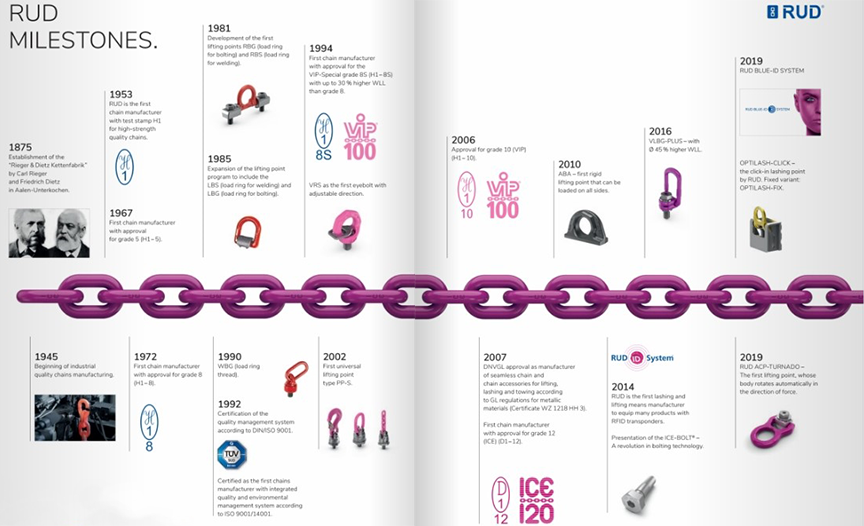
1953 marked a turning point in the history of the hoist industry when RUD became the first company to receive the H stamp for high-strength chains. The H stamp, which symbolises quality and safety, has revolutionised the world of lifting and lashing. RUD is the first manufacturer of new quality grades and carries the H1-stamp for Grade 60, Grade 80 and Grade 100. Seven decades later, RUD is still at the forefront of innovation.
Watch the new video, which looks at the stamp's origins and its role in quality and safety.
RUD Australia will be closed from Monday 25th December until 2nd January inclusive.
For emergencies, please call our main line on 07 3809 1300 and one of our team will help you.
Christmas/New Year Trading Hours:
Normal Trading Hours
Monday 18/12/2023 – Friday 22/12/2023
Closure Period
Monday 25/12/2023 - Monday 01/01/2024
Normal Trading Hours
From Tuesday 02/01/2024
Welcome aboard Australia’s leading material lifting and handling technology company.
Click the button to read about us, our products, news, blog posts and everything happening at RUD in Australia and around the world.
Christmas is the season for kindling the fire of hospitality - Washington Irving.
Christmas is doing a little something extra for someone. It is the season of giving, and who better to talk about giving than a charity? Our December Charity Champion is Sallyanne, who is very passionate about giving to the community through the #BeAnElf organisation.
The#RUDstory is about our employees, the charities they support each month, the values they hold dear, and their experience of teamwork, challenges and motivation at RUD.
How many years have you been involved with the Be An Elf charity?
I have been supporting the BE AN ELF charity for 6 years, and RUD Chains has been participating for the last 5 years. This is my favourite charity which I support as I love doing the shopping and giving back to the community.
What inspired you to continue advocating for this charity?
My children have been very fortunate to receive gifts on Christmas morning, and I wanted to teach my children to give back to the community. The Byrne family has been part of the BE AN ELF charity for the last six years, and we love making some local children happy on Christmas Day. This is RUD’s fifth year supporting the charity, which is exciting. One thing I love about this charity is the “Elves” deliver the gifts on Christmas Eve so the children receive their gifts on Christmas Day.
Why is this charity important to you?
I think the big smiles on the children say it all. Being given the gift ‐ granting the very longed-for item and brand from the top of their Wish Letter to Santa' is incredible. We've gone and done it ‐ granted that first wish ‐ bought a new pair of black school shoes, the next Wish Letter for a most desired Barbie, then a really longed-for 'new undies' that weren't holey and pre-worn. RUD and I want to make a difference, contribute to our local community and put smiles on children's faces.
How does the charity serve the community?
For the last 16 years in December, BE AN ELF volunteers read letters written by children to Santa and arrange gift bags for distribution. The letters are mostly written by local kids or their mums or dads asking for 'new shoes', ' bed sheets’, ‘pillow' or other necessities. The children are referred from services such as Centre Link, Social Workers, Neighbourhood Centres, Family Services and GP’s. The BE AN ELF mission is to put smiles on the faces of less fortunate local Queensland kids on Christmas Morning. When times are tough, it’s the little people who are struggling that suffer the most, and being different can be a hard lesson to learn.
How does the RUD team help with the cause?
The difference we make at RUD through the BE AN ELF is an empowering contribution to society’s vulnerable and smallest members who, most of the time, end up neglected because they do not have a voice.
Any additional comments?
I love contributing to this cause, and every year RUD contributes more wish letters which makes me so proud to work alongside such generous people. All for the same cause of making Christmas the most magical day of the year for all.
We are always looking for people in engineering, fabrication, welding, sales or marketing who believe that customers and culture are important. If there are no suitable roles,click hereto send us an expression of interest.
RUD’s apron conveyors are suitable for a wide range of applications, such as high-temperature materials, waste, aggregate, dry ash handling, mineral processing, and kiln applications.
RUD apron feeders increase the efficiency of bulk material handling in high-temperature and high-abrasive applications. They are extremely versatile and can convey bulk materials without causing spillage or degradation.
Simple, robust construction with high strength, Quenched & Tempered plates.
Permanently closed apron surface throughout the entire life cycle.
Lower overall heights due to small chain Drive & Tail end wheel diameters.
Highly efficient because all drive components are accurately calibrated.
Sealed conveyor systems.
Project:
RUD Australia was tasked to design, build and install an apron feeder conveyor for an automotive recycling operation. The scope of the project was to offer a complete solution to solve issues around moving shredded auto parts.
Challenges:
The outdated handling process had individual aprons with rollers installed that required constant maintenance. The goal was to increase production and reliability while minimising maintenance and unplanned shutdowns.
Available data at the engagement stage:
Collection of 24 cubic metres of recycled nonferrous material in a hopper.
Providing a dump station for a WA500 wheel loader with a 3-bucket storage system.
Transport the material over an inclined 70-degree slope as a tumble-back system.
Provide a controlled feed rate into a post-process trommel and sorting equipment as the primary input conveyor system.
The RUD Solution:
RUD designed, manufactured and commissioned a workable solution as part of the improvement project. The RUD-engineered round steel chains proved to be a successful improvement over the plate and bushing pin-type chains.
The Result:
90 metres of 30 x 120 R100 Premium RUD Chain, PCD 614mm hubs and teeth on the drive and reversing tensioner wheel.
89 opposing type MEE-T attachments.
RUD Australia designed and manufactured all rollers, frames and wear rails.
RUD supplied a complete spare parts package with the commissioned system.
Comments:
The fully commissioned technical and commercial reports were signed off as part of acceptance.
This complete Apron Feeder system was manufactured in Brisbane.
RUD Australia provided all Operating & Maintenance guidelines.
Technical Details:
Specifications
Dimensions
Horizontal Conveying Length
8.2 Metres.
Hopper Capacity
24 m3.
Inclined Conveying Length
7 Metres.
Horizontal Conveying Length - Top
0.65 Metres.
Linear Speed
0.1 m/s typical speed 0.2 m/s maximum.
Conveyed Material
50mm average height of material, 900Kg/m³ average density, process 50T p/hr.
Chain Capacity
566kN (break load).
Apron Pans
89 pieces at 480 centres, each weighing 120kg. Minimum 1550mm wide.
If you want to know how the team at RUD can help you, please call us on 07 3809 1300 or fill out an enquiry form here.
Lifting and turning a pump weighing several tonnes was done safely and easily with RUD ICE endless chains.
RUD lifts a massive pump in a mine.
Mining in Chile is concentrated in the Norte Grande region spanning most of the Atacama Desert. The Atacama Desert lies 60 km southeast of Calama and is known as the driest desert in the world. The biggest challenge for mining companies is the lack of water, which is vital to the mining processes for concentrating and leaching. Most mining companies extract water from aquifers located high in the Andes Mountains, while some get it pumped from the coast.
The mine that requested a solution from RUD, extracted copper and molybdenum ore from depths of 1000 mts. This mine used a pump that transported water through 144 km of pipes from the coast to the mine site.
The problem.
The pump to transport water was huge, and its size and weight over several tonnes posed several challenges during maintenance and repair work. The mining company could only use shackles rated at 40kg per shackle and the weight of the total number of shackles to raise the pump made it impossible with this option.
The solution.
Lightweight chains instead of heavy shackles.
To solve the weight problem, RUD offered a solution of using adjustable ICE endless chains with a nominal thickness of 16 mm. ICE endless chains are used to lash an object directly without lashing or lifting points. The advantage of ICE endless chains is that it can be secured and opened without tools and the chain can be adjusted in its loop diameter. The ICE endless chain can be used with an ICE multi-shortening claw to form a closed chain.
The result.
A safe solution weighing only 11 kg per chain with the overall weight reduced by 70%.
For more details on how RUD can help with your lifting requirements, please call us on07 3809 1300or fill out an enquiry formhere.
Indo Pacific International Maritime Exposition is Australia’s premier commercial maritime and naval defence exposition which will be held at the International Convention Centre (ICC) Sydney from Tue 7 - Thu 9 Nov 2023.
This year's expo is on track to be the largest iteration in 23 years, with key players from the maritime and naval defence communities.
RUD Australia is also a certified supplier to the Australian Defence Force. Some of the solutions we provide to the ADF are:
Lifting & Lashing Solutions
Engineered Solutions
Material Handling Solutions
Heavy Vehicle Hoists
What does RUD offer?
We offer bespoke solutions for the challenging conditions in the maritime industry. Forged from Duplex Stainless Steel 1.4462, our products are suitable for corrosive applications, including the subsea ROV-Hook, which has been developed specially for rigging with underwater robots.
ROV Subsea Rigging Hook
Developed for subsea rigging applications for use with Remote Controlled Vehicles (ROVs)
Eliminates the risk of snagging and accidental rigging
Has an outer smooth profile with no protruding hook nose
Outward opening safety latch closes automatically when the ROV releases the trigger
The safety latch is securely locked in a closed position
The hook safety latch opening and closing can be operated by a single ROV
RORO Weld-On Lashing Point
MIL-STD-209K, US Dept of Defence Interface Std
Phosphate surface
Used specially for low temperatures -40°C
100% crack detected
Lashing capacity - 10,000 daN
INOX-ABA Weld-On Lashing Point
Forged from Duplex Steel 1.4462 (Coming soon - Galvanised ABA)
Full WLL in any direction with 4:1 design factor
Clear marking of the WLL
Patented wear markings on the inside and outside
Closed and circumferential fillet weld
Temperature Range -40ºC to 250ºC with no reduction in WLL
INOX-STAR Bolt-On Lifting Point
Pivots 360° for adjustment in load direction
Clear marking of the minimum WLL
Material: Duplex steel 1.4462
RUD 4:1 safety factor
TECDOS Drive Technology
TECDOS Drives can be used in linear, rotating, horizontal or vertical applications to:
Move cranes, align, and adjust loaders and open and close cargo space covers on ships
Lift and lower platforms, drive ferries, and extend telescopic booms and skidding systems
Open and shut gates and roofs
Drive gangways in ports
Click here to visit the Indo Pacific International Maritime Exposition website.
Visit our booth in the Defence Jobs Qld Area from 7-9 Nov 2023 at the InternationalConvention Centre to discuss our Maritime Lifting, Lashing and Drive Technology Solutions.
For more information on RUD Solutions for the Maritime Industry, click here to send us an enquiry.
If there's one thing The Order of Mo is known for, it's this. Growing a Mo is our symbol for better men’s health. It also grabs attention and starts important conversations.
November is Movember for Leigh Dalton, who champions the month in our #RUDstory series. The RUD Stories are about our employees, the values they hold dear and the highlights of teamwork, challenges and motivation while working at RUD.
#meetLeigh - The RUD November Charity Champion promoting men’s health issues on prostate and testicular cancer and men’s suicide.
Leigh Dalton, based at our Perth office, has been an advocate for Movember and has been prioritising this charity in the RUD workplace since 2014. The People & Culture team sat down with Leigh once again to understand why he is passionate about Movember, how RUD is helping to create a culture of care and well-being and why mental health should be a priority in our daily lives and in the workplace.
How many years have you been involved with the Movember charity?
I did Movember with some of the lads I played basketball with a couple of times before starting with RUD. But since I’ve been here, I’ve captained the team every year and this is our 10th consecutive Movember campaign.
What inspired you to continue advocating for this charity?
The conversation around men's health is very important. I have two young sons who I hope get to grow up in a society where men speaking openly about their physical and mental health is met with positive conversation and compassion rather than the old school “just harden up” response of past generations.
Do you think employee well-being is critical at RUD?
Employee well-being should be human well-being, regardless of your occupation and workplace, whether you work full-time, part-time or are not in employment. Everyone’s well-being is important. That being said, RUD does a great job of putting the staff's well-being at the forefront, with plenty of opportunities for people to be involved in various and numerous activities throughout the year and advocating for open and honest conversation amongst everyone here.
What other programs do you get involved with?
I’m a supporter of The Cancer Council as I have a personal and family history of cancer in various forms, and I’m also a big supporter of The Salvation Army. Both organisations do great work in the community in supporting those in need in what is often the darkest times of their lives.
Why do you think others should join your team to raise awareness for mental health?
I understand not everyone wants to commit to growing a Mo or the move challenge, and that’s okay. I just hope people hear the message about open and honest conversation and looking after ourselves, speaking up when things aren’t great and going to the GP when something isn’t right. Over the years, I’ve had conversations with colleagues who were thankful they were encouraged to have those types of discussions and that it made a good positive difference in the lives of them and their loved ones. Click here to join or donate to the RUD Chains Moustache Club.
So give it a go - it shows the world you stand for healthier men and a healthier world.
Interested to join the team?
Check our current vacancies on our Careers page or on Seek.
We are always looking for people in engineering, fabrication, welding, sales and admin who believe that customers and culture are important. If there are no suitable roles, click here to send us an expression of interest.
A Tyre Protection Chain is ideal for creating a barrier between the tyres and the ground surface. TPCs provide maximum protection to sidewalls and tread areas, virtually eliminating tyre failures from rock cuts and staking. This guarantees maximum production from the loader and peace of mind with unplanned tyre maintenance expenses.
The Problem
Australian hard rock quarries have some of the most challenging environments in the world for rubber tyred machines. Boral Quarries' West Burleigh site has been providing road base and other quality aggregates into the Gold Coast and surrounding areas for many years. Maintaining uninterrupted supply is essential to the area’s economic growth and their rubber tyred CAT988G loader is a major asset in the quarrying process. Unplanned tyre failure can cause havoc to production schedules and require expensive and ‘hard to get’ replacement tyres.
The Solution
RUD Chains have been providing TPCs to West Burleigh for over a decade and have fitted a further four chains to their CAT988G wheel loader. The FELS Gigant Plus X19 close mesh ‘extra heavy duty’ Tyre Protection Chain has been proven in Australia and around the world as the best-performing chain for hard rock quarry applications.
More on the Gigant Plus X19
Available in sizes from 26.5-25 up to 45/65-45.
Rhomboid wear links offer maximum tyre protection.
Large link wear volumes deliver an outstanding service life.
The Benefit
RUD’s Gigant Plus X19 provides maximum protection to sidewalls and tread areas, virtually eliminating tyre failures from rock cuts and staking. West Burleigh Quarry can now be confident that they will achieve maximum production from the loader and avoid unplanned tyre expenses.
West Burleigh quarry’s traction and fuel usage has improved, and tyre replacement has been reduced by up to 6 times.
What the customer says
“We see our long-term relationship with RUD Chains more as a partnership than supplier and customer. RUD’s product keeps our tyre costs down - a major expense for any quarry operation. With guaranteed production, our return on investment for the chains is exceptional.”
Article copyright to RUD, this information is accurate at the time of publication and RUD Australia takes no responsibility for any errors, inadvertent or otherwise. Some pictures are for illustration only. For more details on how RUD can help with your crane requirements, please call us on07 3809 1300or fill out an enquiry formhere.
A gangway is a narrow walkway or platform that provides safe access to a ship, truck, or train. Ship gangways are used for the passage of both passengers/crew and cargo. They must move in all directions and be height-adjustable for use with different ships. The gangways must also be robust, secure and safe under challenging conditions.
RUD’s TECDOS Drive system offers an ideal solution for a gangway, using calibrated steel chains fitting into complimenting sprockets. TECDOS drive systems are an ideal replacement for pinion gear and wire rope drives because they function reliably even under the most challenging conditions.
For gangways, RUD TECDOS drive systems can include:
TECDOS PI-GAMMA DRIVE
The PI-GAMMA drive system, with a fixed 180-degree angle (PI) or a flexible 90-180-degree (GAMMA), is suited for horizontal and vertical applications. The PI-GAMMA pocket wheel block can pull the load along the round steel chain or move it to a different location.
The advantages of PI-GAMMA DRIVE:
Ideal 2-in-1-solution.
Light and can be used in narrow spaces.
Can be used between a 90° and 180° redirection or a total 180° redirection.
Multiple lifting points.
Durable, reliable, and safe.
Easy installation without the need for a stable mounting base.
TECDOS PREMIUM ROUND LINK CHAIN
The core component of each TECDOS drive system is a highly wear-resistant, calibrated round link chain that can be used in challenging conditions or with abrasive materials. TECDOS chains have high-grade strength to ensure maximum operating safety. The Premium Round Link Chain is case-hardened.
TECDOS END CHAIN FIXING
The chain end fixing, which connects chains to supporting structures, transfers 100% of the TECDOS chain operating forces. Because of its adjustable axis, it also ensures maximum flexibility during use.
TECDOS LIFT LIMITER
The lift limiter prevents the chain from “passing through” by limiting the unloaded sides of the chain, working as a route limiter.
The Project:
RUD Australia was approached to build a passenger gangway for a cruise ship terminal in Western Australia. The client could not implement the standard method of using a hydraulic cylinder, as it was too expensive and not cost-efficient for the required lift height.
The Solution:
After understanding the project's scope and the solution that best met the client's requirements, RUD developed a dual-strand loop drive component package for this project.
The Result:
RUD implemented a TECDOS 65 component package. Gear motors independently drove the Pi Drives.
The Project Inclusions:
2 x TECDOS 65 PI-GAMMA DRIVE
2 x TECDOS 65 HEBG END FASTENER
34m TECDOS 65 PREMIUM CHAIN
2 x POWERPOINT PP-VIP M36
2 x TECDOS 65 SPECIAL BOLT
2 x TECDOS 65 POCKET WHEELS
TECDOS systems are ideal for applications where materials or equipment must be swivelled, lifted, moved, or rotated safely and reliably. RUD quality is a result of years of research and development, creating bespoke drive solutions that are used by leading companies in maritime, engineering, automotive, and wind power and by military forces around the world.
Article copyright to RUD, this information is accurate at the time of publication and RUD Australia takes no responsibility for any errors, inadvertent or otherwise.
For more details on how RUD can help with your crane requirements, please call us on07 3809 1300or fill out an enquiry formhere.