Corrosion is a huge problem in refineries and chemical plants, so how can you ensure safe lifting in such environments?
In industries like oil refineries or petrochemical plants, lifting operations may have unforeseen risks due to substandard lifting points. Imagine this scenario - A tank needs to be lifted for maintenance. The operations team fixes the lifting chains to the welded eyelets on the tank. As the tank is lifted, one eyelet breaks because of a swivel movement. The tank sways to one side, and as the remaining chain cannot handle the load, the other eyelet also breaks, causing the multi-tonne tank to crash. Production is halted, and the unplanned downtime is estimated to cost hundreds of thousands of dollars. Seem familiar? Probably not if you are using RUD lifting points and lifting chains.
The Risk of Standard DIY Lifting Points
Even in everyday lifting operations that involve setup, dismantling, repairs or maintenance, manufacturers and operators of chemical and petrochemical refineries often use substandard lifting points. They can be simple, welded attachments that do not match the requirements of the weight to be lifted and do not have clearly defined nominal load capacities, safety factors, or certifications. Even if the cranes use specified lifting chains, it highlights the weakest link: the actual connection points.
Relying on such substandard lifting points is a critical safety risk. Many operators are not aware that such lifting points fail to meet safety requirements, and their functionality is assumed, even after years of exposure to operational stresses. Visible deformations on many lifting points, even after a single lifting, clearly indicate their inadequate safety.
Corrosion and Environmental Factors
The harsh operating environments of chemical and petrochemical refineries can accelerate the risks of substandard lifting points. High process temperatures, hot steam, noxious gases, dust, and outdoor elements can significantly impact components and their welded lifting points. While simple lifting points made of inferior structural steel can corrode easily and may be visible, they will not be so easily detectable with stainless steel. Stainless steel is used to prevent embrittlement and flaking of coatings, but the lifting point may not be rated for lifting or load bearing, which may lead to catastrophic failures.
RUD Stainless Steel Anchor Points
RUD's INOX-ABA, launched a few years ago, is a significant development suited for industries that face corrosion. It is manufactured in Germany and has been tested by DGUV. INOX-ABA is the first lifting point made from duplex steel 1.4462, offering superior corrosion resistance (PREN value 30.9 to 38.0).
High Performance and Broad Applicability
INOX-ABA lifting points are currently available with nominal working load limits of 0.8, 1.6, and 2.7 tonnes and are certified for maritime environments. They are part of the ABA family and were developed from the popular W-ABA weld-on lifting point for safe lifting in harsh environments.
Full WLL in any direction with 4:1 design factor
Clear marking of the WLL
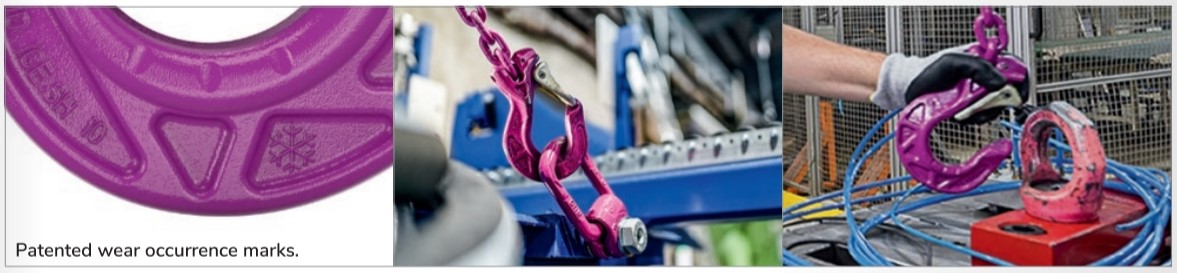
Patented wear markings on the inside and outside
INOX-ABA can tolerate a broad temperature range from -40°C to +250°C with no reduction in WLL. It can withstand superheated steam and liquids with high chloride content and is long-term resistant to pitting and surface corrosion. A closed and circumferential fillet weld further protects it against rusting.
The high corrosion resistance of INOX-ABA ensures safe lifting over long periods. It is also safe for food processing because coatings or material particles cannot contaminate it. Patented wear indicators act as a safety visual aid and the magnetic properties of duplex steel 1.4462 aid in electromagnetic crack detection.
In addition, INOX-ABA lifting points allow for highly stable "black-and-white connections," enabling integration beyond stainless steel surfaces to structural steel components without compromising safety or corrosion resistance, offering broad utilisation across plants and refineries.
The introduction of duplex stainless-steel lifting points from RUD marks a new chapter in lifting technology for refineries. There is no justification to use unsafe and substandard lifting points that compromise safety. RUD’s corrosion-resistant lifting points guarantee safe lifting even after years of use and prevent contamination - benefits that substandard welded points cannot provide.
DIY points are not designed and rated for lifting. They are unsafe, potentially risky and may be illegal under safety standards. By contrast, investing in high-quality, rated lifting points with defined load capacities and safety factors effectively minimises risks to personnel and materials. In such cases, the responsibility of the load capacity rests on the manufacturer, ensuring user compliance. Investing in secure stainless steel anchor solutions for harsh environments should be the only long-term investment for safety.
Copyright to RUD: This information is accurate at the time of publication, and RUD Australia takes no responsibility for any errors, inadvertent or otherwise.
In an Australian heavy vehicle workshop, floor real estate is valuable. Fixed vehicle hoists can be inefficient as they occupy floor space even when not in use, hindering workflow and limiting workshop capabilities. Mobile truck and bus hoists offer a smarter solution, providing space-saving and flexible workshop layouts that boost productivity and safety.
Workshop Limitations of Fixed Hoists
Many older Australian workshops often use pits or fixed above-ground hoists, both of which create space limitations. Fixed hoists require dedicated bays around their lifting points. When a hoist is not in use, this bay remains idle, wasting valuable space. This inflexibility restricts workflow, particularly in workshops with limited space. Manoeuvring trucks and buses around fixed hoists can be difficult, requiring precise positioning and increasing the risk of minor accidents. Fixed hoists are also challenging in workshops that require adapting to different vehicle sizes.
Reclaiming Workshop Space
Mobile heavy vehicle hoists provide an ideal alternative to fixed hoists. Designed for portability, these hoists operate in synchronised pairs or sets to lift entire vehicles. Mounted on wheels or castors, mobile hoists can be moved around the workshop to the vehicle's location. After lifting, vehicles can be placed on stands, freeing up the hoists to lift other vehicles.
This mobility offers significant space-saving advantages. Workshops can move away from fixed bay layouts to dynamic, adaptable workspaces. Instead of fixed bays dictating workflow, floor space becomes flexible and adjustable to the vehicles being serviced and the tasks required.
Adapting to Australia's Diverse Workshop Demands
Mobile truck and bus hoists enhance workshop efficiency and productivity beyond space-saving. Below are some benefits of using mobile truck and bus hoists.
Versatility: Mobile hoists allow workshops to utilise the entire floor space during peak periods and repurpose areas during quieter times
Service a Range of Vehicles: Mobile hoists accommodate various wheelbases and vehicle sizes, including trailers and specialised vehicles. Both Endurequip and Finkbeiner can be used in sets of 4 to 20 hoists to lift different-sized trucks, buses, road trains, rail coaches, and agricultural or portable buildings
Temporary Layout: In leased workshops, mobile hoists eliminate the need for permanent structural changes like pits or concrete drilling, preserving the building's integrity
Indoor and Outdoor Use: IP 65-rated mobile hoists, like galvanised Finkbeiner models and Endurequip, are suitable for both indoor and outdoor use, including wash bays and harsh outback conditions
Minimised Vehicle Movement: Mobile hoists can be moved and brought to the vehicle, reducing unnecessary and time-consuming manoeuvring within the workshop
Quick Lifting and Lowering: Fast lifting and lowering times, such as Finkbeiner's 90-second cycle, save time and accelerate repair processes
Enhanced Accessibility: The open design of mobile hoists provides easy access around the vehicle, simplifying inspections and repairs and improving workflow efficiency
Australian Workshop Success
Read how an inter-state bus and coach company experiencing rapid growth switched to mobile hoists from fixed hoist bays and expanded its service capacity.
By switching to mobile bus hoists, they:
Optimised Lifting Space: They maximised space around the mobile hoists to service both small and large buses without the need for an expensive building expansion
Established Adaptable Service Zones: They reconfigured the workshop floor to handle different bus sizes for varied maintenance schedules
Enhanced Workflow Efficiency: Reduced bus manoeuvring sped up turnaround times by minimising unnecessary movement and increased safety
Selecting the Ideal Mobile Hoist: Key Australian Workshop Considerations
Choosing the right mobile truck and bus hoist is crucial for space optimisation and workshop efficiency.
Consider these factors for Australian workshops:
Lifting Capacity (Australian Standards Compliance): Ensure the hoist capacity exceeds the weight of the heaviest vehicles. Endurequip Portalift complies with Australian standards AS 2550.9.1996, AS/NZS 2538:2004 and ISO 9001, with safety features and underbody access
Workshop Floor Conditions: Assess how easily hoists move and position across your workshop floor. Look for features like grab handles and appropriate wheel sizes for smooth movement
Safety Features: Prioritise hoists with essential safety features, including accessible emergency stops and safety locks
Mobile truck and bus hoists overcome the limitations of fixed hoists, offering adaptable solutions for efficient workshop layouts. Endurequip and Finkbeiner mobile hoists empower Australian workshops to maximise space, streamline workflows, increase productivity, and thrive in a competitive market.
RUD will exhibit at the Brisbane Truck Show at the Brisbane Convention Centre from 15-18 May 2025. Visit our booth #297 on the Plaza Level for more details about our truck hoists and workshop handling solutions.
Want free tickets to the 2025 Brisbane Truck Show?Click here to fill out a form to enter the draw to win FREE tickets to the 2025 Brisbane Truck Show.
Article copyright to RUD: This information is accurate at the time of publication, and RUD Australia takes no responsibility for any errors, inadvertent or otherwise.
A load restraint system is essential for safely securing freight on heavy vehicles and preventing possible accidents or hazards during transit. Load restraint systems comprise various methods and equipment, such as friction matting, pallets, shrink wrapping, edge protectors, and securing straps or chains. Proper load restraint ensures compliance with safety regulations, protects assets, and enhances transport efficiency.
In Australia, the National Heavy Vehicle Regulator (NHVR) plays a crucial role in regulating heavy vehicles with GVM over 4.5 tonnes through the Heavy Vehicle National Law (HVNL - Qld). It also publishes the Load Restraint Guide, a comprehensive resource that sets the standard for best-practice restraint systems. This article is based on the NHVR guidelines and our recommended RUD products to secure loads.
Why do we need Load Restraint?
A robust load restraint system is crucial for:
Safety: Prevents accidents by keeping loads stable
Compliance: Meets the HVNL loading requirements
Asset Protection: Reduces damage to cargo and infrastructure
Efficiency: Streamlines loading and unloading processes
Designing a Load Restraint System
The Load Restraint Guide provides recommendations for standard freight, offering a reassuring support system for operators. Professional engineering guidance is crucial in designing a suitable load restraint system for complex loads.
Note: Also read the NHVR Loading Plans, which recommend how loads should be packed and positioned and the minimum requirements to safely restrain the load for transit by road.
Key Elements of a Load Restraint System
When developing a load restraint system, follow the below steps to prevent accidents, keep your team safe, and ensure compliance with HVNL loading requirements.
1. Safety Procedures
Establish documented procedures and loading plans
Train drivers and loaders
Implement exclusion zones and clear communication protocols
Conduct regular safety reviews
2. Load Assessment
Evaluate mass, dimensions, centre of gravity, fragility, friction, and packaging
Use scales or manufacturer specifications to verify load weight
3. Vehicle Selection
Ensure the vehicle has adequate capacity and securing points
Choose stable vehicles, especially for high-centre-of-gravity loads
Check vehicle structures and restraint gear for wear and tear
Use rated and regularly inspected equipment
5. Restraint Methods
Choose between tie-down or direct restraint methods or a combination of both
Seek professional assessment if unsure
RUD has a team of engineers to assist in designing and specifying the correct load restraint system
6. Load Positioning
Position loads centrally and distributes weight evenly
Avoid dangerous projections
7. Load Stability
Use rigid structures, strapping, and properly tensioned lashings
Exercise caution when turning or braking with high-centre-of-gravity loads
RUD has a range of Lashing Systems, for increased safety and reliability
8. Securing the Load
Apply adequate restraints to withstand transport forces
Add extra restraints if in doubt
9. Driving Adjustments
Adapt driving style based on load type and positioning
Avoid sudden movements and be mindful of vehicle dimensions
10. Regular Load Checks
Inspect load security periodically during transit
Adjust restraints as needed, especially for loose materials
How can RUD help?
RUD ICE Chains and RUD Tensioners, such as the ICE-CURT-GAKO Tensioner with a magnetic locking device, help to secure your load safely. All RUD high-quality lashing and load securing systems are designed for superior load restraint, ensuring your cargo remains secure and preventing any slippage or movement in transit.
Every load is different, and a one-stop approach does not work. Planning a tailored restraint approach is critical to ensure safety, compliance, and efficiency. By following best practices and regularly inspecting the load restraint system, drivers and operators can prevent accidents and ensure smooth transportation.
RUD will exhibit at the 2025 Brisbane Truck Show at the Brisbane Convention Centre between 15-18 May 2025, showcasing load restraint solutions and heavy vehicle hoists. Do you want free tickets to the Truck Show?Click here to fill out a form to enter the draw to win FREE tickets.
Article copyright to RUD: This information is accurate at the time of publication, and RUD Australia takes no responsibility for any errors, inadvertent or otherwise.
The modern construction landscape is dynamic and demanding, constantly pushing the boundaries of engineering projects. From towering skyscrapers to complicated infrastructure, success relies on efficient and reliable lifting solutions that can manage a wide range of challenges. This is where RUD steps in with a diverse range of innovative lifting solutions designed to tackle even the most demanding construction and infrastructure projects with precision and safety.
RUD - A Legacy of Innovation in Lifting Solutions
RUD has earned its reputation for excellence through decades of continuous innovation. Dedication to research and development has resulted in a comprehensive portfolio of lifting solutions meticulously engineered to meet the specific requirements of diverse construction projects.
Beyond the Traditional Hook
RUD's approach extends beyond the standard industry hook, offering a range of lifting devices tailored to meet the unique challenges in modern construction:
Heavy Lifting Specialists: For projects involving massive loads and demanding lifting capacities, RUD offers specialised lifting equipment like heavy-duty chain slings, shackles, eyebolts, and pre-cast lifting hoops. These components are crafted from high-strength steel, rigorously tested, and designed for maximum safety and durability under extreme conditions.
Be it our ICE Grade 120 chains, which are 30% lighter than the next nominal grade chain, or our VIP Maxi Construction Kit, which offers a WLL (Working Load Limit) of up to 126 tonnes for crane operators, choose from more than 700 tested boltable and weldable lifting points in load ranges up to 250t that meet maximum safety requirements in infrastructure projects.
Lifting/Spreader Beams: RUD offers a range of specialised products designed to handle specific challenges within the construction industry. Lifting and spreader beams are generally used where loads must be lifted and moved in a horizontal configuration and where the load is being lifted from a single lifting point. The load being lifted is spread over the length of the beam, giving an even distribution and a safer lift.
Addressing Unique Challenges in Construction Projects
RUD's diverse range of lifting solutions allows construction professionals to overcome a range of challenges faced in modern projects:
High-Rise Construction: Skyscrapers demand efficient and reliable lifting solutions. RUD's lifting solutions for construction cranes can handle the immense weight of structural elements, ensuring safe and controlled movement during the building process.
Prefabricated Construction: The increasing reliance on prefabricated components requires lifting equipment capable of handling large, pre-assembled sections with precision. RUD's spreader beams and custom lifting solutions are designed to lift and position these components, thereby streamlining the construction process.
Bridge Construction: Bridge construction involves lifting and appropriately positioning heavy structural elements. RUD offers Philipp Lifting Hoops, which are wire ropes that enclose a concrete core. Lifting hoops ensure the safe lifting and placement of bridge girders, decks, trusses, and other components.
Read how RUD Australia helped Universal Cranes with the Pacific Highway Exit 41 Upgradehere.
Wind Turbine Installation:Wind turbines' dizzying heights require sophisticated lifting equipment. RUD's specialised lifting solutions, including custom-designed lifting slings and Personal Fall Arrest products such as the PSA VRS-STARPOINT and the PSA INOX-STAR, ensure the safe and efficient installation of turbine blades, nacelles, and other key components.
Offshore Construction: Working in harsh marine environments demands robust lifting solutions. Weld-on products such as the INOX-ABA, made from duplex steel 1.4462, are corrosion resistant, provide reliable lifting capacity, and secure load handling for offshore projects.
Read how RUD Germany lifted a 25m long, 56 tonne lattice cage in Berlinhere.
A Focus on Safety and Efficiency
RUD's commitment to safety is ingrained in every aspect of its operations. We adhere to the highest industry standards, ensuring all our products are rigorously tested and certified to meet strict safety regulations. We also have a full engineering team at Brisbane who are experts in lifting solutions and offer compliance certification, including the capability to test fabricated goods and lifting devices with two 200-tonne tensile and one 500-tonne compression test bed.
Beyond safety, our lifting solutions are designed to maximise efficiency in construction projects. By providing reliable and adaptable products, we empower construction companies to streamline projects, reduce downtime, and complete jobs on time and within budget.
A Partner in Construction Success
RUD's innovative lifting solutions play a critical role in shaping the modern construction landscape, allowing contractors to tackle complex projects with confidence and efficiency. We provide a comprehensive range of lifting devices and manufacture bespoke solutions at our 6000m2 facility at Larapinta. We also provide testing and compliance services, including assessment and verification of engineered products and structures, third-party review, proof and destructive testing, materials analysis, major inspections, modifications, and repairs. Thus, you can be assured of our quality and certification, which exceed industry standards.
For specified products in construction and infrastructure projects, RUD can help with STEP or CAD files that integrate our products into your designs. Visit our Technical Downloads page to search for files or technical specifications. If you want to download our brochures or catalogues, you can also head to our Download Portal.
As the construction industry continues to evolve, RUD remains committed to developing innovative solutions that drive progress, enhance safety, and contribute to the successful completion of complex construction projects worldwide.
Article copyright to RUD: This information is accurate at the time of publication, and RUD Australia takes no responsibility for any errors, inadvertent or otherwise.
If you want to know how the team at RUD can help, please call 07 3809 1300 or fill out a form here.
Western Australia's maritime industry faces unique challenges, particularly with vessel access due to the region’s extremely high tidal ranges, which can reach up to 11 meters. These high tides complicate the boarding process from jack-up barges or jetties, posing safety risks to personnel and impacting operational efficiency. Traditional methods of vessel access often prove inadequate and potentially unsafe in these demanding environments.
This is why the RUD TECDOS system is recommended as an ideal solution.
Exceptional durability:
The extreme conditions of Western Australia's coastal waters require equipment designed for exceptional durability and reliability. The RUD TECDOS system is ideal because it is resistant to corrosion and engineered for long exposure to seawater, contamination, and environmental wear and tear arising from the constant buffeting of waves. TECDOS systems ensure long-lasting performance even in the most challenging environments.
Compact and easy to install:
A key advantage of the RUD TECDOS system is its compact design and simple installation process. This minimises disruption to ongoing operations and reduces the time required to integrate the access system into existing infrastructure. Reduced installation time minimises operational downtime and maximises project efficiency.
Tolerance to misalignment:
The TECDOS system is tolerant of misalignment. Currents, wave action, and the limitations of floating platforms can affect vessel positioning and alignment. The TECDOS system delivers reliable performance even when equipment is shifted or not perfectly aligned.
The RUD TECDOS system offers a comprehensive approach to vessel access challenges in harsh marine environments. By combining exceptional durability, compact design, and adaptability to misalignment, the system empowers marine operators to navigate the complex tidal conditions of Western Australia.
By leveraging RUD TECDOS, marine operators can enhance safety, streamline operations, and ensure reliable vessel access, thereby mitigating risks and maximising efficiency.
Article copyright to RUD: This information is accurate at the time of publication, and RUD Australia takes no responsibility for any errors, inadvertent or otherwise.
If you want to know how the team at RUD can help you, please call 07 3809 1300 or fill out a form here.
Across the world, RUD lifting points and chains are known for their pink colour (Often referred to as pinkies in Australia). Ever wonder why the colour pink? Read the story of how the RUD pink colour came to be and our 30-year journey since 1994.
The article below summarises the interview conducted with Hermann Kolb, Head of the RUD Group’s Lifting and Lashing Equipment Division in Germany. The original interviews can be read here and here.
In the world of lifting and lashing equipment, functionality and safety reign supreme, and branding takes second place. Yet, for the past three decades, RUD has broken the mould, blazing a new path with its signature pink colour for its lifting, lashing and chain products.
What started as a bold design choice in 1994 has become an industry-defining trademark. From technological advancements to innovative safety measures, RUD's pink lifting and lashing points and chains have reshaped the perception of industrial equipment while reinforcing the brand's commitment to excellence.
The Beginning of an Unmistakable Trademark
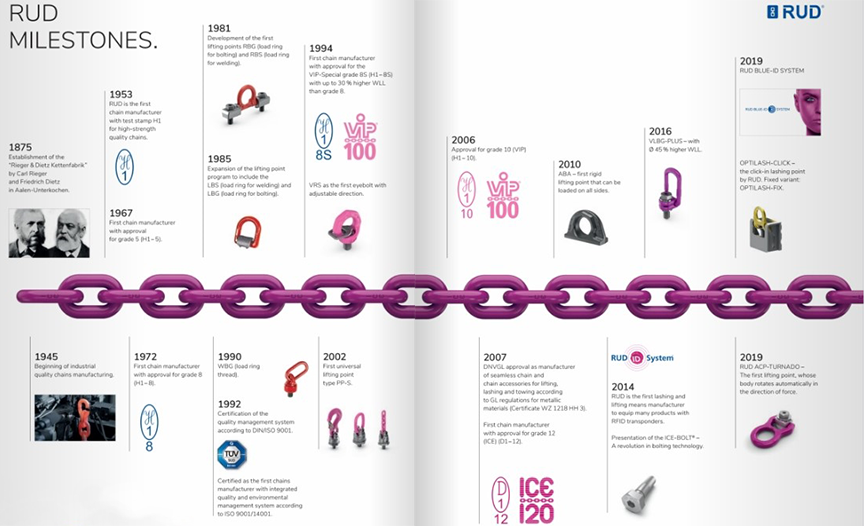
The story of RUD's pink lifting equipment began in 1994 with the development of the world’s first Grade 100 chain system. This ground-breaking advancement represented a significant leap in strength and durability, but RUD wanted to ensure it would also stand out visually in a traditionally conservative industry. Opting for colour as the differentiator, the company chose pink - a decision that was as daring as it was unconventional.
According to Hermann Kolb, the Head of RUD Group’s Lifting and Lashing Equipment Division, the colour pink was associated with progressiveness and modernity, making it an ideal choice to signal innovation. The new design was paired with the product designation VIP 100, where "VIP" stood for Verwechslungsfrei in Pink (non-mix-up in pink). The colour initially sparked internal debate, but it was embraced by employees and stakeholders who saw its potential to redefine RUD’s market presence.
Overcoming Industry Stereotypes
Launching pink-coloured lifting chains in a male-dominated, function-over-form industry came with its challenges. However, the team at RUD was determined and refused to compromise on the new colour.
Even after the initial scepticism, the decision to continue with the pink colour was challenging. “A RUD chain is a RUD chain,” Kolb states, reinforcing the company’s commitment to its brand identity. Over time, the pink colour gained acceptance, and customers began to associate RUD with pink lifting and lashing equipment - a connection that has strengthened the brand over the years.
Function Meets Form - Pink as a Safety Indicator
Beyond its aesthetic appeal, the pink coating on RUD’s products serves a critical functional purpose. When exposed to high temperatures exceeding 200°C, the colour darkens progressively, offering a visual indicator of heat exposure. This feature allows users to assess whether a component has been compromised and should be replaced. A brown-black colour, for instance, signals that the material has surpassed 300°C, potentially reducing its strength and requiring immediate replacement.
This innovative approach has set RUD apart in the industry. It provides an additional layer of safety while enhancing the practical value of its products. The heat-responsive colour chart developed by RUD is now a standard tool for professionals who rely on these components.
The Journey from Grade 100 to Grade 120
RUD’s commitment to innovation is reflected not only in the functionality of its products but also in the evolution of its iconic colour. The original, light pink, represented Grade 100 and remained the standard from 1994 until 2007. As RUD introduced Grade 120, we needed to differentiate the higher grade, which is why all ICE 120 products come with a darker shade called ICE pink. This subtle yet effective variation shows the quality differentiator for clarity.
Powder Coating - Durability Under Pressure
RUD’s pink coating is applied using advanced powder-coating technology, ensuring resilience against the rigours of industrial use. To further reinforce product traceability and safety, RUD incorporates permanent embossing such as manufacturer details, quality class, and batch numbers.
Customisation for Diverse Needs
While pink is RUD’s standard colour, we also cater for customer-specific requirements. Weldable lifting points are often integrated into machinery and vehicles, and in such cases, we offer customised coatings to match product functionality with ambience.
Similarly, our anchor points for personal fall arrest, such as the PSA VRS-STARPOINT or the PSA INOX-STAR, come in yellow. Although this colour is not dictated by any formal standard, it has become an industry norm, providing a clear visual distinction for components designed to secure people instead of lifting or lashing.
Market Reception and Customer Engagement
RUD launched the pink colour in 1994 at the Hanover Fair. Since then, trade fairs and conferences have proven to be important platforms to showcase the pink lifting and lashing equipment. The striking colour often sparks curiosity among visitors and initiates conversations, which has transformed the colour into a recognised brand identity.
Kolb, reflecting on the 30-year journey, affirms that, in hindsight, the decision was perfect and would be made again without hesitation. “We exceeded our expectations. The association ‘RUD = pink’ has achieved an extremely high level of acceptance, and I believe this will remain the case for a long time to come.”
The Future of Pink Innovation
As RUD celebrates 30 years of pink lifting points and chains, we continue to expand boundaries in safety, quality, and design. The enduring success of the pink colour branding demonstrates strategic foresight in shaping market perception.
In an industry driven by performance and reliability, RUD’s pink lifting equipment stands as a testament to the value of innovation - not just in technology but also in how a company chooses to define itself. For professionals worldwide, and especially in Australia, where "Pinkies" are a standard, RUD’s vibrant legacy is poised to continue for decades to come.
Article copyright toRUD Group. This information is accurate at the time of publication, and RUD Australia takes no responsibility for any errors, inadvertent or otherwise.
Falls from heights are a significant hazard in Australian workplaces, contributing to annual injuries and fatalities. According to Safe Work Australia, falls from a height were the second-highest contributor to worker fatalities, with a 71% increase from 17 to 29 deaths between 2022 and 2023. 1
Non-fatal falls also impose substantial financial burdens, with each incident costing employers downtime, medical expenses, and recovery costs. This underscores the critical need for robust height safety measures, with personal fall arrest systems playing a pivotal role in mitigating these risks.
The Australian Height Safety Landscape
Australia maintains a comprehensive legislative framework for workplace safety, particularly for working at heights.
A range of standards employed within this framework include:
AS/NZS 1891 (series); and
AS/NZS 5532:2013.
AS/NZS 1891 (series)
This standard series offers detailed guidance on the various aspects of personal fall arrest systems, including selection, use, and maintenance of industrial fall-arrest systems and devices.
AS/NZS 5532:2013
This standard specifies manufacturing requirements for single-point anchor devices used in harness-based work at height. It outlines the design, testing, and performance criteria that anchor devices must meet to ensure reliability during fall arrest scenarios.
The Role of Personal Fall Arrest Systems
Personal fall arrest systems are critical safety measures for workers operating at heights. Their effectiveness depends on proper selection, installation, and use, highlighting the necessity for comprehensive training. Personal fall arrest systems should serve as a final line of defence when other preventative measures, such as guardrails or safety nets, are not feasible.
Importance of Training
Workers utilising personal fall arrest systems must receive thorough training on the following:
Equipment Selection: Choosing appropriate personal fall arrest systems based on specific tasks and environmental conditions.
Proper Donning and Doffing: Ensuring correct fitting and adjustment for optimal function and safety.
Routine Inspections: Conducting regular checks to identify any damage or defects that could compromise safety.
Emergency Procedures: Being prepared to respond effectively in the event of a fall, including rescue operations and equipment handling.
RUD: Leading with Anchor Points
RUD offers a range of personal fall arrest system anchor points compliant with Australian standards:
PSA VRS-STARPOINT: A 360-degree rotatable anchor point designed for permanent installations on buildings and wind turbines.
PSA INOX-STAR: Similar to the VRS-STARPOINT but constructed from stainless steel, making it suitable for harsh environments.
Weld-on Anchor Points: RUD is preparing to release a range of weld-on anchor points with boltable plates, expanding secure anchoring options for various substrates.
All RUD fall arrest anchor points are tested and certified to meet AS/NZS 1891.4:2009 and AS/NZS 5532:2013, ensuring compliance with Australian safety regulations. A forthcoming weld-on duplex stainless steel anchor point will be suitable for corrosive environments.
Contact RUD for more information, applications and technical advice. Call 07 3809 1300 or email us here.
Article copyright toRUD Group. This information is accurate at the time of publication, and RUD Australia takes no responsibility for any errors, inadvertent or otherwise.
In the demanding world of construction and infrastructure projects, the safe and efficient lifting of heavy loads is critical. If you want to lift heavy loads from 85 tonnes upwards, look no further than the RUD WBPG, which offers safe lifting as a single product.
The amazing RUD WBPG is the best heavy-duty bootable lifting point in the market and can lift loads from 85 tonnes to 250 tonnes, which is a game changer for the construction and infrastructure industry!
RUD's Commitment to Safety and Efficiency:
RUD's decades of experience in lifting technology are evident in the WBPG hoist ring. The WBPG lifting point is designed for exceptional strength and durability, meeting and exceeding industry standards.
Benefits
Exceptional Load Capacity: The WBPG is available in size M48 with a Working Load Limit (WLL) ranging from 85 to 250 tonnes, making it the best choice for heavy lifting in construction and infrastructure projects.
Ball Bearing Mounted for Smooth Operation: The innovative ball bearing mounting ensures smooth operation even under heavy loads, reducing friction and wear on the lifting point. A crucial benefit for increased safety even with multiple uses.
Shackle Pivoting and Swivel Bolt: The WBPG features a 180° shackle pivot and a 360° swivel bolt with ball bearings, allowing for flexible load positioning and manoeuvring.
Removable Suspension Ring: The WBPG ring is designed to resemble a shackle, permitting secure attachment of hoops in heavy concrete sleepers. This makes it easier for your team to work faster and more efficiently.
Multi-directional Loading: The WBPG can be loaded from any side in the direction of the pivot, making it ideal for lifting and turning heavy loads.
Robust Design and Construction: RUD's lifting points are built to withstand dynamic loads of at least 20,000 cycles and are tested at an overload of 50%. All bolts undergo a 100% crack test, providing quadruple safety in every loading direction.
Selecting the Right Lifting Point
When choosing a lifting point for a construction or infrastructure project, it is essential to:
Determine the Total Weight. Accurately calculate the weight of the load being lifted.
Consider the Number of Lifting Points. The appropriate number of lifting points must be determined based on the shape of the load and installation position.
Account for Reduction Factors. Refer to operating instructions to factor in reductions due to tilt angles and temperature variations.
Select a Lifting Point with Sufficient WLL. To ensure a safe margin, choose a lifting point with a WLL that exceeds the weight determined in step 3.
RUD's WBPG: A Solution for Heavy Lifting Challenges
The RUD WBPG hoist ring is the best boltable lifting point in the market. It offers an exceptional solution for heavy lifting in the construction and infrastructure industries. Its robust design, high load capacity, and multiple safety features provide peace of mind and efficiency, ensuring the safe and successful completion of even the most demanding projects.
Read how the WBPG helped the world's largest crane manufacturer build an enormous ship crane that would be used for offshore applications in the oil and gas sector and wind farm installation and disassembly. Click here for the full article.
RUD Australia has a ready stock of VWBG 200t. Call 07 3809 1300 or email us here for more details on how it can meet your heavy-lifting needs.
The INOX-ABA weld-on lifting point, which is part of the ABA family, provides a robust and corrosion-resistant solution for lifting operations in challenging environments. This lifting point is forged from duplex stainless steel 1.4462 and offers superior resistance to pitting and surface corrosion, ensuring long-lasting performance even when exposed to corrosive elements like seawater.
Designed for Durability and Reliability
The INOX-ABA is forged from duplex stainless-steel 1.4462, known for its strength and resistance to corrosion. This material choice ensures that the anchor point can withstand demanding conditions often encountered in industries such as:
Paper and food processing: Hygiene quality control is very important in the paper and food industries to prevent contamination. INOX-ABA's duplex stainless-steel manufacturing prevents any potential leaching of coatings or particles, thereby safeguarding the process.
Petrochemical plants: The INOX-ABA’s resistance to corrosive chemicals and high temperatures makes it ideal for handling equipment and machinery in these challenging environments.
Maritime environments: The INOX-ABA is specifically designed to withstand the corrosive effects of saltwater, making it perfect for use on ships, rigs, and offshore installations.
Addressing Common Challenges
Most weld-on lifting points, while doing a great job, fall short in challenging environments. The INOX-ABA, however, addresses these shortcomings with its robust construction and comprehensive design features:
Corrosion Resistance: The duplex stainless-steel forging and closed fillet weld provides superior protection against rusting and pitting, ensuring the lifting point remains functional and safe even after prolonged exposure to corrosive elements.
Load in All Directions: The INOX-ABA has full WLL in any direction, providing a secure and reliable lifting solution regardless of the load's orientation.
Enhanced Safety: The INOX-ABA has a 4:1 design factor for safety compared to traditional lifting points, ensuring a wide safety margin in critical lifting operations.
Wear Indicators: Patented internal and external wear indicators permit easy inspection and monitoring of wear and tear, enabling timely maintenance and ensuring continued safety.
Adaptable and Versatile
The INOX-ABA is available in three load capacities (0.8t, 1.6t, and 2.7t) to accommodate a wide range of lifting applications. Its operating temperature ranges from -40°C to 250°C, further expanding its versatility, making it suitable for a variety of temperature environments. The duplex stainless-steel 1.4462 used in the INOX-ABA allows electromagnetic crack testing to ensure the integrity of the anchor point.
Welding Compatibility and Diverse Applications
The INOX-ABA's duplex stainless-steel construction is compatible with various materials, including structural steel, permitting seamless integration into diverse applications. This makes it ideal for use in container construction, particularly in the food production and oil & gas industries, where its resistance to corrosion and contamination is beneficial.
INOX-ABA is also becoming popular for use on cruise ships. It can perform a range of lifting tasks while seamlessly blending into the ship's stainless-steel environment. Its versatility and adaptability make it an asset in diverse industries, ensuring safety and reliability in challenging conditions.
A Comprehensive Solution
RUD's INOX-ABA weld-on lifting point represents a significant advancement in lifting solutions for harsh environments. Its robust construction, corrosion resistance, and comprehensive design features combine to provide a safe, reliable, and versatile solution for a wide range of industries. From heavy-duty lifting operations to fall protection applications (Only 1.6t), the INOX-ABA is a dependable and durable lifting point, ensuring the safety and efficiency of operations in even the most challenging conditions.
References:
Content is taken from www.rud.com.au and technical websites as given below:
If you want more details of our lifting and lashing solutions, call us on 07 3809 1300 or email us here.
Exciting 2 new products coming soon ...
CCS-FASTLOX - The First-Ever Clickable Clevis Shackle.
PIP-RAPIDO - The First-Ever Plug-In Lifting Point.
We will soon launch two innovative products - the clickable shackle CCS-FASTLOX and the pluggable lifting point PIP-RAPIDO for speedier and simplified load lifting.
In comparison with conventional fork-head shackles, the extremely robust CCS-FASTLOX can be used without any tools at all - i.e. without a separate bolt, nut and cotter pin. To assemble it, the user simply pushes the bolt through the shackle and clicks it into a safety mechanism attached to the side, automatically keeping it in position. This means it takes up to 80% less time to assemble and dismantle the shackle. The CCS-FASTLOX will be available in Grade 120 (ICE) and Grade 100 (VIP) and nominal sizes from 4 to 16 (ICE) or 6 to 22 (VIP).
One possible application is using the CCS-FASTLOX in combination with the new pluggable lifting point PIP-RAPIDO with a self-locking fixing mechanism. It was developed to supplement boltable and weldable lifting points and is, in particular, intended for easy assembly on through-hole fixtures – such as flanges – and holes with undercuts. To fix it in place, the locking elements are unlocked at the locking bolt and the bolt is inserted into the through-hole fixture. As soon as the bolt is in position, the locking mechanism automatically engages, making a safe connection between the load and the lifting point possible.
Thanks to this mechanism, PIP-RAPIDO can be installed much more quickly than conventional boltable lifting points. It is also suitable for scenarios where a boltable lifting point is unsuitable because it is not possible to fit a nut from below - for example, when it is assembled on flanges that are stacked on top of one another.
CCS-FASTLOX - The First-Ever Clickable Clevis Shackle.
PIP-RAPIDO - The First-Ever Plug-In Lifting Point.
All RUD products are equipped with an integrated RFID transponder as standard, which allows users to retrieve the factory ID number using an NFC-based reader or smartphone. Stay tuned for more information.
RUD will exhibit at the Crane Industry Conference - CICA 2024 at the Adelaide Convention Centre from 17-19 October 2024. Visit our booth #2 to discuss our lifting and lashing solutions for the crane industry.
If you want more details of our lifting and lashing solutions, call us on 07 3809 1300 or email us here.
Part 2 of the 2-part article. Click here to read Part 1.
A Comprehensive Range of Lashing and Anchoring Solutions
RUD offers a comprehensive range of solutions, addressing both lashing and anchoring needs:
High Capacity Lashing Points: These lashing points are engineered for multi-directional load capacity with a 2:1 safety factor against breakage. They are clearly labelled with their tensile strength for easy identification during setup.
L-ABA: Forged with one-piece construction for exceptional strength. Click to view the product.
LPW: Patented 90° design for efficient load support, featuring a noise-dampening holding spring. Click to view the product.
Secure Anchor Points: These products offer a 4:1 safety factor against breakage. They feature clear WLL labels and undergo electromagnetic crack testing for maximum reliability.
W-ABA: One of the best-selling products, the W-ABA comes with an annealed base for superior wear resistance. Click to view the product.
VRBS: Features 180° pivoting for versatility with split force introduction for optimal load distribution. Click to view the product.
VLBS: Also features 180° pivoting for versatility and a high safety factor due to an undetachable suspension ring and weld-on block. Click to view the product.
Benefits of RUD's Lashing System:
Enhanced Load Control
High-capacity lashings effectively manage the heavyweight and shifting forces during transportation, ensuring stability even on challenging terrain.
Reduced Tipping Risk
Strategically placed anchor points prevent tipping during turns and manoeuvres, offering peace of mind for drivers navigating tight corners and uneven roads.
Durability and Reliability
Robust, wear-resistant materials ensure long-lasting performance for multiple journeys, reducing maintenance costs and downtime.
The Bottom Line: Choosing the Right Partner
The successful transport of Pasquale Maraffa's oversized boiler highlights the crucial role of proper lashing and anchoring technology in handling heavy, high-centre-of-gravity loads. By partnering with RUD, transport and freight companies can ensure safe and efficient delivery, even for the most demanding projects.
Investing in robust lashing solutions is not an expense; it is crucial to ensure the safety and success of every transport operation.
RUD will exhibit at the National Bus & Coach Show at the Brisbane Convention and Exhibition Centre from 17-18 September 2024. Visit our booth DB33 in Hall 3 to discuss our lashing solutions and hoists for the heavy vehicle industry.
If you want more details of our lashing solutions for the transport industry, call us on 07 3809 1300 or email us here.
Article copyright to RUD Group. This information is accurate at the time of publication, and RUD Australia takes no responsibility for any errors, inadvertent or otherwise.
This is a 2 part article.
Transporting large bulky equipment with a high centre of gravity is a challenge. In the world of heavy transportation, hauling oversized equipment presents unique challenges. From navigating tight corners to tackling unpredictable terrain, every journey demands meticulous planning and a deep understanding of load-securing techniques.
This is true when dealing with extremely heavy loads with a high centre of gravity, like massive boilers transported to industrial sites. Continue to read how an Italian freight company used RUD expertise to transport a huge boiler.
Pasquale Maraffa, owner of an Italian freight company, recently faced such a challenge. His team was contracted to transport a colossal boiler, weighing over 200 tonnes and towering 16 meters high, to a refinery. The large size and weight of the load required careful planning because even a slight incline in the road could put immense stress on the lashing components. Adding to the complexity, narrow turns posed a significant risk of the load tipping over.
For Pasquale, the success of this project rested on choosing the right partner-one with a clear understanding of load securing and a proven track record of handling such demanding tasks. That partner was RUD, known worldwide for advanced lashing technology solutions.
The Importance of Lashing Expertise
While many transport companies acknowledge the importance of weather considerations and route planning, the crucial aspect of lashing point capabilities often gets overlooked. This is where RUD's expertise shines. We understand that every lashing point on a trailer must be carefully evaluated to ensure its capacity matches the load's weight and the stresses it will encounter during transport.
For Maraffa, this project highlighted the importance of choosing a partner like RUD, which offers comprehensive lashing technology solutions tailored to specific needs. Instead of relying on generic solutions, RUD provides a customised approach, including:
Clear Working Load Limits (WLL)
All RUD products are clearly labelled with their safe working capacity, ensuring proper use and preventing accidents.
Technical Expertise
RUD offers custom lashing solutions based on the specific load characteristics and transportation requirements, creating a bespoke system for each transport.
Customisation
RUD can even customise lashing products to match the brand colours of trailer manufacturers, adding a touch of visual professionalism to the trailer.
Optimised Lashing Design
RUD products are designed with rounded and durable shapes to minimise wear and tear, guaranteeing long-lasting performance.
Investing in robust lashing solutions is not an expense; it is crucial to ensure the safety and success of every transport operation.
RUD will exhibit at the National Bus & Coach Show at the Brisbane Convention and Exhibition Centre from 17-18 September 2024. Visit our booth DB33 in Hall 3 to discuss our lashing solutions and hoists for the heavy vehicle industry.
If you want more details of our lashing solutions for the transport industry, call us on 07 3809 1300 or email us here.
Article copyright to RUD Group. This information is accurate at the time of publication, and RUD Australia takes no responsibility for any errors, inadvertent or otherwise.
This is a 2 part article.
Australia's vast and diverse landscape, scattered from bustling metropolises to remote outback towns, requires reliable and robust equipment. A mobile heavy vehicle hoist is an indispensable tool for maintenance, repairs, and inspections for businesses operating in the truck and bus maintenance and repair industries. However, navigating the vehicle hoist market can be challenging, with a wide choice of brands and models varying in quality and price.
This article will help you understand the different aspects of the mobile heavy vehicle hoist industry, ensuring you choose the right hoist for your needs and budget.
Understanding Australian Landscape
Australia's unique geography dictates different requirements for mobile hoists. In metros along the east and west coast, the workshop layout and space limitations can influence the choice of hoists. Also, the use of technology is more prevalent in metros, where there is a high demand for devices that work on wireless signals. In contrast, the outback demands heavy-duty models capable of handling harsh weather conditions. Hence, a robust hoist is preferred, which can withstand the rigours of the dusty and harsh outback.
A Balancing Act between Quality and Price
There are many hoist companies in Australia that differ in quality, features, and price. It is a well-known fact that most of the time, the cheapest purchase can work out more expensive in the long run. Cutting corners on quality can lead to costly consequences. While price can appear attractive during purchase, it is important to consider the build and safety features to ensure your team is confident to work on vehicles when they are hoisted in the air.
Below are some points you need to consider when choosing a mobile heavy vehicle hoist:
Lifting Capacity
Determine the maximum weight you need to lift, ensuring the hoist has sufficient capacity to handle your specific needs.
RUD Heavy Vehicle Hoists - Endurequip and Finkbeiner are built to handle a wide range of heavy vehicles. We offer lifting capacities from 30 to 170 tonnes in combination with up to 20 hoist sets.
Durable Construction
Choose hoists that are built with high-grade steel and robust components that are designed to withstand heavy loads and frequent use.
Both Endurequip (Made in Australia) and Finkbeiner (Made in Germany) hoists are built with quality steel, ensuring quality construction during manufacture. Endurequip is built to the strictest Australian standards (2550.9.1996, AS/NZS 2538:2004, ISO9001) and is the only Australian-made and Australia’s No. 1 mobile heavy vehicle hoist.
Advanced Safety Features
Check for multiple safety mechanisms, including emergency lowering systems and locking mechanisms, to ensure the safety of both personnel and equipment.
Both Endurequip and Finkbeiner include a range of safety features, such as emergency stops, remote control, and a keyed safety lock to ensure your team works safely and confidently on every heavy vehicle repair job.
Article copyright to RUD Group. This information is accurate at the time of publication, and RUD Australia takes no responsibility for any errors, inadvertent or otherwise.
Part 2 of the 2-part article. Click hereto read Part 1.
Load securing during transportation faces many challenges, especially when dealing with loads that have sharp edges. The sharp edges pose a risk to the integrity of lashing equipment and can potentially lead to accidents, jeopardising the safety of vehicle occupants and other road users. Hence, understanding the potential dangers associated with sharp edges is critical to ensure safe and efficient transportation. Read Part 2 below.
Reduction of Lashing Capacity
With loads where the lashing chain goes over sharp edges, we recommend reducing the Lashing Capacity (LC) by 25% or using a larger chain size. The Load Restraint Guide 2018of the National Transport Commission (NTC) outlines the rules for lashing loads with sharp edges.
For example, if a lashing chain has a rated capacity of 10,000 daN, the effective securing capacity with a sharp corner load would be reduced by 25%, to 7500 daN.
ICE Grade 120 Lashing Chains
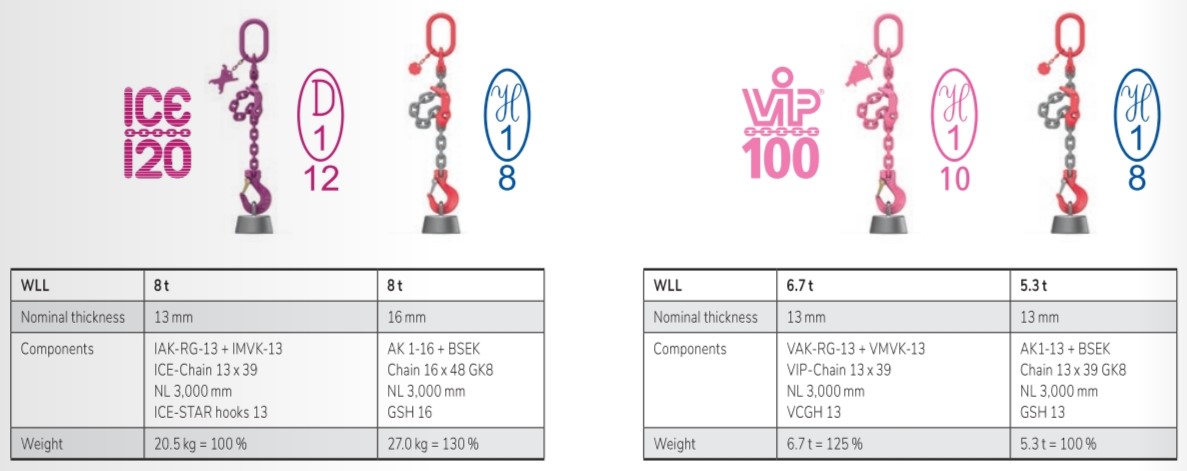
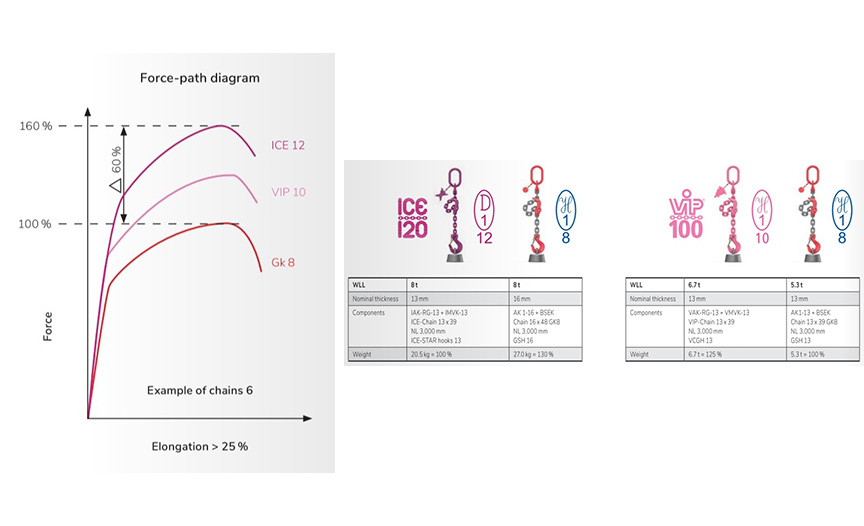
ICE Grade 120 lashing chain can replace a Grade 80 lashing chain of the next largest nominal thickness in direct lashing. ICE 120 is lighter than Grade 80 by 45% and has a breaking force up to 60% higher than Grade 80. This means that by using an ICE 120 lashing chain, you can have a large weight reduction with easier assembly and better safety.
How can Endless Chains help?
In situations where suitable lashing points are unavailable or the existing points are unsuitable, using hooks or shackles for connecting the lashing chain can expose the connecting element to bending stresses. This can compromise the integrity of the connection and lead to potential failure.
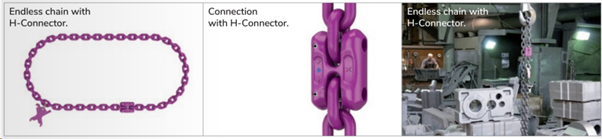
Endless chains, designed to eliminate the need for separate hooks or shackles, provide a safer alternative. With an endless chain, the lashing capacity remains consistent throughout the entire chain loop, eliminating the potential weak points associated with hooks or shackles. Moreover, doubling up an endless chain reduces the effects of sharp edges, as the load is distributed across a larger surface area, which limits the stress on individual chain links.
ICE-Endless-Chain and ICE-Multi-shortening Claw
When combined with the ICE-Endless Chain, the ICE-Multi-shortening claw forms a closed chain system that is easily adjustable and can be opened without tools. This flexibility allows for convenient use in situations where the load's dimensions may vary. This configuration is particularly beneficial for securing loads with unconventional shapes, such as stone blocks or concrete, which may lack dedicated lashing points.
The advantages of such a configuration are:
The endless chain can be opened without tools and
Is adjustable in its endless chain diameter.
Conclusion:
Understanding and addressing the challenges posed by sharp edges during load securing is crucial for ensuring safe and efficient transportation. By implementing the guidelines of the Load Restraint Guide and utilising appropriate protective measures such as edge protectors and endless chains, we can effectively mitigate the risks associated with sharp edges, ensuring the integrity of the lashing equipment and the safety of all road users.
Article copyright toRUD Group. This information is accurate at the time of publication, and RUD Australia takes no responsibility for any errors, inadvertent or otherwise.
This is a 2 part article.
Load securing during transportation faces many challenges, especially when dealing with loads that have sharp edges. The sharp edges pose a risk to the integrity of lashing equipment and can potentially lead to accidents, jeopardising the safety of vehicle occupants and other road users. Hence, understanding the potential dangers associated with sharp edges is critical to ensure safe and efficient transportation.
Sharp edges can cause considerable wear and tear on lashing equipment, primarily due to the concentrated stress they can impose on the lashing material. The repetitive bending and flexing of the lashing equipment as it goes over these edges can lead to fatigue, weakening the material and potentially causing failure. This failure can result in a sudden snap, a gradual weakening, or a distortion in the equipment's shape, resulting in a compromised load restraint system and a potential safety hazard.
In this article, we will address the question of what is considered a sharp edge and what measures should be taken to ensure safety when working with such angles.
Australian National Transport Commission and sharp edges
The National Transport Commission (NTC), in its Load Restraint Guide 2018, emphasises the importance of protecting lashing chains from sharp edges. This guide outlines a clear correlation between the sharpness of a corner and the chain's lashing capacity, highlighting the critical need to consider the load's geometry when selecting and using lashing equipment.
As per the guide, the lashing chain should be protected over sharp edges or rough surfaces to maintain its full lashing capacity.
When the corner radius (r) is less than the chain size (d), the chain's lashing capacity is reduced by 25%. The above figure is taken from the Australian Load Restraint Guide 2018.
Understanding the Corner Radius and Chain Diameter
When assessing load-securing options, the radius of the sharp edge should be considered in relation to the degree of flexibility of the lashing equipment. The corner radius (r) refers to the radius of the curve at the corner of the load, while the chain diameter (d) refers to the diameter of the chain link. Understanding the relationship between the two is critical because it influences the choice of lashing equipment.
To ensure safe and effective load securing, the corner radius should always be greater than the chain diameter. This ensures smooth chain movement over the corner without any risk of jamming, kinking, or undue stress. When the corner radius is less than the chain diameter, the chain experiences increased bending stress, leading to potential damage and reduced functionality.
Protective measures must be implemented to reduce the risk when the corner radius is smaller than the chain diameter. Edge protectors are an excellent option because they serve as an intermediary between the chain and the load, preventing direct contact and protecting the chain from premature wear and tear.
To be continued ...
Article copyright toRUD Group. This information is accurate at the time of publication, and RUD Australia takes no responsibility for any errors, inadvertent or otherwise.
When a foundry in Italy found itself in a hot problem, they turned to RUD.
Foundries are notoriously harsh environments. They get hot, insanely hot. Red-hot loads demand equipment that can withstand extreme temperatures while ensuring safe and efficient operation.
A foundry in Italy needed to move scorching hot steel bars that were long and weighed thousands of kilos. They were also square-shaped with a unique profile that required a unique lifting solution.
The Situation
The project had several challenges:
Extreme Temperatures: The bars reached a staggering 300°C, requiring a heat-resistant lifting mechanism to protect operators and equipment.
Weight and Size: Each bar measured 12 meters long and weighed a hefty 2,400 kg, requiring a robust lifting solution with a high working load limit (WLL).
Square Geometry: The square profile of the bars (14x14 cm and 16x16 cm) demanded a unique clamping mechanism for secure grip and transport stability.
A Unique Solution
RUD has been in the lifting business for years and knows steel like the back of our hand. So, we took our knowledge of high-quality clamps and chains and devised a custom system to handle this hot situation.
Built to Last: We customised a robust system that weighed 150 kg with a working load limit (WLL) of 2,500 kg. This was a rock-solid solution that provided stability and safety. The system's core component was a RUD VIP-2-strand sling, which hooked into the crane for a secure connection.
Versatile Clamping: The clamping mechanism was versatile and could adjust to slight size differences (14x14 cm and 16x16 cm) without a problem. This ensured a secure grip regardless of minor size discrepancies, preventing potential slippage during transport - the last thing you need when dealing with red-hot metal!
Safety First Followed by Efficiency: Safety is paramount in a foundry for both the employees and the equipment. Our safety-friendly design ticked all the boxes. We made it semi-automatic with a lever system for hooking and unhooking the bars. This kept the operators far away from the intense heat. The lever also controlled the rotation and locking of the clamps, ensuring the bars stayed put throughout the entire process. The clamps themselves were attached to super-strong 8mm RUD VIP Grade 100 sling chains - chosen specifically for their exceptional heat resistance and strength.
Game Change for the Client
This custom system has been a game-changer for the foundry, improving operations on the floor. It moves the steel bars with ease, keeping things efficient while prioritising operator safety. This project is a perfect example of how RUD combines high-quality lifting components with custom-designed solutions. This tailored approach sets RUD apart from the competition. We don't just sell products; we deliver solutions for even the most challenging high-temperature lifting situations.
This project shows our commitment to exceeding customer expectations. By combining our expertise in lifting with a dedication to custom design, we ensure safety, efficiency, and happy customers, no matter how hot the job gets.
If you want more details of our lifting and lashing solutions, email us or call us on 07 3809 1300.
Article copyright toRUD Group andRUD Australia. This information is accurate at the time of publication, and RUD Australia takes no responsibility for any errors, inadvertent or otherwise. Some pictures are shown for illustration only.
Secure and reliable lashing points are critical when transporting heavy machinery and cargo. These critical components guarantee the safety of goods in transit and minimise potential damage and costs. In addition, appropriately secured loads significantly reduce the risk of accidents caused by shifting cargo, protecting drivers, passengers, and other road users*.
* If you want more details on the importance of load securing, including the NHVR Load Restraint Guide, read our 2-part article published earlier:
Imagine a scenario where a load shifts unexpectedly during transport in your heavy vehicle. Not only could it damage the cargo itself, but it also poses a significant risk of accidents for drivers, passengers, and other road users. This is why proper load restraint using certified lashing equipment, as mandated by the Australian Load Restraint Guide, is absolutely crucial.
RUD: A Global Leader in Lashing Solutions
RUD is a world leader in the lifting and lashing industry and offers a comprehensive selection oflashing pointswith capacities ranging from3,000 to 32,000 daN. These lashing solutions cater to diverse sectors, including thelashing of heavy and large loadsin cargo transportation, vehicle transport, railway operations, and construction equipment.
Uncompromising Quality and Compliance
RUD takes quality and compliance seriously. All RUD lashing points undergo rigorous 100% crack testing and adhere to the strictest quality control procedures. This ensures that you receive reliable and compliant products that meet the demands of heavy vehicle transport.
Flexibility and Adaptability for Optimised Loading and Unloading
Regarding efficiency, RUD's lashing points are designed for unmatched flexibility during loading and unloading operations. The compact designs with large eye diameters allow greater versatility when using different lashing equipment. The diverse welding surfaces enable easy and seamless integration into the truck or trailer chassis during the build process.
For instance, theRUD OPTILASH-CLICKsystem stands out for its versatility. It can be moved along the chassis, reducing the required number of lashing points. This translates to cost savings and lighter weight for your heavy vehicle.
Benefits of Choosing RUD Lashing Points
There are numerous advantages to incorporating RUD lashing points into your transport operations:
Multi-directional lashing capability: Ensures comprehensive load security from all angles.
Two-fold safety factor: Provides exceptional reliability against breakage for peace of mind.
Marked tensile strength: Lashing capacity (LC) is marked in daN for accurate load identification.
Smooth, rounded shapes: Minimises wear and tear on lashing equipment.
Optimal connection sizes: Delivers secure and efficient attachment for your cargo.
The RUD Lashing Point Range
To cater to various load-securing needs in transport, RUD offers a comprehensive range of lashing points, including weld-on and bolt-on options.
There are several compelling reasons to choose RUD for your lashing point requirements:
Unmatched Expertise: RUD brings decades of global experience and leadership in lifting and lashing technology to the table.
One-Stop Solution: We offer a comprehensive range of load-securing solutions backed by a reliable service network.
Optimised Shapes: RUD's lashing points are designed with rounded shapes and no sharp edges to minimise wear and tear on your lashing equipment.
Clear Markings: Lashing load specifications are marked for easy reference during loading and transport.
Custom Branding: RUD lashing points can be custom-painted to match the colour of your vehicle and chassis.
By partnering with RUD for your lashing point needs, you are guaranteed exceptional quality, superior safety, and efficient operation of all your load securing and lashing requirements. RUD lashing points are available through a network of Australia-wide distributors. If you want to know your nearest RUD distributor, email us or call us on 07 3809 1300.
Article copyright toRUD KettenandRUD Australia. This information is accurate at the time of publication, and RUD Australia takes no responsibility for any errors, inadvertent or otherwise. Some pictures are for illustration only.
Ensuring a safe and controlled operation is critical in the challenging conditions of marine projects. Marine environments are corrosive and heavily influenced by currents and tides. Hence, it is paramount that all factors are considered before installation to ensure long-term performance.
This article discusses the reasons why the RUD TECDOS drive solution was ideal for the Brisbane River Ferry Terminals.
The Challenge: Decoupling Walkway in a Marine Environment
International Consulting Engineering company Aurecon approached RUD seeking a drive solution to decouple the Brisbane River Ferry Terminal walkways. The biggest challenge was enabling controlled release and rotation of the walkway undercurrents and tides and preventing damage caused by the ebb and recess of the water flow.
Why TECDOS? Addressing Key Requirements
RUD invited Aurecon to a site visit to the Brisbane factory to demonstrate and showcase the capabilities of the RUD TECDOS system.
RUD TECDOS possessed several benefits that aligned with the project's specific requirements:
Corrosion Resistance: The zinc-coated RUD TECDOS chain is specially designed to withstand challenging marine environments, ensuring long-lasting performance without rusting even in a static position.
3D Flexibility: The inherent flexibility of the TECDOS chain allows for smooth and controlled movement of the walkway, accommodating slight misalignments while maintaining structural integrity. This is crucial for ensuring proper engagement and release during operation.
Compact Design: Compared to conventional wire rope cables, the TECDOS system utilises compact wheels with six pocket teeth, minimising space constraints within the terminal design.
Static Functionality: The system is designed to remain idle in a static position until decoupling is required. This ensures minimal wear and tear on the components during normal operation, extending their lifespan and reducing maintenance needs.
Accurately Rated Load Capacity: The TECDOS system offers accurately rated load capacities, ensuring the safe and reliable handling of the walkway under various load conditions, including potential debris accumulation or high water levels.
Click for more details of TECDOSPi-Gamma Drive and Omega Drive technology and why RUD is the world leader in drive technology based on the RUD round steel chain mechanism for horizontal, vertical and rotational applications.
The RUD Solution: A Controlled and Safe Decoupling Mechanism
The implemented solution leverages the TECDOS chain drive system to achieve a controlled and safe decoupling process:
Chain Release with Damping: The mechanism utilises the TECDOS chain to control and lift the rotating gangway (walkway support structure) away from its cradle through a dampener system. This dampener ensures smooth lifting motion, preventing sudden movements and potential damage.
Controlled Decoupling and Rotation: The control arm is integrated with the TECDOS chain to facilitate the lifting and subsequent release of the walkway. This allows the walkway to rotate controlled, aligning it with the downstream river flow to prevent damage during high tides, which increase water levels.
The Result: A Proven and Replicable Solution
The success of the RUD TECDOS implementation at the Brisbane River Ferry Terminal is evident by:
Multiple Installations: We have installed the TECDOS drive solution in seven ferry terminals across Brisbane. Each terminal uses nine TECDOS six-tooth pocket wheels, chains, and terminations per unit. Each unit features a fixed pocket wheel connected to the dampener for controlled speed and additional wheels facilitating lifting and releasing the gangway.
Operational Success: The fully fabricated and controlled system is operational across all seven ferry terminals, demonstrating its effectiveness in safely managing walkway decoupling during high tides and debris during flooding.
Watch the video of the engineering and design from Aurecon, which ensured an ideal option to ensure the critical ferry infrastructure is flood resilient, accessible and for travellers to enjoy and celebrate the river.
Conclusion: Addressing Marine Challenges with Innovative Solutions
The RUD TECDOS system on the Brisbane River Ferry Terminal demonstrates its versatility and effectiveness in addressing complex challenges in the marine sector. Its corrosion resistance, 3D flexibility, compact design, and precisely rated load capacity make it an ideal solution for applications requiring controlled movement and reliable operation in challenging environments.
In addition, the system's modular design and proven track record across multiple installations highlight its potential for wider implementation within the conveying and drive sectors, where accurate control, corrosion resistance, and space optimisation are critical considerations.
Article copyright toRUD KettenandRUD Australia. This information is accurate at the time of publication, and RUD Australia takes no responsibility for any errors, inadvertent or otherwise. Some pictures are for illustration only
Part 2 of the 2-part article.Click hereto read Part 1.
Risk Analysis: A Crucial Step for Integrated and Attachable Lifting Points
A comprehensive risk analysis is mandatory before conducting a lift, whether utilising integrated or attachable lifting points. This analysis should consider the following key aspects regarding lifting points:
The lifting point or lifting eye should not have any sharp edges.
The lift point must be suitable for the hooks/shackles/slings being used.
Wall thicknesses and edge distances must be assessed to ensure the load can be transferred appropriately into the structure.
The product-specific marking must be provided.
Lifting Point Selection Criteria
Choosing the appropriate lifting point is crucial for ensuring the safety and efficiency of any lifting operation. Here are some key factors to consider during the selection process:
Mass and Centre of Gravity: The payload's mass and centre of gravity are the primary determinants. Lifting points with a Working Load Limit (WLL) equal to or exceeding the load weight must be selected. Additionally, the centre of gravity will influence the number and placement of lifting points required for balanced lifting.
Number of Lifting Points and Lifting Configuration: The number of lifting points depends on the number of legs in the lifting sling and the desired lifting configuration (single-leg, multi-leg). The chosen configuration will impact the overall WLL of the lifting system.
Deduction Factors: External factors like tilt angle and temperature fluctuations can affect the WLL of a lifting point. Deduction factors specific to the anticipated lifting scenario should be considered during selection.
Lifting Point Type and WLL: Based on the load weight, lifting configuration, and deduction factors, a lifting point with an appropriate WLL and suitable type (boltable, weldable, rigid, swivel) must be chosen.
Verification and Documentation
The selected lifting point should possess a valid test certificate conforming to the relevant standards. This certification verifies that the manufacturer adheres to stringent testing protocols, including proof load application, destructive tensile tests, and crack detection procedures.
Design and Calculation Resources
Providing engineers access to 2D/3D CAD design documents and calculation programs can significantly enhance the lifting point selection process. These resources allow engineers to incorporate lifting points directly into technical drawings while considering factors impacting WLL calculations, such as:
The number of lifting strands/legs.
Potential angle variations during the lift.
The symmetry or asymmetry of the lifted object.
Simplified Lifting Point Inspection with RFID Technology
Regular inspection and maintenance of lifting points are essential for safe operation. RUD offers lifting points equipped with RFID transponders. These transponders contain unique identification numbers that a dedicated reader can scan to transmit data to cloud-based software. This technology simplifies inspection recordkeeping and allows for convenient access to vital lifting point information.
Click here to see the RUD ACP-TURNADO, the world’s first intelligent lifting point with RFID.
Lifting Point Purchasing Checklist
To streamline the selection process, consider this checklist when purchasing lifting points:
Is the lifting point type specified in the project plan?
How many lifting points are needed per component?
What is the required WLL for the lifting point?
Are there any specific design dimensions to consider?
What are the anticipated loading directions for the lifting point?
Are there any necessary approvals or certifications required for the lifting point?
By following these guidelines and utilising available resources, you can ensure the selection of the most suitable lifting points for your specific lifting applications, promoting a safe and efficient operation. RUD Australia has a team of experienced, CPEng-qualified engineers who can assist you in selecting the correct lifting points for your application.
Article copyright to RUD Group. This information is accurate at the time of publication, and RUD Australia takes no responsibility for any errors, inadvertent or otherwise.
This is a 2 part article.
Lifting points are fundamental elements within any lifting system. They are the crucial connection between lifting equipment (cranes, hoists) and the load itself, facilitating lifting, rotating, and manoeuvring operations. Common lifting point examples include eyebolts, swivel load rings and pad eyes, which connect to lifting chains using hooks, shackles, or other dedicated connectors. Modern lifting points are engineered to ensure safe load handling and to prevent damage throughout the lifting and transportation process.
Integrating Lifting Points at the Design Stage
With over 140 years of experience, RUD recognises that lifting points are often overlooked during the initial design phase. This can lead to complications and potential safety hazards later in the project. Incorporating lifting points should be prioritised from the outset to prevent such issues. This includes considering lifting requirements throughout the product lifecycle, from production and internal transportation to delivery, installation, assembly, and even potential relocation or decommissioning. Implementing lifting points at each stage minimises risk and promotes smooth operation. During the design phase, collaboration between the engineering, production, logistics, and supply chain management teams ensures proper lifting point integration.
Evolution of Lifting Points: From Simple Eye Bolts to Modern Safety Standards
Over time, lifting point design has evolved to comply with changing regulations and safety requirements. Four decades ago, DIN 580 eyebolts were the most prevalent lifting point option. However, a series of accidents in German underground operations, attributed to eyebolt breakage, necessitated stricter standards. These types of incidents regarding the misuse of collared eyebolts led to the development of modern lifting points, offering significantly higher safety margins against breakage in all directions. As a result, collared eyebolts such as DIN 580 and AS 2317.1 eyebolts are no longer the preferred choice for lifting points.
The Role of Lifting Points in Conjunction with Lifting Equipment
Lifting points play a vital role when working with lifting equipment like cranes, crane trucks, and material-handling machinery. Lifting chains that connect the machine to the load rely on these critical components. In Australia, specific standards for lifting (e.g. AS 4991, AS 3775.2, AS 3776) set the requirements for various lifting gear, prioritising operator safety. This focus on safety emphasises the importance of selecting the most suitable lifting gear for each application.
Types of Lifting Points: Boltable vs. Weldable, Rigid vs. Swivel
Lifting points are generally categorised into two primary types: boltable and weldable. Boltable options are the most common due to their versatility, allowing for easy assembly and disassembly as needed. They are available for standard thread sizes, offering maximum flexibility. Conversely, weldable lifting points are permanently affixed to the load. Their primary advantage is eliminating accidental unscrewing or over-tightening during load rotation or turning. Beyond these classifications, lifting points can also be rigid or swivelling. Rigid variants, such as collared eyebolts or pad eyes, lack adjustability in the pulling direction. Swivel lifting points, on the other hand, offer greater flexibility. They are commonly employed in multi-strand lifting applications, as they can automatically align themselves with the lifting force during load handling.
Advantages of Lifting Points with Swivel and Rotation Capabilities
Lifting points specifically designed for rotating and turning applications offer additional benefits, translating into increased value. These points often integrate ball bearings, enabling a full Working Load Limit (WLL) under rotation. This makes them ideal for scenarios requiring load manipulation during lifting. The ball bearings significantly reduce sudden and unwanted movements during rotation, a crucial safety feature. Achieving smooth, impact-free rotation under load is only possible with these bearings.
WLL is a critical industry term indicating the working load a lifting point can be subject to. Selecting appropriate lifting points necessitates a thorough understanding of their WLLs. Several factors influence a lifting point's WLL, including its attachment method, positioning, load symmetry, and the number of lift points used.
To be continued ...
Article copyright to RUD Group. This information is accurate at the time of publication, and RUD Australia takes no responsibility for any errors, inadvertent or otherwise.
Introduction:
Germany, with 34 million tons of cement production, is Europe's leading cement producer*. When TBA, a renowned concrete supplier needed assistance to lift the roof of a concrete silo used for an infrastructure project, they turned to RUD.
The Challenge:
The project required lifting and placing a roof on top of a silo located near Unterkochen.
The project presented several challenges for the lifting operation:
Logistics: The circular silo roof was 10 meters in diameter, 3 meters in height and weighed 16 tonnes. Lifting such an object requires careful planning.
Inclement Weather: The project location was known for inclement weather conditions from strong crosswinds and average temperatures of 2°C.
Limited Lifting Space: The lift was done using a crane with double hooks. This required precise planning of the lifting equipment to maintain safe load capacity within the permissible range while ensuring sufficient chain length.
The Solution:
Due to the heavy lift and the lifting configuration, RUD engineers proposed that a 13mm, 2 x 2-strand ICE 120 chain was ideal for the operation. To maintain the chain's working load limit (WLL) within safe parameters, it was calculated that a minimum length of 6.402 meters was required for low sling angles.
However, there were only 2 x 7-metre 2-strand chains and 2 x 4-metre chains in stock. Instead of postponing the project to another date, we decided to use IH (ICE-H) Connectors to extend the 4-metre chains.
The I-H Connectors are a fast, simple, and cost-effective solution for converting ICE chains into endless configurations. They are compact, easier to manage than conventional chain connectors, and flexible enough to fit the ICE chain.
Once the chains were extended to the necessary length, ICE Star Hooks were attached to the chain ends. Due to their innovative skeletal design, ICE Star Hooks can be used in temperatures from -60°C to 300°C and are up to 25% lighter than Grade 80 hooks of the same WLL.
This solution enabled a safe and secure lift of the silo roof. The roof was lifted to its final height of 35 meters above ground for the final assembly.
Products used in the project:
ICE 120 2-strand 13mm chains
ICE H-Connectors
ICE ISAK Masterlinks
ICE IMVK Shortening Claws
ICE Star Hooks
Conclusion:
This project demonstrates how RUD's innovative lifting solutions, such as the flexible ICE Chains, can solve complex lifting challenges. RUD is the innovator and sets standards for lifting technologies through expertise and flexible solutions to ensure safe and successful operation even in challenging conditions.
* The European Cement Association. Key Facts & Figures: Main World Producers in 2018; The European Cement Association: Brussels, Belgium, 2020
Article copyright to RUD Ketten and RUD Australia. This information is accurate at the time of publication, and RUD Australia takes no responsibility for any errors, inadvertent or otherwise. Some pictures are for illustration only.
Part 2 of the 2-part article.Click hereto read Part 1.
Lifting chain safety depends on selecting the correct chain grade, ensuring proper certification and conducting regular inspections. Grade identification markings, traceability systems and electromagnetic crack testing all play an important role in preventing lifting incidents. Choosing the right lifting chain requires consideration of load weight, attachment points, operating conditions and Working Load Limit (WLL) requirements to ensure safe and efficient lifting operations.
Identifying Chain Grades
Lifting chains are stamped with their grade for easy identification. Grade 80 and Grade 100 lifting chains use the “(H)” stamp followed by the corresponding number:
H8 for Grade 80
H10 for Grade 100
Grade 120 lifting chains use the “(D)” stamp. It is important to note that hoist chains cannot be used for lifting applications. Hoist chains are stamped with letters to prevent potentially dangerous mix-ups with lifting chains.
Safety Certifications and Testing
Safety is critical in lifting operations. Lifting chains should always be approved by relevant regulatory bodies, such as DGUV in Germany. Traceability is also important for lifting chain safety and compliance. Batch codes and RFID chip tracking, offered by RUD, assist with identification and inspection management. Regular inspections and electromagnetic crack testing are essential to maintaining lifting chain integrity and operational safety. Electromagnetic crack testing should be conducted every three years as part of ongoing inspection procedures.
Choosing the Right Lifting Chain
Selecting the correct lifting chain depends on several operational and environmental factors.
RUD assists customers in selecting the appropriate chain suspension for lifting applications based on:
Load type and weight
Attachment points
Presence of sharp edges or rough surfaces
Required Working Load Limit (WLL)
Load centre of gravity
Operating temperature range
Ease of operational safety checks
Choosing the correct lifting chain helps improve lifting safety, operational efficiency and compliance with lifting standards.
Conclusion
Understanding the types, grades and applications of lifting chains is essential for safe and efficient lifting operations.
Safety should always remain the priority by:
Following lifting regulations and standards
Conducting regular inspections and testing
Selecting the appropriate lifting chain for the application
Ensuring traceability and compliance
Proper lifting chain selection and maintenance help reduce operational risks and improve lifting performance across industrial applications.
Frequently Asked Questions
How can lifting chain grades be identified?
Lifting chain grades are identified through stamped markings on the chain. Grade 80 uses H8, Grade 100 uses H10 and Grade 120 uses a D stamp.
Can hoist chains be used for lifting?
No. Hoist chains are not designed for lifting applications and are marked differently to prevent unsafe use.
Why is lifting chain certification important?
Certification ensures the lifting chain complies with recognised safety and performance standards required for lifting operations.
What inspections are required for lifting chains?
Lifting chains require regular visual inspections and electromagnetic crack testing to identify wear, damage or fatigue.
What factors should be considered when selecting a lifting chain?
Factors include load weight, attachment points, sharp edges, Working Load Limit (WLL), centre of gravity, temperature range and inspection requirements.
What is electromagnetic crack testing?
Electromagnetic crack testing is a non-destructive inspection method used to detect cracks or defects within lifting chains to improve operational safety.
Click hereto download our Lifting Points and Lifting Means Catalogues.
Article copyright to RUD Australia. This information is accurate at the time of publication, and RUD Australia takes no responsibility for any errors, inadvertent or otherwise. Some pictures are for illustration only.
This is a 2 part article.
Lifting chains are critical components in material handling and heavy lifting applications. Grade 80, Grade 100 and Grade 120 lifting chains each offer different levels of strength, weight reduction and durability. Modern lifting chains provide superior adjustability, temperature resistance and sharp-edge performance compared to wire rope and synthetic slings, making them ideal for demanding industrial environments.
What are Lifting Chains?
The age-old proverb, "A chain is only as strong as its weakest link," first used in Thomas Reid’s “Essays on the Intellectual Powers of Man” in 1786, perfectly encapsulates the critical role of lifting chains in material handling. This article delves into the world of lifting chains, exploring their types, grades, uses, and essential safety considerations.
Lifting chains are crucial connectors between a load and a lifting hook. They are typically secured to a designated lifting point on the load, ensuring safe and secure lifting. Lifting chains form part of chain suspensions, which, along with the chains, include a master link, end components like hooks, connecting or shortening components and balancers if required.
Evolution of Lifting Chains
Modern lifting chains have significantly improved compared to their predecessors. While older chains suffered from lower material strength and cumbersome weight, today’s lifting chains offer high strength, durability and cost-effectiveness, making them the preferred choice for lifting and lashing applications. Modern lifting chains also weigh considerably less for the same Working Load Limit (WLL), which is beneficial when lifting heavy loads.
Types of Lifting Equipment
While wire rope and synthetic slings offer alternative lifting options, they have limitations, particularly in terms of adjustability, susceptibility to sharp edges and performance under extreme temperatures.
Lifting chains stand out because of their:
Adjustability - Length can be easily modified using additional components.
Sharp-edge resistance - Greater resilience against damage from sharp edges.
Temperature tolerance - Suitable for a wider range of operating temperatures.
Choosing the Right Chain Grade
Several lifting chain grades exist, including Grade 80, Grade 100 and Grade 120, each with its own Working Load Limit (WLL). Selecting the appropriate grade is critical for safety and efficiency.
Grade 80 Lifting Chain
Grade 80 lifting chain has been in existence since 1970 and remains popular in some parts of the world because it offers affordability. However, it has a lower breaking force and higher weight compared to newer grades. Tip: RUD was the first chain manufacturer approved for Grade 80 in 1972.
Grade 100 Lifting Chain
Grade 100 lifting chain has been in existence for more than 30 years and is widely used across lifting applications. It is a step up from Grade 80 and provides a balance between cost and performance. Tip: RUD launched Grade 100 as VIP (Verwechslungsfrei in Pink) in 2006, and it remains a popular solution for many lifting applications.
Grade 120 Lifting Chain
Grade 120 is the latest and strongest lifting chain grade, offering lighter weight and higher breaking force than Grade 80. It is exclusive to only a few manufacturers, including RUD.
Grade 120 lifting chains provide:
A 30% reduction in weight compared to Grade 80
A 60% higher breaking force than Grade 80
Excellent robustness and resistance to sharp and rough edges
This means that an ICE Grade 120 lifting or lashing chain, regardless of nominal thickness, can replace a Grade 80 chain of the next higher nominal thickness. Click here for more details on RUD ICE 120 Chains.
Frequently Asked Questions
What are lifting chains used for?
Lifting chains are used in material handling and lifting applications to connect loads to lifting equipment safely and securely.
What is the difference between Grade 80, Grade 100 and Grade 120 lifting chains?
Grade 80 is a traditional lifting chain grade offering affordability. Grade 100 provides improved strength and performance, while Grade 120 offers the highest strength, lower weight and increased durability.
Why are lifting chains preferred over synthetic slings?
Lifting chains provide better adjustability, improved resistance to sharp edges and better performance under extreme temperatures.
What does WLL mean in lifting chains?
WLL stands for Working Load Limit, which is the maximum load a lifting chain can safely lift under normal operating conditions.
What are the advantages of Grade 120 lifting chains?
Grade 120 lifting chains offer reduced weight, higher breaking force and greater resistance to harsh lifting environments compared to lower chain grades.
to be continued ...
Article copyright to RUD Australia. This information is accurate at the time of publication, and RUD Australia takes no responsibility for any errors, inadvertent or otherwise. Some pictures are for illustration only.
Performance and safety are paramount when lifting or moving heavy products. In such conditions, the need for specialised material handling equipment is critical. RUD understands these challenges and offers a range of solutions designed specifically for steel handling.
In addition to the steel handling products, RUD Australia also offers additional solutions for lifting and lashing. From heavy coils to cumbersome beams, our robust and reliable products prioritise safety and efficiency at every stage of your business.
Pacman Coil Tilter: The Pacman Coil Tilter is a small footprint up-ender for tilting steel coils from a vertical to a horizontal bore position, enabling safe loading to an Uncoiler machine.
The Pacman Coil Tilter is driven mechanically and can be stopped with the load in the turning process. RUD offers a standard 6-tonne model with a slewing base, and we can customise it to suit your required tonnage.
Safety features include a start delay switch, audio-visual warning, a ‘deadman’ start switch and fork tyne slots. The Pacman Coil Tilter, with its space-saving design, provides reliable tilting and easy load control.
Click here for more details about the RUD Pacman Coil Tilter, or watch the video here.
Self-Levelling C-Hook: Handle coils easily and confidently thanks to the optimised design and ergonomic handle. We can provide custom options with multiple coil widths and protection pads to minimise product damage.
Click here for more details on the RUD Self-Levelling C-Hook.
Quad Hook: This is used to move large steel coils safely and efficiently. The Quad Hook eliminates the risks of conventional T-hooks and bore tongs as it minimises the likelihood of coil damage from unravelling. The Quad Hook provides peace of mind for safety with four pivoting arms that cradle the coils securely, minimising damage and operator risk.
Spreader/Lifting Beams: RUD’s custom-engineered spreader and lifting beams optimise weight distribution for the safe and efficient lifting of heavy, awkward loads. We design the spreader/lifting beams in-house to minimise lead time and maximise cost-effectiveness. Our beam designs are verified with FEA software, certified by an external engineer, and then proof load tested after manufacture.
Click here for more details on the RUD Speader and Lifting Beams.
Hands-Free Feeder Unit (HFFU): A safe, reliable hands-free system to feed coil from the mandrel into the roll former. The HFFU eliminates the need to feed the coil, thereby preventing injuries manually. It will also increase productivity as the operator needs minimal interaction in the coil feeding process.
Click here for more details on the RUD Hands-Free Feeder Unit.
Coil Car: Move coils safely and simply with our compact yet powerful coil transporters. Coils can be loaded directly on the car with a C-Hook or other loading device, driven towards the uncoiler and height positioned to load over an expanding mandrel. We custom manufacture to suit your requirements.
Safety features include extended wings and safety rail locks for optimal stability.
All RUD products are rigorously tested and certified to meet the highest safety standards. RUD's commitment to safety, quality and sustainability is demonstrated by our accreditations, including ISO 9001, ISO 14001, AS/NZS, ISO 3834.2, ISO/IEC 17025 and AS 45001.
Investing in RUD's steel handling solutions means:
Enhanced safety for your workforce.
Increased productivity and efficiency.
Reduced risk of coil damage and equipment failure.
Customisable options for your specific requirements.
Article copyright to RUD Australia. This information is accurate at the time of publication, and RUD Australia takes no responsibility for any errors, inadvertent or otherwise. Some pictures are for illustration only.
Contact RUD today at 07 3809 1300 or fill out an enquiry form hereto discuss how our specialised equipment can optimise your steel handling requirements and elevate your safety standards.
Part 2 of the 2-part article. Click here to read Part 1.
Delivery Stage
RUD's lashing solutions are used to secure wind turbine components during transport. For example, the L-VLBG M36lashing point is ideal for securing a nacelle.
Jens adds, "When it comes to reliable solutions for safe transport, you can depend on RUD technology. Poor quality load-securing products are the major contributors to accidents in the wind power industry. The cost of a new nacelle or postponing the commissioning of a turbine is costlier than investing in the right load-securing product”. ICE Grade 120 lashings reduce weight while keeping safety paramount. Products such as the ICE-CURT-GAKO ratchet tensioner prevent accidental release, which can happen from vibrations while driving.
Installation Stage
RUD offers custom lifting and handling solutions when installing heavy tower segments and rotor blades. Jens explains, “For lifting and erecting large and heavy tower segments, special attachment points are attached to the flanges of the segment. The RUDT-FRB (FLARIBO) flanged load ring was specially developed for such an application and features a patented thrust bearing washer incorporated into the lateral bearing for 90° loading."
Four FLARIBOs are mounted to the top of the segment and two FLARIBOs to the bottom to erect a tower segment. The segment is then lifted using two cranes and erected in the air. The sling chains move over the deflection rollers of the RUD VIP Chain Block (VCB). The VCB allows load balancing for the segment to be positioned vertically. The flange to flange can then be bolted together. When the four FLARIBOs are removed from the top of the tower segment, the deflection rollers of the VCB prevent the unloaded side of the chain from slipping through and falling.
After the tower is assembled from its individual segments, the next step is to mount the nacelle and hub assembly. "A lifting beam is used to lift the pre-assembled rotor blades for the hub assembly. The lifting beam has two generators and two hydraulic systems, which ensures safe assembly of the hub in the event of a partial failure of the system”.
Operation and Maintenance Stage
It is crucial to ensure personal safety mechanisms are in place while conducting maintenance operations. At such dizzying heights, there is no compromise on risk. The PSA-VRS STARPOINT has been specially developed to secure people by connection with the safety harness.
A RUD PSA-VRS STARPOINT can carry up to two persons, offering the advantage of safe securing of the victim and the rescuer in the event of an incident. The PSA can be rotated 360° and forms a compact securing unit with its special non-removable screw.
“The stainless-steel variant, PSA INOX-STAR, is designed for permanent outdoor use in challenging weather because of its corrosion resistance," says Christiansen.
Decommissioning Stage
Like installation and delivery, the same products can be used during dismantling and removal. For example, the flange load ring T-FRB (FLARIBO) and the VCB can be used to safely lift pipe segments. The L-VLBG M36 lashing load block, ICE-CURT-GAKO ratchet tensioner and ICE 120 lashing chains can be used during loading and transport.
Offshore plant?
Onshore wind turbines require products that are resistant to corrosion and challenging weather. The RUD ROV-HOOK, designed for subsea applications, is the first of its kind that can be operated with only one robot arm of a robot-operated vehicle, handling loads of up to 25 tonnes. Due to its integrated unique locking mechanism, accidental unhooking is impossible, which is a big plus point for safety.
RUD’s products offer safe and efficient applications in a wind turbine's life cycle from planning, production, transport and installation to maintenance and dismantling.
If you are facing challenges in the wind energy industry, RUD can keep your operations safe and efficient. Contact us today for more details on how we can help you.
RUD will be exhibiting at the Crane Industry Lifting Conference - CICA 2023 from 26-28 Oct 2023. Visit us in Booth #27/28 at the Perth Convention Centre to discuss our Lifting and Lashing Solutions for the crane industry.
Article copyright to RUD; this information is accurate at the time of publication and RUD Australia takes no responsibility for any errors, inadvertent or otherwise.
Wind power is currently the cheapest source of large-scale renewable energy, which involves generating electricity from the naturally occurring power of the wind. Wind turbines capture wind energy within the area swept by their blades. The spinning blades drive an electrical generator that produces electricity for export to the grid.
The Australian renewable energy industry accounted for 35.9% of Australia’s total electricity generation in 2022, up from 32.5% in 2021. This is more than double before the boom started in 2017 (16.9%). While there is still a significant way to go if Australia is to meet its ambitious 82% renewables by 2030, there has nevertheless been encouraging progress.
There are currently over 3,000 wind turbines in operation in Australia, generating enough electricity to power over 2 million homes. Some of the largest wind farms in Australia developed over the last few years include the MacIntyre, Coopers Gap and MacArthur.
While the wind energy industry creates jobs and economic opportunities in Australia, employing over 10,000 people and an additional 10,000 jobs by 2030, it faces a lot of operational challenges, such as:
Logistics and Transportation challenges, including intercontinental sea transport, handling and storage in local ports and transportation from the ports to the installation sites, several of which are in remote areas.
Installation and Lifting challenges ensure everyone goes home safely from the project every day.
Servicing challenges (20+ years) including end-of-life turbines and components.
RUD Solutions for the Wind Energy Industry
RUD is a world leader in lifting and lashing and offers a wide range of solutions for the wind energy industry to increase safety and efficiency in the design - manufacturing - logistics - installation and maintenance processes.
Reliability and Safety are Key in the Supply Chain
According to Jens Christiansen, RUD Slings Division Sales Manager for Germany, Austria, and Switzerland, "Logistics already starts with the design. The designer must plan how the component will be assembled, transported on the road or ship, and installed on-site in the design stage itself. As we know, wind energy includes components that are large and very heavy, which makes the job complex. As the leaders in lifting and lashing technology, we offer versatile solutions for all stages in a wind turbine life cycle”.
Where can RUD help?
RUD’s products and services are used throughout the life cycle of a wind turbine, from the design phase to decommissioning.
Idea and Design Stage
RUD lifting points are reputed for top quality, ergonomics and safety in lifting technology and load securing for more than 35 years. We offer more than 700 tested boltable and weldable lifting points in load ranges up to 250t, which meet maximum safety requirements. Our engineers can work with wind turbine manufacturers to design lifting and lashing solutions that meet the specific requirements of each project.
Production Stage
Whether lifting or moving small components or huge rotors, RUD has a solution for every task in the production process. Lifting, handling, or moving during production can be made more efficient using standard products. For example, the VLBG-PLUS Load Ring is suitable for lifting, rotating, and turning operations due to its large load-bearing capacity, excellent material properties (temperature/corrosion resistance) and ideal design. A VLBG-PLUS can be rotated 360° or swivelled 180° in the direction of the load. This makes it extremely easy to hook the sling into place, saving time and money.
RUD has also developed a Tool Mover with a capacity from 2.5 tons to up to 64 tons. RUD tool movers are widely used and accepted safety devices to guarantee the safe rotating and turning of turbines and critical components. Click to read how Enercon, a German wind turbine manufacturer is using RUD Tecdos Tool Mover to lift, move and turn large rotors of wind turbines.
RUD will be exhibiting at the Crane Industry Lifting Conference - CICA 2023 from 26-28 Oct 2023. Visit us in Booth #27/28 at the Perth Convention Centre to discuss our Lifting and Lashing Solutions for the crane industry.
To be continued ...
Article copyright to RUD, this information is accurate at the time of publication and RUD Australia takes no responsibility for any errors inadvertent or otherwise.
RUD is a world-leading manufacturer reputed for top quality, ergonomics and safety in lifting technology and load securing for more than 35 years. We offer more than 700 tested boltable and weldable lifting points in load ranges up to 250t which meet maximum safety requirements in the crane industry. Our lifting points are also integrated into the crane during manufacture by leading crane manufacturers.
Hence, it makes sense to invest in RUD products, not just for safety but also to comply with site specifications. For example, our ICE Grade 120 chains are 30% lighter than the next nominal grade chain which means you carry less weight when lifting loads. Our VIP Maxi Construction Kit offers a WLL (Working Load Limit) of up to 126 tonnes when used with a combination of VIP chains in a double-strand configuration.
With RUD, you can be assured that your operations are safe on-site and for the crane operator.
What can RUD offer as a solution for your investment?
Customised Lifting Kit: We can customise our lifting and lashing chains to offer you a one-stop solution for your needs or site requirements. For example, a RUD ICE Grade 120 chain offers a 30% reduction in weight which means you carry less weight and thereby potentially reduce fuel consumption. Did you also know that a RUD ICE 16 mm chain when used with a balancer can lift up to 48 tonnes, which is the highest in its capacity?
Increased safety: Many crane manufacturers offer RUD points integrated into the crane during manufacture. RUD ICE and VIP chains meet the highest safety standards, making them a safe and reliable choice for lifting heavy loads.
Reduced downtime: RUD chains are designed to last for many years, which can help to reduce downtime and keep your business efficient.
Increased peace of mind: Knowing that you are using quality lifting chains can give you peace of mind when lifting heavy loads. RUD chains are manufactured from high-quality materials, and you can be confident that your loads are being lifted and moved safely.
Lashing Solutions: When transporting your crane, it is critical to ensure that the truck or the trailer has specified lashing points with the appropriate tensile force Lashing Capacity (LC). Many truck and trailer manufacturers integrate RUD lashing points during the fabrication of the chassis.
RUD Solutions for the Crane Industry
RUD has been providing lifting and lashing solutions for the crane industry in Australia and around the world. RUD products are trusted by some of the biggest companies in the mining, construction, and quarry industries.
RUD Germany provided lifting solutions for the Filstal Bridges along the Stuttgart 21 on the Wendlingen-Ulm route in Germany. The Fistal Bridges are the third-highest railway bridges in Germany made from pre-stressed concrete and are 485/472 mts in length and 85 metres in height at some points to the bottom of the Fils Valley.
In 2022, RUD Germany lifted the largest and heaviest lattice cage in Berlin. The lattice cage which was part of the infrastructure for a bridge pier in Berlin’s City Centre was 25 metres long and weighed around 56 tonnes. Read the full project here.
In 2022, RUD Australia supplied Philipps Pre-Cast Concrete Hoops to Universal Cranes to lift bridge girders on the Exit 41 M1 Pacific Highway Upgrade in Gold Coast. The 2 x span bridge consisted of 7 girders per span and each girder was 85t with 14 girders in total. Read more about the project here.
How can RUD ensure the safety of your crane, equipment, and people?
Safety is of critical importance in any industry. Accidents involving lifting and lashing points can have serious consequences, including injuries and fatalities. This is why it is very important to use high-quality lifting chains and lashing points that are designed to meet the highest safety standards.
RUD lifting chains and lashing points are the safest choices for you. All RUD products are made from high-quality materials and are designed to perform to the highest safety standards. RUD lifting and lashing points are also available across many sizes, WLL and LC, making them suitable for a wide range of applications.
Summary
We know your investment is important for your business growth. This is why we are happy to work with you to offer custom solutions for your business requirements. All our lifting and lashing products are specified to LEEA and NATA standards. If you are looking for a safe and reliable investment to boost your business profile, RUD is the perfect partner for you.
Article copyright to RUD, this information is accurate at the time of publication and RUD Australia takes no responsibility for any errors inadvertent or otherwise.
For more details on how RUD can help with your crane requirements, please call us on 07 3809 1300 or fill out an enquiry form here.
Entertainment is big business. All musical and sporting events require smooth behind-the-scenes operations to create magic for the audiences. Many stadiums, opera houses and theatre buildings are constructed or renovated to accommodate a wide variety of events, from sports to live theatre, music concerts and dance performances. Hence, the stage needs to adapt quickly to new areas or shapes to accommodate the demanding requirements of such events. And the only way is by using systems such as mechanical chains that lift, lower, push, and pull equipment into a variety of configurations.
Every stage is different, which means that each component of the stage not only has to be durable and efficient but must also integrate into the whole equipment. Theatre and stage construction present technical challenges because of high loads on crossbeams, stage lighting, stage sets or entire stage platforms, which must move safely and reliably. In addition, technical equipment must operate quietly and out of sight, so as not to interfere with the performance.
A long history
RUD has been a world leader in lifting and drive technology with a history of manufacturing excellence for over 140 plus years.
The magic of a show is priceless. Many opera houses, theatres and stadiums across the world use RUD hoist chains and drive solutions that reliably raise and lower stage equipment such as crossbeams, platforms and curtains including setting up and dismantling shows. RUD chains and drive solutions also enable the smooth realignment of permanently installed lightning. Every event is unique and using RUD chains and drive technology guarantees a safe and easy process including customisation for each performance as required.
TECDOS from RUD is a drive system that combines high-quality and accurately calibrated steel chains which fit into complementing sprockets. TECDOS modules are suitable for high loads and reliable under the most challenging conditions. Every TECDOS round steel chain is stamped and issued with a standard 3.1 inspection certificate to ensure its traceability right back to the chain furnace.
Solutions for the entertainment industry:
All RUD products are finished in Galvanised Black Phosphate to blend with the stage equipment.
CASE-HARDENED ROUND STEEL CHAINS
Case-hardened RUD chains of RTS, RTD and RTB are the safe option for every electric hoist which require reliability and safety.
The benefits of RUD Case-Hardened round chains are:
They can be used in high-wear applications as per DIN EN 818-7-T.
They have a high vibration resistance which helps to resist fatigue fractures during operation.
D-PROFILE CHAIN
RUD D-profile chain, the round steel chain 2.0, is the leading technologically advanced round steel chain. Because of its large cross-sectional area, it has a higher maximum load, is case-hardened and designed for higher wear demands.
The benefits of RUD D-Profile chains are:
Used for motor-driven hoists.
Used in high wear loads in accordance with EN 818-7-T.
Has approximately 8% higher load capacity than comparable round steel chains.
TECDOS DRIVE TECHNOLOGY
RUD TECDOS products can manage the lifting and moving of all stage elements, safely and reliably.
Some of the TECDOS products used for stage operations are:
TECDOS ROUND LINK CHAIN: The core component of every TECDOS system application is a highly wear-resistant RUD round link chain for maximum service life.
TECDOS PI-GAMMA: The 2 in 1 Pi-Gamma is suited for horizontal and vertical applications with a fixed 180 degree application, or a flexible 90 to 180 degree application. The drive system ensures greater efficiency through flexibility.
TECDOS OMEGA DRIVE: TECDOS Omega Drive with a wrap angle of 180 degrees is recommended for continuous linear (linear drive) or rotary movements.
TECDOS Pocket Wheel: TECDOS pocket wheels are optimally designed to fit round link chains for smooth running and long service life.
TECDOS Chain Connector: The highly wear-resistant chain connector forms a reliable connection system even under challenging conditions. Endless chain loops are possible by means of a simple hammer assembly.
TECDOS Chain End Fixing: The chain end fixing for connecting chains to supporting structures transfers 100% of the TECDOS chain operating forces. Due to its adjustable axis, it ensures maximum flexibility during use.
TECDOS PowerPoint Lifting Point: The PowerPoint lifting point for connection to chains, hooks, and eyes, can easily be rotated 360° and swivelled 230°. The double ball bearing ensures easy tilting, turning and rotating for drive technology.
If you want to know how the team at RUD can help you, please call 07 3809 1300 or fill out an enquiry form here.
Article copyright to RUD, this information is accurate at the time of publication and RUD Australia takes no responsibility for any errors inadvertent or otherwise.
The Safe and Versatile Lifting Solution for Small Loads.
The RUD Mini-Lifter is made up of a master link with an integrated shortening option which is specially developed for the 4mm RUD ICE 120 lifting chain. The mini-lifter is designed and manufactured by RUD Germany and with an ICE 120 chain is ideal for lifting small loads up to 800 kg with a single-leg lift and up to 1.4 tonnes with a 2, 3 or 4-leg lift.
The mini-lifter is made from high-quality material and is designed to meet the highest safety standards. It is marked with the RUD-ID-TAG® (RFID chip) for easy identification.
The mini-lifter with the ICE chain is a versatile lifting solution that can be used in a variety of applications and is ideal for lifting small loads in tight or confined spaces. It is easy to use and maintain, and it is backed by RUD's commitment to quality.
It is lightweight: The RUD mini-lifter using an ICE 4mm chain is lightweight (under 400 grams per metre) and is the smallest diameter lifting chain in the world. This is a major advantage for manual lifting in workshops that have limited or tight spaces.
It is versatile: The RUD mini-lifter is ideal for lifting small loads up to 800 kg (single-leg) and up to 1.4 tonnes (2, 3 or 4-leg application).
It is safe: The RUD mini-lifter is Grade 120, which is high-quality and designed to meet the highest safety standards.
It is a quality product: The RUD mini-lifter is marked with the RUD-ID-TAG® (RFID chip) for easy identification and is backed by RUD's quality guarantee.
So, where can I use the RUD ICE mini-lifter?
Workshops: Ideal solution for lifting small loads such as engines, gearboxes, and construction materials.
Automotive Industry: Lifting automotive parts during the manufacturing or maintenance processes.
Specialised Industries: Ideal for lifting delicate or sensitive goods.
Waste Management: For lifting waste and hazardous materials.
Tips for Using Mini-lifters.
When lifting loads, ensure that the weight is within the WLL (Working Load Limit)*.
Adjust the chain strand to the required length.
Inspect the mini-lifter regularly for signs of wear and tear. If the mini-lifter or chain is damaged, it should be replaced before use.
If you are looking for a versatile and reliable tool for lifting heavy objects in your workshop, a RUD ICE mini-lifter is a great option. Order your RUD ICE mini-lifter today and experience the RUD quality.
Call us on 07 3809 1300 or send us an enquiry here.
Tie-down lashing is the most common type of lashing for the transport of goods over the road. If the cargo is wide (if not wider than the truck tray), securing the load is only possible by vertical or slightly inclined tie-down lashing.
In the case of tie-down lashing, care must be taken to consider factors such as:
High friction between the load and the load surface (cargo and the truck).
Knowledge of the vertical angle which should be as close as possible to 90°.
The load must be able to cope with a higher pre-tension.
The lashing points must be suitable for the load.
The amount of pre-tension force to be applied using the tensioning element should be known.
Note: Tie-down lashing only works if there is enough friction between the loading area and the load. For example, a steel load on a steel loading area does not offer enough friction which is why wooden supports or anti-slip mats should be used to increase friction.
Diagonal Lashing
For diagonal lashing, two angle plans (horizontal and vertical) should be considered and two angles defined. Diagonal lashing should be prioritised over tie-down lashing. This is because with diagonal lashing, the lashing equipment is not subject to pre-tensioning forces. The lashing equipment is only subjected to higher loads in the event of sudden braking, jerky start, or close cornering.
Are Lifting Points suitable for Lashing?
Lifting points are often installed for lashing purposes. However, lifting points are used primarily for lifting and therefore not marked with the permissible tensile force LC (Lashing Capacity - daN) but with their WLL (tonne). It is important to know that lashing points and lifting points are subject to different design factors. This is why you will find it easier to meet practical requirements with high-strength, tested, and field-proven RUD lashing points.
Weldable RUD lashing points are forged and available in blocks that can be easily welded. RUD lashing points with LC specification in daN can also be retrofitted to the vehicle carrier by certified welders. In addition to these weldable lashing points, RUD also offers an extensive range of boltable lashing points which can be used for load securing.
Tips for Skip Loaders - Optimum Load Securing with Angled Lashing
Load securing is always about the safety of people and the load. Also, having your load secure ensures that you do not run the risk of fines by the transport authorities. With RUD lashing products you be assured of safe transport of your cargo all the time.
As shown in the pictures, tie-down lashing of trough containers is advisable in V, X, or trapezoidal angles with a fixed connection at the lashing point and the suspension pin. A Y lashing should be avoided because the load will not be adequately secured with this type of lashing.
Finally
If you are transporting heavy machines or cargo, it is important to plan load securing during the design phase components. This means, installing lashing points on both the load and the loading area.
Some of the points to note:
Lashing points should be freely accessible.
The lashing point shape should allow the folding safety catch of the lashing hook to be closed.
Lashing points should be adapted to the shape of the lashing hooks and should not require any additional adaptor elements such as shackles.
Lashing points should guarantee the correct load of the connected lashing hook (load at the bottom of the book / no bending load).
The positioning of the lashing point should allow lashing in the direct strand without lashing redirections over component edges.
The positioning of the lashing point should make it possible to maintain reasonable lashing angles.
Lashing points should be marked with their permissible lashing capacity.
Lashing points should be available in sufficient numbers and tensile force.
Lashing points should be easily replaceable in the event of damage.
Lashing points should exhibit pronounced plastic deformation prior to failure in order to detect damage due to overloading.
Lashing points should have a design factor of 2 against breaking.
RUD will be displaying in the Brisbane Truck Show from 18-21 May 2023 at the Brisbane Convention Centre.
Visit us on Booth #380 (Plaza Level) to know more about our Lifting & Lashing Systems, Workshop Handling Solutions including Endurequip Portalift Hoists and Tyre Protection/Traction Chains.
Article copyright to RUD, this information is accurate at the time of publication and RUD Australia takes no responsibility for any errors inadvertent or otherwise.
If you want to know how the team at RUD can help you, please call 07 3809 1300 or fill out an enquiry form here.